The Peace That Made a New Nation
On September 3, 1783, the Treaty of Paris formally ended the American Revolutionary War and recognized the United States as an independent nation.
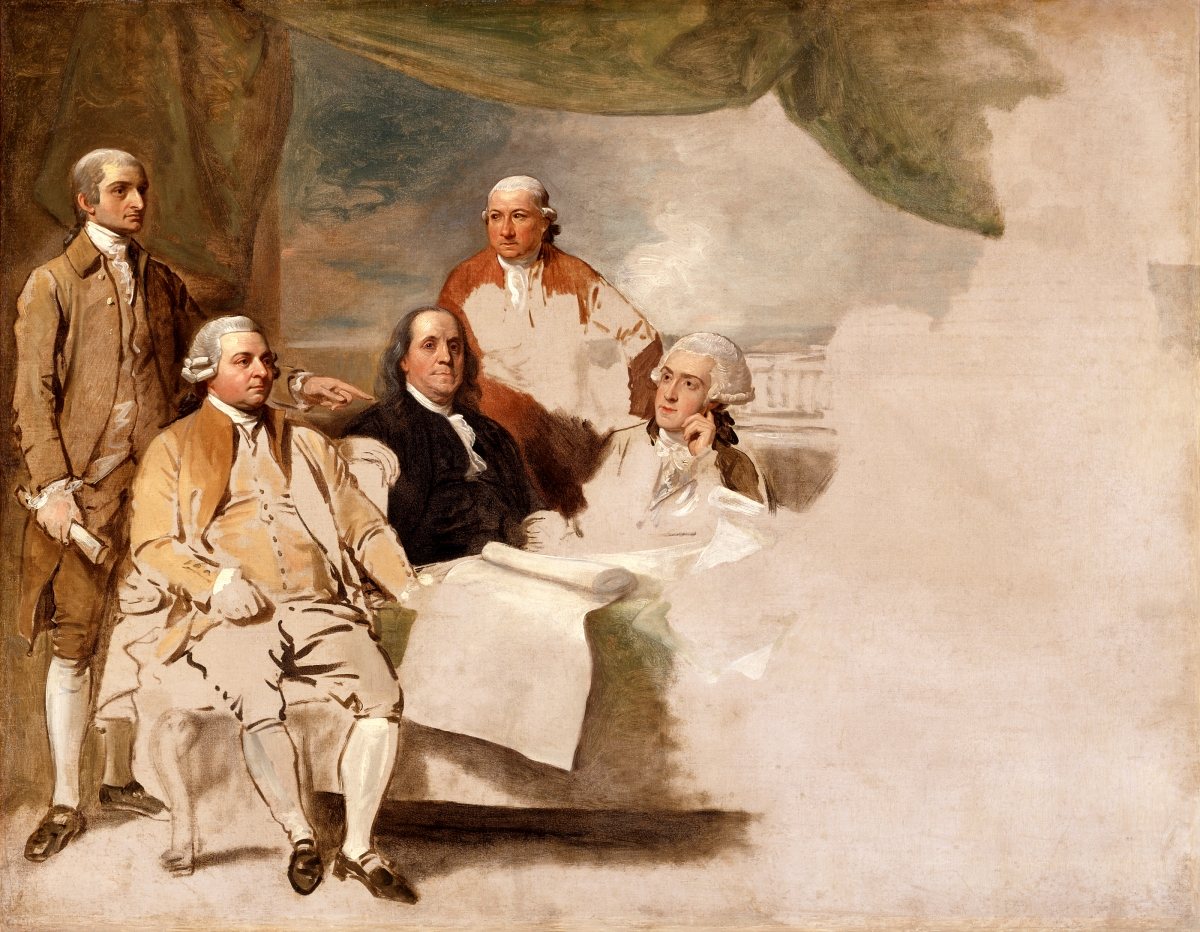
In a Paris townhouse on September 3, 1783, four men picked up quills and redrew the map of North America.
On one side of the table sat the Americans: Benjamin Franklin, the world-famous inventor and diplomat; John Adams, the sharp-tongued lawyer from Massachusetts; and John Jay, the New Yorker who had done much of the negotiating. A fourth American, Henry Laurens, joined them late in the talks. Across from them sat David Hartley, a member of the British Parliament who was, unusually for a Briton of his day, a genuine friend of the American cause.
The document they signed was the Treaty of Paris. Its first and most important act was simple: Great Britain recognized the United States as "free, sovereign and independent states." After eight years of war, the thirteen former colonies were, in the eyes of the law, a country.
But the treaty did much more than declare peace. Britain granted the new nation generous borders stretching west to the Mississippi River — more territory than the Americans had dared to hope for. Spain got Florida back. American fishermen won the right to work the rich waters off Newfoundland. And both sides promised that ordinary debts could still be collected and that loyalists who had sided with Britain would be treated fairly.
The road to that Paris townhouse had been long. The last major battle, Yorktown, had ended in October 1781. Preliminary terms were agreed in November 1782, and it took nearly another year of haggling before the final treaty was ready. The Continental Congress, meeting in Annapolis, Maryland, ratified it on January 14, 1784.
There is a wonderful footnote to the story. The painter Benjamin West set out to capture the American negotiators on canvas — but the British diplomats refused to sit for him. So West left the right side of his painting blank, an empty space where the other half of history should have been. It remains unfinished to this day, a silent reminder that peace doesn't always mean friendship.
Why it matters: the Treaty of Paris is, in a real sense, America's birth certificate — the moment the world formally acknowledged the United States as a nation. Its effects rippled far beyond America, too. France had bankrupted itself helping the Americans win, and the financial crisis that followed helped push France toward its own revolution just six years later.
Photo: Benjamin West, public domain (via Wikimedia Commons).