
The Night They Burned Their Own Ship
On February 16, 1804, a 25-year-old American lieutenant sailed into Tripoli harbor in disguise and burned the captured frigate USS Philadelphia so the enemy could never sail her.
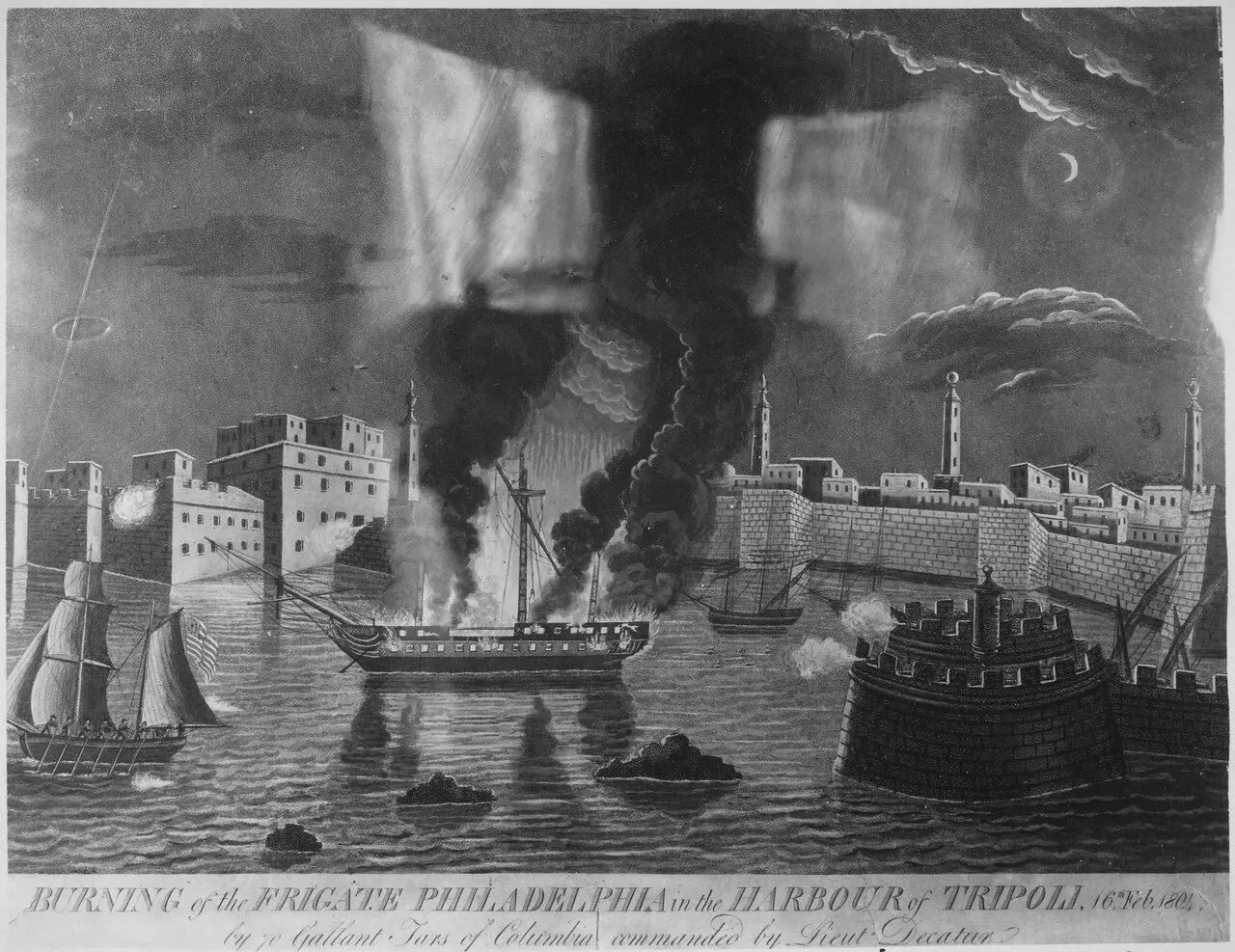
Some naval victories are won by taking a ship. This one was won by destroying one.
In the autumn of 1803, the American frigate USS Philadelphia ran aground on an uncharted reef while chasing enemy vessels off the coast of Tripoli, in North Africa. After failing to refloat her under fire, her captain, William Bainbridge, had no choice but to surrender. The ship, her guns, and more than 300 of her officers and crew fell into the hands of Tripoli's ruler. The Americans' nightmare deepened weeks later when the Tripolitans managed to refloat the frigate and anchor her in the harbor, armed and ready, as a floating gun battery aimed at any ship that dared approach.
To the young United States Navy, this was intolerable. A first-rate American frigate, built with American know-how, would either fight for the enemy or teach her captors how to build more like her. Commodore Edward Preble, commanding the American squadron, decided the Philadelphia had to go. The only way to do it was to send men straight into Tripoli harbor, under the guns of the city's fortresses, and burn her where she lay.
The man he chose was 25-year-old Lieutenant Stephen Decatur, whose father had once commanded the Philadelphia herself. For the job, the Americans had a captured Tripolitan ketch, renamed the Intrepid and rigged to look like a local trading vessel. On the night of February 16, 1804, Decatur took her into the harbor with a crew of volunteers, disguised as Maltese sailors. At the helm stood a Sicilian pilot who spoke the local language; when a guard hailed them, the raiders claimed they had lost their anchors in a storm and asked permission to tie up alongside the big frigate for the night.
The ruse worked. As the two vessels touched, Decatur led his men over the rails with swords and pikes. The guards were taken completely by surprise and quickly overpowered. Working fast, the Americans spread combustibles across the frigate's decks, lit the fires, and scrambled back to the Intrepid. Decatur was the last man off the burning ship. Under fire from the harbor's shore batteries, the little ketch slipped away into the dark, carrying a crew with only one man wounded, while the Philadelphia burned to the waterline and her powder magazine exploded in a blaze that lit up the whole harbor.
The raid electrified both sides of the Atlantic. The British Admiral Lord Nelson is often credited with calling it the most bold and daring act of the age, and whether or not he said it, the sentiment fit. A grateful Congress voted Decatur a sword of honor, and he was promoted to captain, an astonishing leap for a 25-year-old.
The First Barbary War is often called America's first foreign war, and the Philadelphia raid remains one of its defining moments. The Marines' Hymn still sings of "the shores of Tripoli" — and on that February night in 1804, a handful of American sailors wrote one of the reasons why.
Photo: U.S. National Archives, public domain (via Wikimedia Commons).