The Night France Tore Up a Thousand Years of Privilege
On the night of August 4, 1789, France's National Assembly voted to abolish feudalism — ending centuries of noble privilege in a single electrifying session.
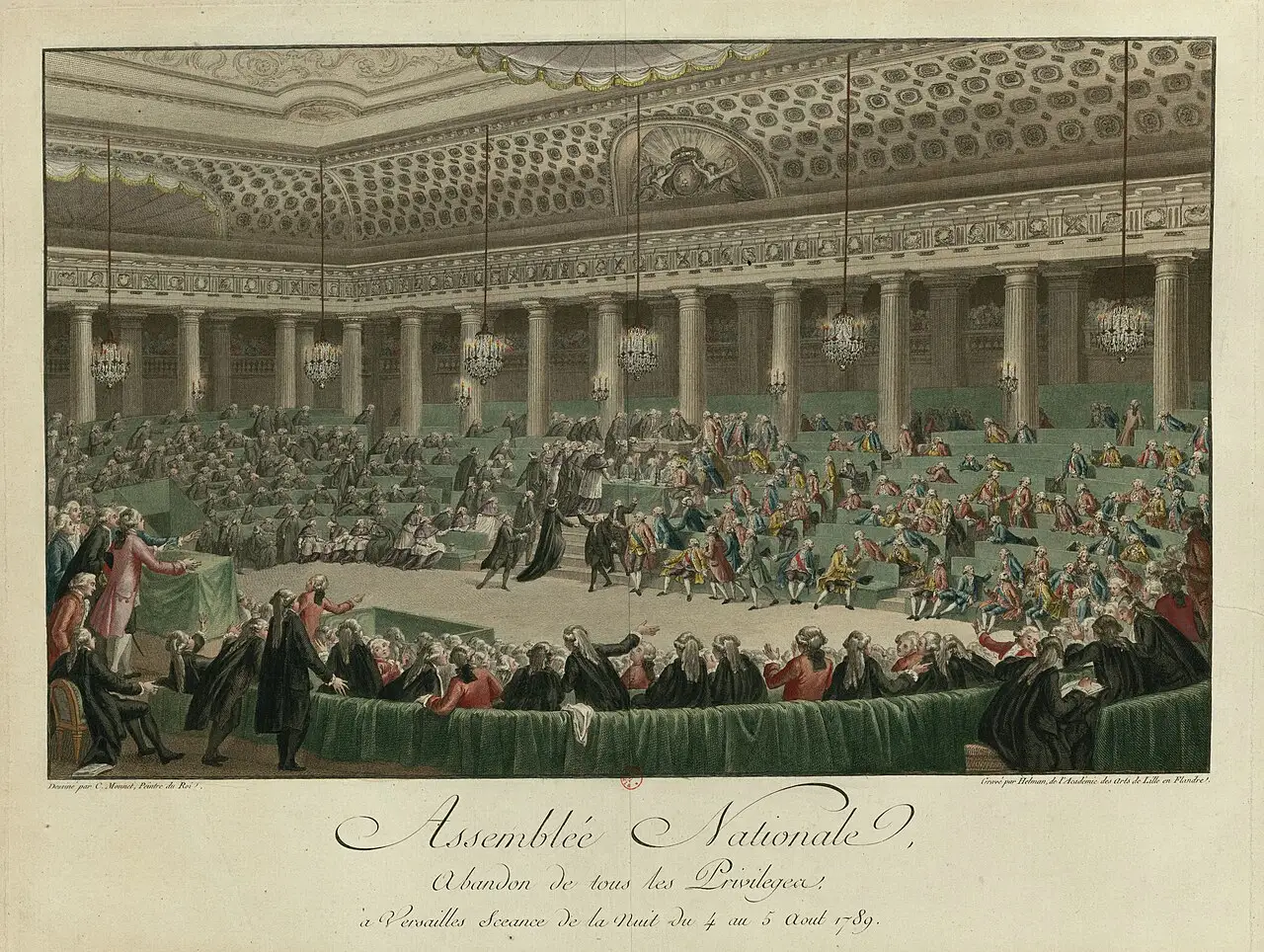
It began with an act of generosity nobody expected — and by dawn, a thousand years of privilege lay in ruins. On the night of August 4, 1789, inside the meeting hall of the National Assembly at Versailles, France's deputies voted to abolish feudalism entirely.
The country was on fire. Three weeks after the fall of the Bastille, panic and revolt had swept the French countryside in what became known as the Great Fear: peasants attacked the manors of nobles, burned châteaux, and refused to pay the feudal dues that had burdened them for centuries. Reports of burning and pillage poured into Paris from every province. The Assembly, desperate to calm the countryside, decided to act.
That evening, the Vicomte de Noailles — himself a nobleman — rose and proposed that the Assembly abolish the feudal rights of the nobility. The Duc d'Aiguillon, one of the greatest landowners in France, seconded him. What followed was an extraordinary cascade of renunciation. One by one, deputies stood to surrender their ancient privileges: exclusive hunting rights, private seigneurial courts, the buying and selling of government offices, special tax exemptions. The bishops of Nancy and Chartres gave up the Church's tithes. Towns and provinces surrendered their own cherished exemptions. In a fever of patriotic enthusiasm, the Assembly declared: "The National Assembly abolishes the feudal system entirely."
A medal was struck to commemorate the night, and the Assembly proclaimed Louis XVI the "Restorer of French Liberty." The fine print, finalized in decrees a week later, was more cautious than the night's soaring rhetoric — many dues were made redeemable rather than simply erased — but the principle was revolutionary and permanent: all French citizens equal before the law, privilege abolished, careers open to talent rather than birth.
The night of August 4 became one of the founding moments of modern France — and of the modern idea that no one is born to rule and no one is born to obey.
Three weeks later, the Assembly adopted the Declaration of the Rights of Man and of the Citizen, enshrining the night's principle that men are born free and equal in rights. The decrees that followed reorganized France's map, its church, and its courts: church lands were seized, the guilds abolished, and the ancient provinces replaced by departments. The old order never recovered. August 4 lit the fuse; the explosion remade a nation, and the idea that privilege itself was illegitimate spread across Europe.
Engraving by Isidore Helman after Charles Monnet, public domain (via Wikimedia Commons).