
The Night Berlin Woke Up Divided
In the early hours of August 13, 1961, East German troops sealed off West Berlin and began building the wall that would divide the city for 28 years.
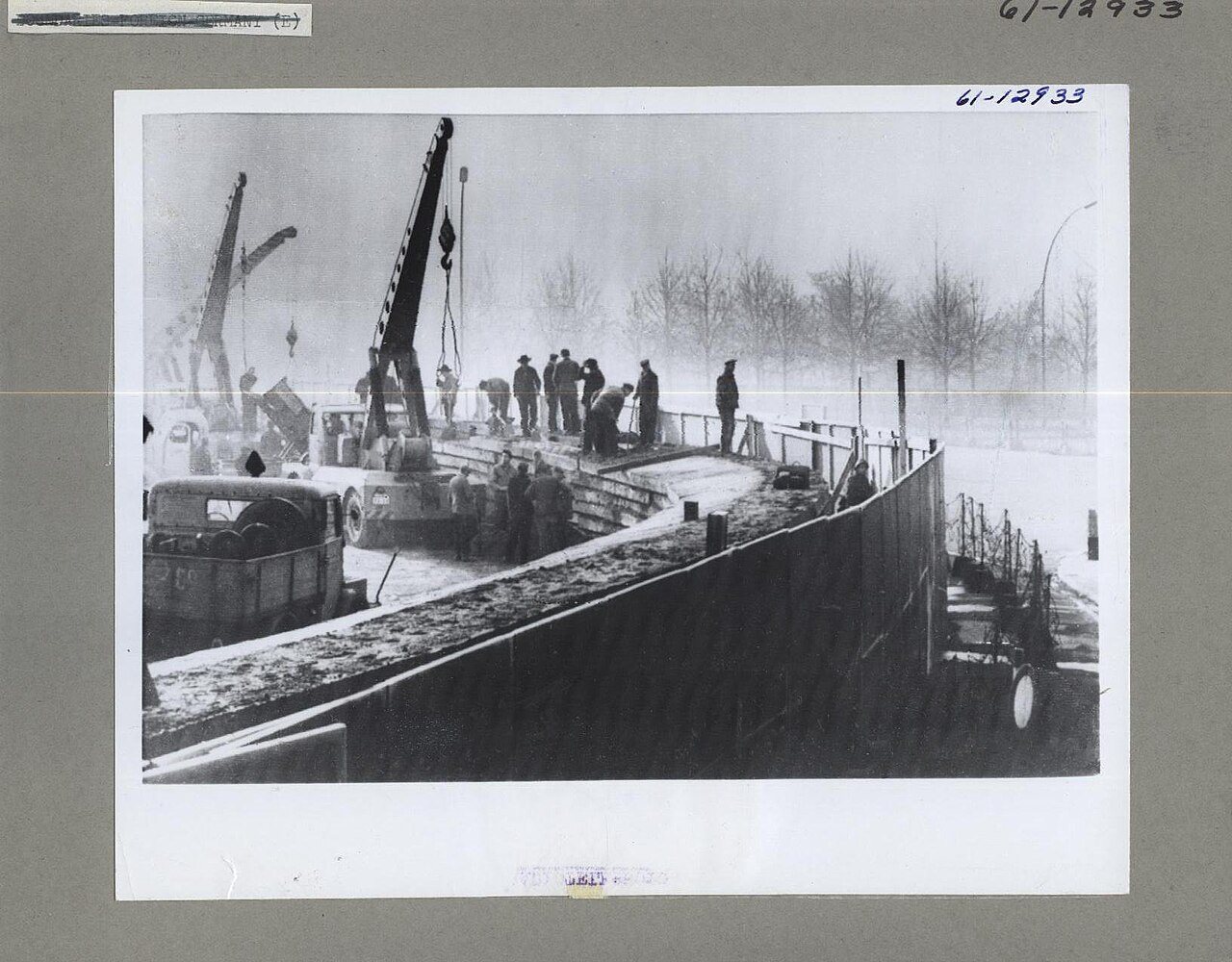
Just after midnight on Sunday, August 13, 1961, East German soldiers and police moved through sleeping Berlin and began unrolling coils of barbed wire across streets, squares, and subway lines. By dawn, the border between East and West Berlin — once a line you could cross on foot — had become a barrier. The city woke up divided.
The seed had been planted two months earlier in Vienna, where a newly inaugurated President John F. Kennedy met Soviet Premier Nikita Khrushchev in early June 1961. Khrushchev renewed his ultimatum over Berlin, demanding Western forces withdraw; Kennedy refused. On July 25, Kennedy addressed the nation on West Berlin and asked Congress for an additional $3.25 billion in defense spending. Privately, though, Kennedy signaled he could live with a sealed East Berlin border, so long as West Berlin itself was untouched.
The move had been ordered by East Germany's leader, Walter Ulbricht, and entrusted to security chief Erich Honecker as a top-secret mission called "Operation Rose." The motive was no mystery: since the end of the Second World War, some three million East Germans had fled westward, slipping through Berlin — the one open valve in an otherwise sealed border — into West Berlin and freedom. The exodus included workers and professionals, and the East German leadership feared for the very survival of its state. Ulbricht himself had declared that June that "nobody intends to build a wall"; thousands of East Germans, reading the signal, hurried out before the border closed.
By July, East Germans were leaving at a rate of more than 2,000 a day; on August 12, the day before the wire went up, some 4,000 fled west — a record. It was this hemorrhage that Ulbricht and Khrushchev meant to stop.
More than 40,000 soldiers and police sealed all but a handful of crossing points that night, stringing barbed wire around West Berlin's 155-kilometer perimeter. The concrete came days later — the first solid blocks went up on August 15, the day an East German soldier named Conrad Schumann made himself famous by leaping over the wire into the West. Within months the barbed wire had become a concrete wall, then a double wall with guard towers, dog runs, and a patrolled "death strip."
Nowhere was the cruelty more visible than on Bernauer Strasse, where the border ran along the front doors of apartment blocks whose sidewalks lay in the West. Residents leapt from upper-story windows into rescue nets held by firemen; hundreds escaped before the authorities nailed the doors shut and bricked up the windows, brick by brick.
Washington's response was restrained. Kennedy called the move a "brutal border closing" that only war could reverse, adding that no one had supposed "that we should go to war on this point." A formal protest took four days to reach Moscow — but Vice President Lyndon Johnson flew to West Berlin with a 1,500-man battle group sent down the autobahn from West Germany, to show the Western commitment stood. That October, American and Soviet tanks faced each other at Checkpoint Charlie in a tense 18-hour standoff before both sides inched backward; in June 1963, Kennedy returned to declare, "Ich bin ein Berliner."
For the next 28 years the Berlin Wall stood as the starkest symbol of the Cold War — a line through one city that stood for the division of an entire world. It held until the night of November 9, 1989, when crowds of East Berliners, confused by a bungled announcement of travel reforms, streamed to the crossings and guards finally opened the gates.
August 13, 1961, is remembered in Germany as "Barbed Wire Sunday" — the night a government, rather than persuade its people to stay, chose to make leaving impossible. The wall's rise is a reminder of what freedom of movement really means, and of how quickly it can be taken away in the dark.
Photo: The Central Intelligence Agency, public domain (via Wikimedia Commons).