The Night the Olympics Came Home
On August 13, 2004, Athens opened the Summer Olympics with a spectacular ceremony tracing Greek history before 72,000 spectators in the Olympic Stadium.
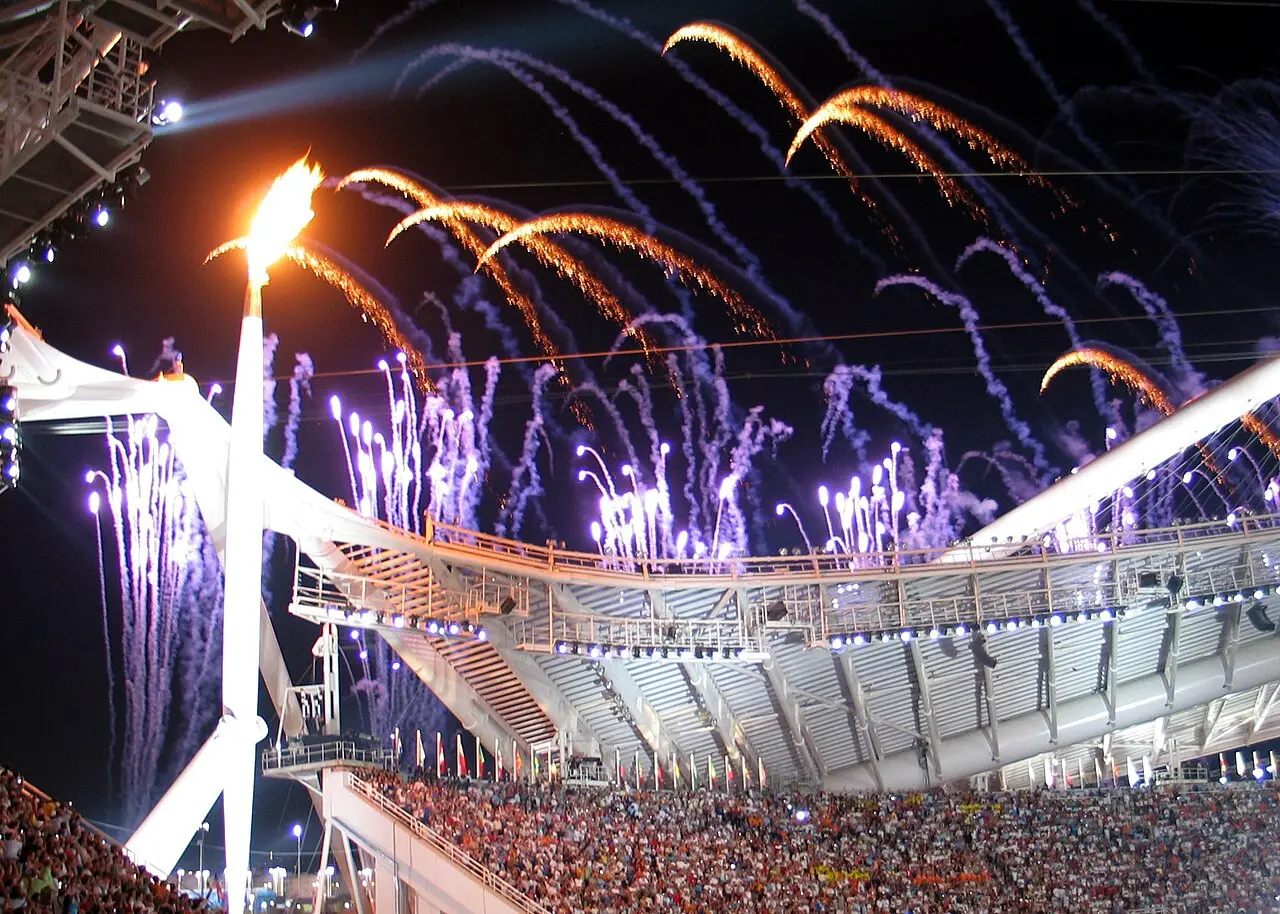
Twenty-eight seconds — one for every Olympiad since Athens 1896 — ticked down to the sound of an amplified heartbeat. Then the sky over Athens caught fire.
On the night of August 13, 2004, the Olympic Games came home. In the Olympic Stadium at Marousi, before 72,000 spectators and nearly 50 world leaders, Greece opened the Summer Olympics with a ceremony subtitled "Birthplace" — a promise to carry the audience from myth to modernity. For one long evening, it kept that promise.
The show, directed by avant-garde choreographer Dimitris Papaioannou and produced by Jack Morton Worldwide, opened with a drum duet: a single drummer in the ancient stadium at Olympia trading beats with another in Athens, stitching the ancient and modern Games together across the centuries. Then a flaming arrow arced into the stadium's reflecting pool, and the Olympic rings rose from the water in fire.
What followed was a pageant of Greek civilization, hearkening back to its mythological beginnings. A boy sailed into the stadium on a paper ship, waving the Greek flag to ethereal music. A centaur reared. A gigantic head of a Cycladic figurine split into fragments symbolizing the Greek islands — and beneath it appeared a Hellenistic human form, the classical ideal of bodily perfection. A man balanced on a hovering cube, caught between passion and reason, while young lovers chased each other beneath the hovering god Eros. Then came a great float parade carrying the crowd from the ancient Minoan civilization through the ages to the present day.
The formalities held their own gravity. Some 15,000 athletes from 202 countries paraded into the stadium, and at 23:46, President Konstantinos Stephanopoulos declared the Games open. The night also made broadcast history: it was the first-ever international transmission in high-definition television, carried by America's NBC and Japan's NHK.
For Greece, the night was a statement. The small country that had given the world the Games had won the right to host them again — and it answered with three millennia of history in a single evening, in sharper picture quality than any Olympic audience had ever seen. More than a century after Athens hosted the first modern Olympics in 1896, the Games had returned to where they began — with a heartbeat, a drumbeat, and rings of fire.
The Games left a complicated legacy: the venues cost billions, and many fell silent within a few years, becoming symbols of Olympic excess debated ever since. But for sixteen nights in August 2004, Athens was the center of the sporting world, and the Games were home.
Photo: Alterego, CC BY-SA 3.0 (via Wikimedia Commons).