The Day the Lake City Fell
On August 13, 1521, Spanish and Tlaxcalan forces captured the Aztec emperor Cuauhtémoc, ending the siege of Tenochtitlan and toppling an empire.
For nearly three months, the greatest city in the Americas had been dying by inches.
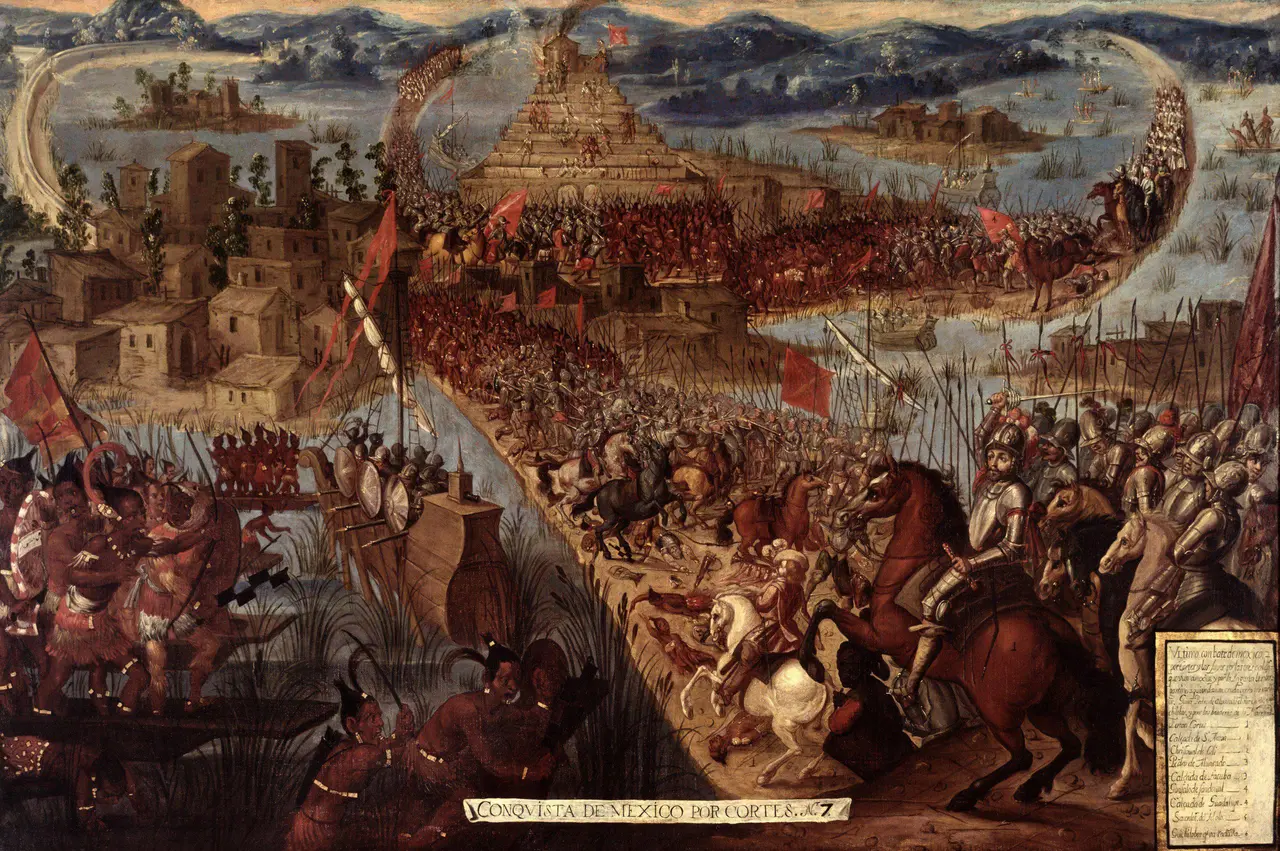
Tenochtitlan rose from the waters of Lake Texcoco on stone causeways, a city of perhaps 200,000 people — bigger than London or Seville in that age — all temples, markets, and floating gardens. By the summer of 1521 it had become a trap. Hernán Cortés, with a few hundred Spanish soldiers and tens of thousands of Tlaxcalan warriors who had their own long scores to settle with the Aztecs, had cut the causeways, launched war brigantines onto the lake, and begun grinding through the city district by district, burning each quarter as it fell.
Inside the shrinking pocket of streets his people still held, the young emperor Cuauhtémoc refused to surrender. He had taken the throne only that February, after smallpox — the invaders' invisible ally — swept through the city in 1520 and killed his predecessor Cuitláhuac along with thousands of others. Now his warriors fought from rooftops and canoes while starvation did what Spanish steel could not. Aztec accounts describe survivors too weak to stand, houses crammed with the dead.
The end came quickly. On August 12, with his peace overtures refused, Cortés ordered a final assault, and the last defenders were overrun. The next morning, as hundreds of canoes fled across the lake carrying survivors and the last of the imperial treasure, Cortés sent his brigantines to cut them off. In one of the canoes was Cuauhtémoc himself, trying to slip away with his family. Spanish launches under Sandoval ran him down and brought him before Cortés.
According to Spanish accounts, the defeated emperor asked Cortés to kill him on the spot — and the Spanish chroniclers record Cortés answering that he knew how to respect valor, even in an enemy. But mercy stopped where gold began. When the captured treasure disappointed the conquerors, Cuauhtémoc was tortured with fire in a fruitless hunt for riches lost during the Spaniards' disastrous midnight escape from the city a year earlier. He lived on as a captive figurehead until his execution in 1525.
The surrender on August 13, 1521, destroyed the Aztec Empire. On its ruins the victors raised a new capital — Mexico City, seat of New Spain, which would dominate the Americas for three centuries.
It was one of history's great hinge points: the moment two worlds, separated for millennia, collided and fused. Spanish became the language of government and the Catholic faith took root, but the Indigenous foundations never fully vanished — they live on in Mexico's food, its festivals, its faces. Modern Mexico was born the day the lake city fell.
Photo: 17th-century painting of the fall of Tenochtitlan, artist unknown, public domain (via Wikimedia Commons).