The Moonshot Speech: Kennedy Pledges America to the Moon
On May 25, 1961, President Kennedy told Congress America would land a man on the Moon before the decade was out — before NASA had even orbited an astronaut.
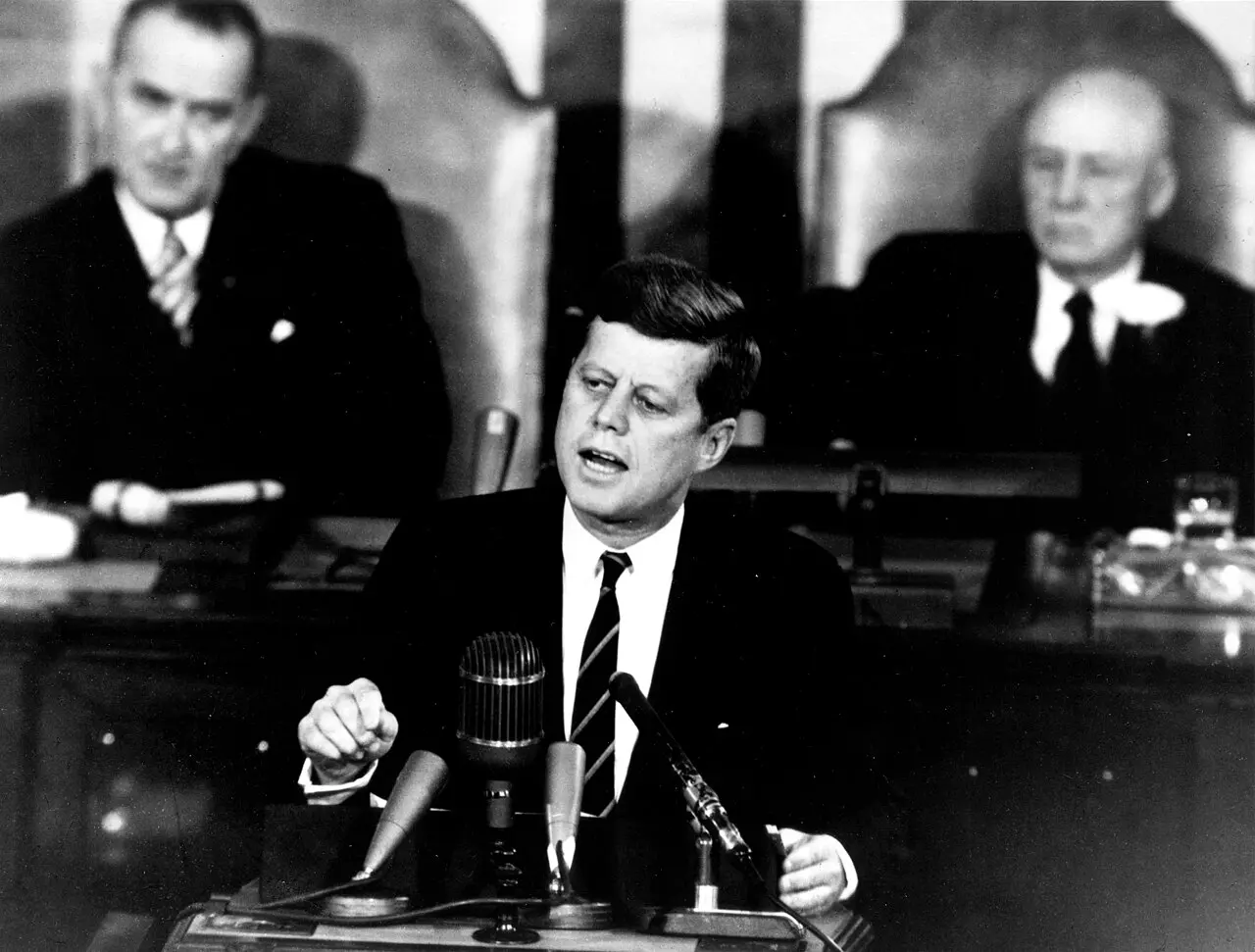
On May 25, 1961, a 43-year-old president stood before Congress and made one of the boldest promises in American history. The United States had not yet launched a single astronaut into orbit. The Soviet Union had humiliated America by putting Yuri Gagarin into space the month before. And yet John F. Kennedy told a joint session of Congress that America would land a man on the Moon — and bring him safely home — before the decade was out.
Kennedy's address was formally titled the "Special Message to Congress on Urgent National Needs," a 46-minute speech about Cold War dangers and America's role in the world. Behind the podium sat Vice President Lyndon Johnson and House Speaker Sam Rayburn, the two most powerful men in Congress. The speech covered everything from civil defense to foreign aid. But it is remembered for the passage near the end, when Kennedy turned to the space race.
The context was grim for America. The Soviet Union had launched Sputnik, the first artificial satellite, in 1957. On April 12, 1961, cosmonaut Yuri Gagarin had become the first human in orbit. A few days later, the American-backed Bay of Pigs invasion of Cuba collapsed in disaster. America's one space triumph — Alan Shepard's 15-minute suborbital flight on May 5 — had come barely three weeks before the speech and looked tiny next to Gagarin's orbit.
Kennedy's answer was to change the game entirely. Rather than chase the Soviets launch for launch, he proposed a contest America could win — a single, staggering goal:
"I believe that this nation should commit itself to achieving the goal, before this decade is out, of landing a man on the moon and returning him safely to the earth."
He was blunt about the price: "No single space project in this period will be more impressive to mankind, or more important for the long-range exploration of space; and none will be so difficult or expensive to accomplish." He asked Congress for greatly expanded funding for the young space agency, NASA — and Congress gave it. At the peak of the Apollo program, in 1965 and 1966, NASA consumed more than 4 percent of the entire federal budget, a share no civilian agency has approached since.
The pledge worked exactly as Kennedy hoped. Eight years and two months later, on July 20, 1969, Neil Armstrong stepped onto the lunar surface, fulfilling the deadline with months to spare. Some 400,000 Americans had worked on Apollo at its peak, from the seamstresses who sewed the spacesuits to the engineers who invented computers small enough to fly.
Why it matters: the Moon speech showed the power of a deadline attached to a dream. Kennedy could not have known that the rockets, computers, and materials needed to reach the Moon would all be invented in time — he bet that naming the goal would summon the means. The bet paid off, and the technologies spun off from Apollo, from water purification to miniaturized electronics, reshaped the modern world. When leaders today talk about "moonshots," they are borrowing a word Kennedy coined on May 25, 1961.
Photo: NASA, public domain (via Wikimedia Commons).