The Marines Land on Iwo Jima
On February 19, 1945, some 30,000 U.S. Marines stormed ashore at Iwo Jima, beginning a 36-day battle that became the bloodiest in Marine Corps history.
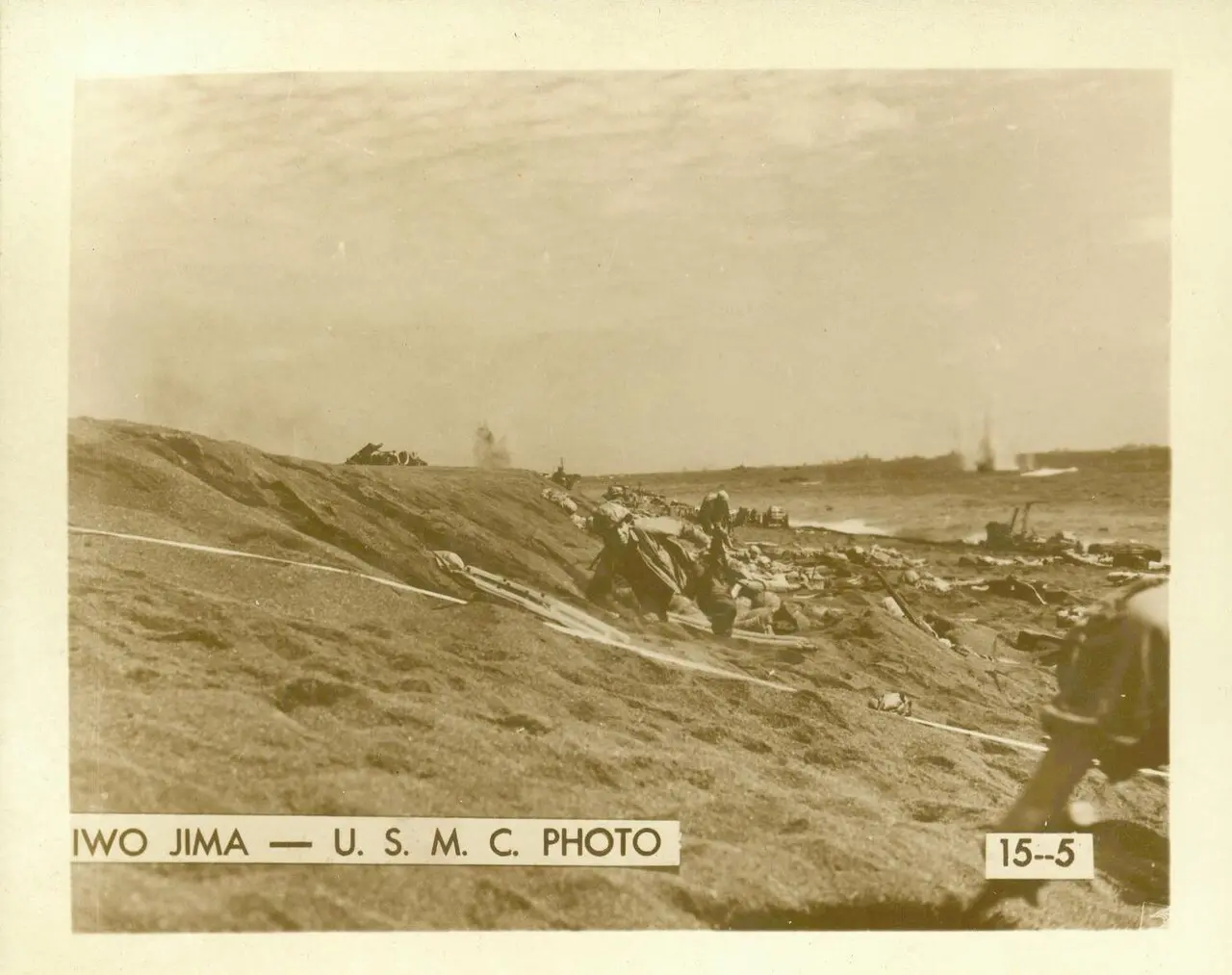
At 08:59 on February 19, 1945 — one minute ahead of schedule — the first wave of U.S. Marines waded ashore on the southeastern beaches of Iwo Jima. They stepped into a trap. Beneath the island's black volcanic ash, Japanese commander Tadamichi Kuribayashi had spent eight months building one of the most formidable defenses of the Pacific war: 11 miles of tunnels, some 1,500 underground rooms, and artillery hidden behind steel doors that slammed shut between shots.
The island was only eight square miles, a volcanic speck about 660 nautical miles from Tokyo, but it mattered enormously. Its airfields could base fighter escorts for the B-29 bombers striking Japan, and give damaged bombers a place to land on the long flight home. The Navy had pounded the island for 74 consecutive days — the longest pre-invasion bombardment of the Pacific war — but it had barely scratched the garrison dug sixty feet into the rock.
Kuribayashi broke with Japanese military tradition. There would be no suicidal beach defense and no wild banzai charges — instead, his guns held their fire while the Marines filled the beaches, then opened up from the heights of Mount Suribachi. Marines struggled forward through ash too soft for foxholes, and every bunker had to be reduced one at a time with flamethrowers, grenades, and explosives. That first day, six Navajo code talkers working for the 5th Marine Division's signal officer sent and received more than 800 messages without a single error — "were it not for the Navajos," Major Howard Connor later said, "the Marines would never have taken Iwo Jima."
The battle lasted 36 days. On February 23, five days in, six men raised an American flag atop Mount Suribachi — a moment captured by Associated Press photographer Joe Rosenthal in one of the most famous images ever taken, and one that earned him a Pulitzer Prize. But 31 days of brutal fighting still remained. When the island was finally declared secure, nearly 7,000 American Marines and sailors were dead and 20,000 more wounded; of the roughly 21,000 Japanese defenders, nearly all had been killed.
Twenty-seven Medals of Honor were awarded for Iwo Jima — more than for any other single battle. Admiral Chester Nimitz summed it up in words that became inseparable from the Corps itself: "Uncommon valor was a common virtue." The airfields were quickly put to use; more than 2,200 damaged B-29s would eventually make emergency landings on the island instead of ditching in the sea.
Eight decades later, Iwo Jima stands as the defining battle of the Marine Corps — and as a reminder of what ordinary young men paid, one bunker at a time, for every yard of black sand.
Photo: USMC Archives, CC BY 2.0 (via Wikimedia Commons).