
The Great White Hurricane Strikes, March 11, 1888
On March 11, 1888, a mild spring day gave way to one of the deadliest blizzards in American history — a storm that buried cities, killed more than 400 people, and forced America to go underground.
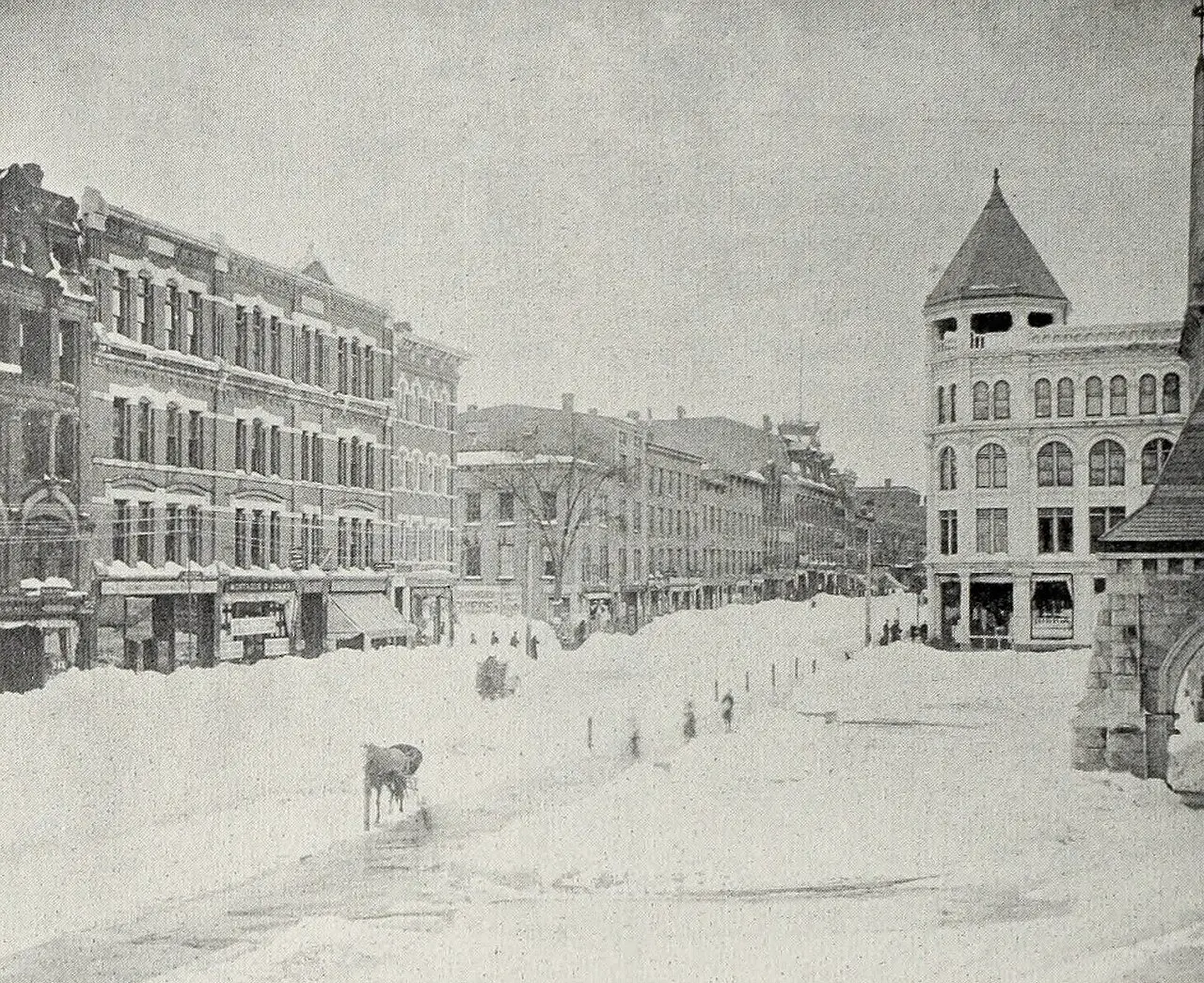
The morning of Sunday, March 11, 1888, felt like spring. Temperatures along the East Coast sat in the 40s and 50s, and nobody in New York or Boston had any reason to fear the sky. By nightfall, snow was falling. By Monday morning, the world they knew was gone.
What came next was the Great Blizzard of 1888 — the Great White Hurricane — one of the most severe and deadliest blizzards ever recorded in North America. It raged from March 11 to March 14, paralyzing the coast from the Chesapeake Bay to Maine, and into Canada's Atlantic provinces.
On Sunday night, a cold rain changed over to snow as temperatures plunged. The snow was only the start. Sustained winds topped 45 miles per hour, with gusts to 80, driving the snow into drifts as high as 50 feet — the tallest measured reached 52 feet in the Gravesend section of Brooklyn. New York City received 22 inches; other parts of the region saw 40 to 50 inches, and Saratoga Springs, New York, recorded 58.
On Monday, many New Yorkers who had never seen a blizzard tried to walk to work anyway. They were stranded in the streets, on trains, and in elevated transit cars. Telegraph and telephone wires snapped under ice and wind, isolating New York, Boston, Philadelphia, and Washington for days. Fire stations were immobilized, and emergency services broke down across the region. Saloons, hotels, and even prisons overflowed with people seeking shelter. Exact totals vary by source — the National Weather Service estimated about 50 inches in parts of Connecticut and Massachusetts, and 40 across New York and New Jersey — with temperatures plunging into the single digits. More than 200 ships were sunk or grounded at sea, and about 100 sailors died. In all, more than 400 people lost their lives — roughly 200 in New York City alone — and property damage totaled about $25 million in 1888 dollars.
The storm's legacy lasted far longer than its snowdrifts. The sight of shattered utility poles convinced city leaders that power, telegraph, and telephone lines belonged underground — a transformation that reshaped American cities. And the total collapse of above-ground transportation lit a fire under plans for underground rail: New York approved its subway in 1894 and opened it in 1904. For decades afterward, survivors of the storm held reunions on its anniversary, until 1969.
The Great White Hurricane remains a reminder of how quickly nature can humble even the busiest city — and of how catastrophe can become the blueprint for progress.
Photo: unknown author, public domain (via Wikimedia Commons).