The Garden Hose Deal: FDR Signs Lend-Lease
On March 11, 1941, FDR signed the Lend-Lease Act, turning America into the 'arsenal of democracy' — with a little help from a garden hose.
"Suppose my neighbor's home catches fire," President Franklin D. Roosevelt told reporters on December 17, 1940, "and I have a length of garden hose four or five hundred feet away. If he can take my garden hose and connect it up with his hydrant, I may help him to put out his fire." He leaned forward. "I don't say to him before that operation, 'Neighbor, my garden hose cost me $15; you have to pay me $15 for it.' What is the transaction that goes on? I don't want $15 — I want my garden hose back after the fire is over."
The neighbor was Britain. By the winter of 1940, Britain stood alone against Nazi Germany, and it was running out of money to buy American weapons under the "cash and carry" rules. Roosevelt's answer was radical: America would lend or lease the arms — no haggling, no payment up front. He had already called America "the great arsenal of democracy" in a fireside chat that December. Now he wanted Congress to make it law.
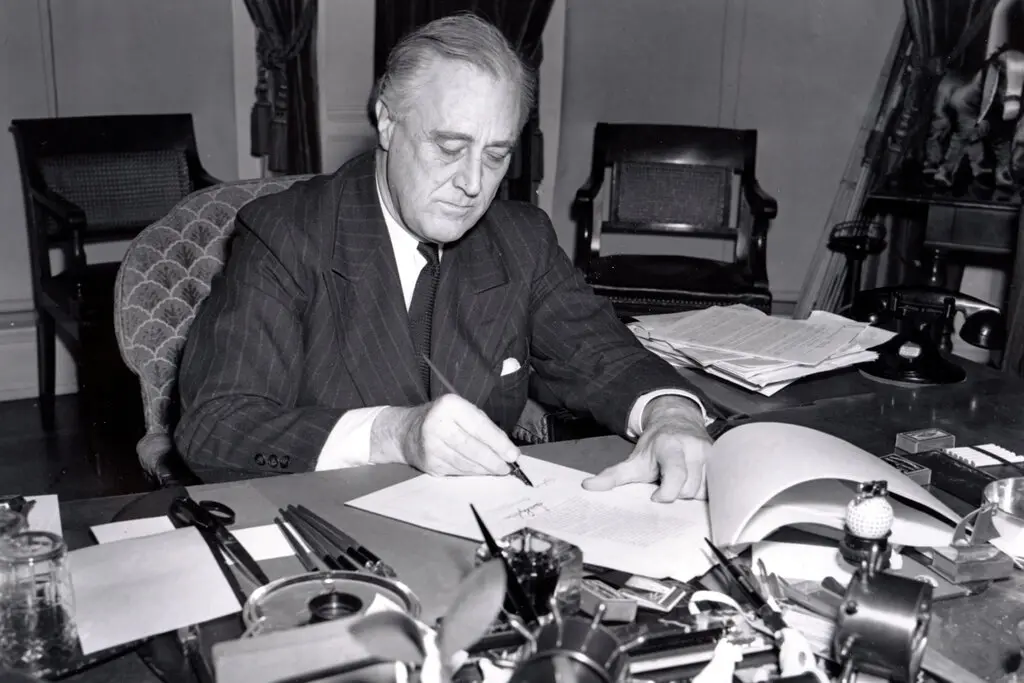
The bill was numbered H.R. 1776 — a deliberate echo of independence. Isolationists, led by the America First Committee, warned it would drag the country into war; the aviator Charles Lindbergh testified against it. But the Nazi threat concentrated minds. The House passed it on February 8, 260 to 165; the Senate followed on March 8, 60 to 31. On March 11, 1941, Roosevelt signed the Lend-Lease Act at his White House desk, photographers crowded around him.
What followed was the greatest aid program in history to that point: more than $50 billion worth of weapons, vehicles, aircraft, food, and fuel by the program's end, the vast majority of it going to the British Empire. After Hitler invaded the Soviet Union that June, American trucks, jeeps, and canned food began flowing east as well, and China received its share over the treacherous Himalayan airlift. By war's end, Lend-Lease had touched nearly every Allied front.
Lend-Lease kept Britain fighting — and later helped the Soviet Union absorb the Nazi onslaught — while America was still officially at peace. It marked the moment the United States abandoned neutrality in all but name, and it built the industrial mobilization that would win the war. The garden hose, as Roosevelt promised, came back changed: America emerged from the fire as the world's arsenal — and its superpower.
Photo: President Franklin D. Roosevelt signing the Lend-Lease bill, March 11, 1941, public domain (Library of Congress).