
The Good Turn That Built the Boy Scouts
On February 8, 1910, Chicago publisher William D. Boyce filed papers in Washington, D.C. launching the Boy Scouts of America — inspired by a London boy who refused his tip.
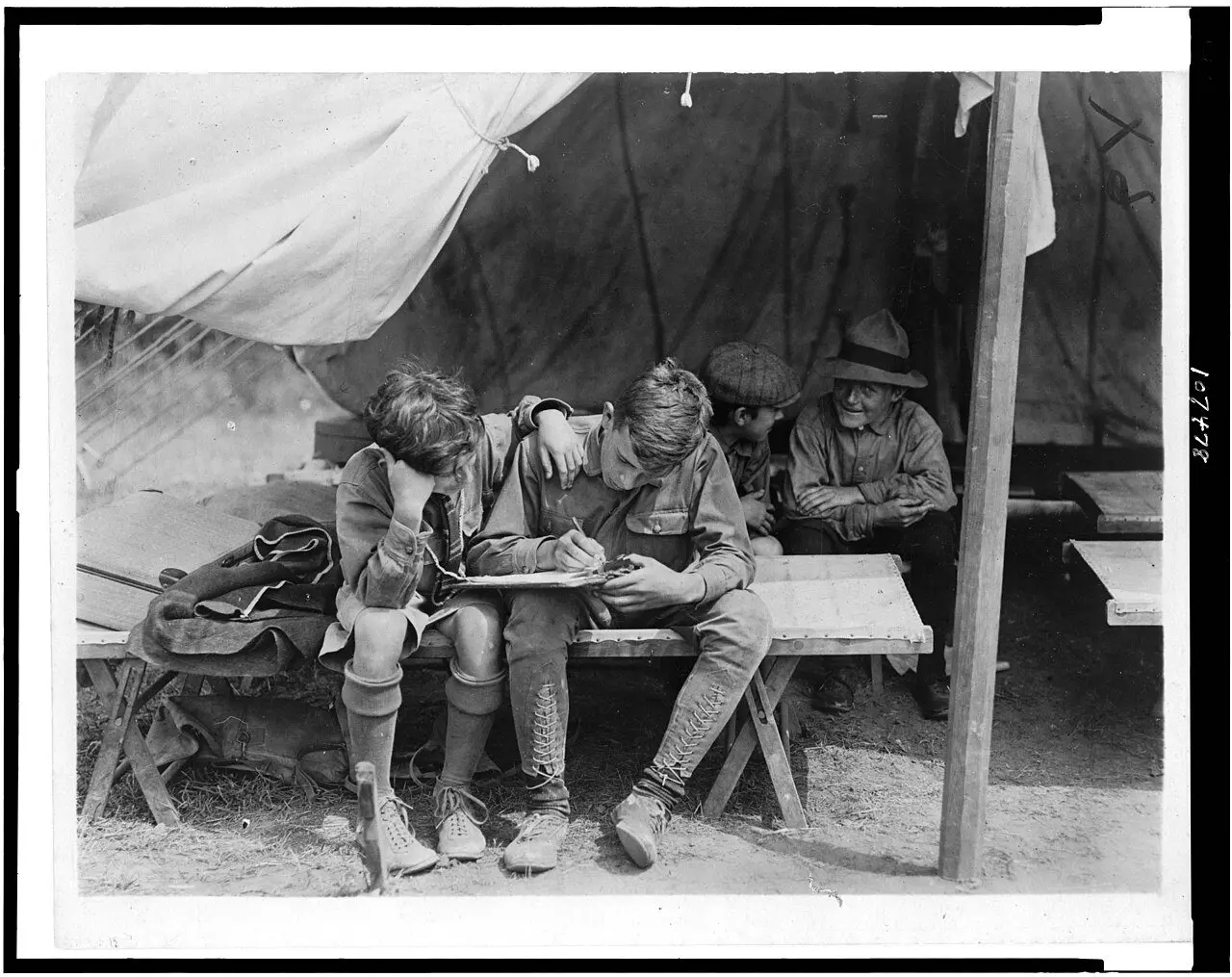
It started with a lost man, a foggy London street, and a boy who refused to take his money.
In 1909, Chicago publisher William D. Boyce was in London on his way to a safari in Africa when he became hopelessly lost in the fog. A boy of about 12 offered to guide him to the address he was seeking. When Boyce reached for a shilling to tip him, the boy refused: "No sir, I am a Scout. Scouts do not accept tips for good turns."
That, at least, is the founding story the Boy Scouts of America have told for more than a century — though historians note that some of its details, including the famous fog, may have been polished up in the retelling. What is beyond dispute is what happened next: Boyce visited British Scout headquarters, met Robert Baden-Powell — the Boer War hero who had started the Scouting movement in 1907 — and returned to America determined to bring Scouting across the Atlantic.
On February 8, 1910, Boyce made it official. He filed papers of incorporation for the Boy Scouts of America in Washington, D.C., alongside Edward S. Stewart and Stanley D. Willis. The stated purpose was to promote, in the words of the filing, "the ability of boys to do things for themselves and others, to train them in Scoutcraft, and to teach them patriotism, courage, self-reliance and kindred virtues."
Boyce didn't stop at paperwork. He pledged $1,000 a month for a year to get the new organization on its feet, and brought in Edgar M. Robinson, a YMCA administrator, to build it into a national movement. On June 1, 1910, the BSA's national office opened in the 28th Street YMCA in New York City. Rival boys' groups — Ernest Thompson Seton's Woodcraft Indians, Daniel Carter Beard's Boy Pioneers, and several others — were folded into the new organization.
The growth was astonishing. By autumn of 1910, barely eight months after incorporation, the BSA had received some 2,500 leader applications from 44 states and more than 150,000 inquiries from boys eager to join.
The movement's legitimacy was sealed on June 15, 1916, when President Woodrow Wilson signed the federal charter of the Boy Scouts of America into law.
More than a century later, the good turn that started it all — real in spirit, whatever the fog — has echoed through generations of American childhoods. The Eagle Scout rank alone has been earned by astronauts like Neil Armstrong, filmmakers like Steven Spielberg, and even a U.S. president, Gerald Ford. All because a lost publisher met a helpful boy who wouldn't take a shilling.
Photo: Library of Congress, public domain (via Wikimedia Commons).