Mary, Queen of Scots Is Beheaded at Fotheringhay Castle
On February 8, 1587, Mary, Queen of Scots was beheaded at Fotheringhay Castle after nineteen years as Elizabeth I's prisoner.
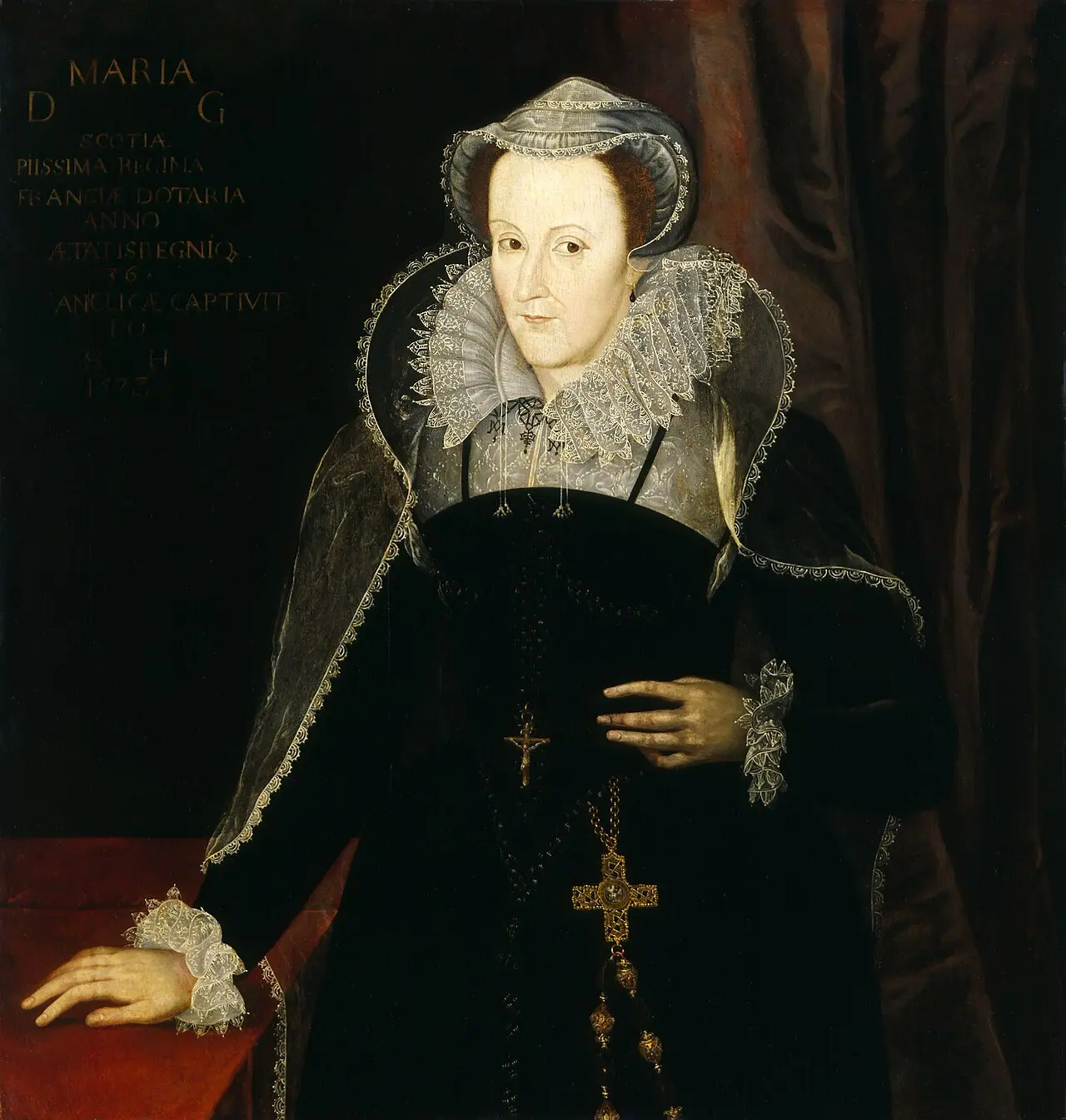
For nineteen years she had been a prisoner — moved from castle to castle, watched, guarded, never free. On the morning of February 8, 1587, Mary Stuart, Queen of Scots, dressed with care, said farewell to her servants, and walked into the great hall of Fotheringhay Castle to die.
She had been a queen since she was six days old, crowned after her father, James V of Scotland, died in 1542. Raised at the French court, she married the dauphin, who briefly became King Francis II of France before dying in 1560. The widowed Mary returned to rule Scotland — and walked into disaster. Her second husband, Lord Darnley, was murdered in a mysterious explosion in 1567; her hasty marriage to the Earl of Bothwell, the chief suspect, outraged Scotland's nobles. Defeated and captured, she was forced to abdicate in favor of her infant son, James.
In 1568 she escaped from Lochleven Castle and fled south, expecting her cousin Elizabeth I of England to help her regain her throne. Instead Elizabeth — who feared Mary's claim to the English crown and her Catholic faith — kept her under guard for nineteen years. Mary became the living center of every Catholic plot against Elizabeth, until the Babington Plot of 1586, a scheme to assassinate Elizabeth and put Mary on the throne, gave Elizabeth's ministers the evidence they needed. Tried for treason, Mary was convicted and sentenced to death. Elizabeth hesitated for months before signing the warrant: Mary was an anointed queen, and her own cousin.
On the scaffold Mary was composed to the last. The night before, she had written to her brother-in-law Henry III of France, protesting her innocence: "I scorn death and vow that I meet it innocent of any crime," she wrote, in a letter now held by the National Library of Scotland. According to eyewitness accounts, the executioner's first stroke missed its mark and a second was needed. According to legend, when the executioner lifted her severed head by the hair to show the crowd, her wig came away in his hand and the head rolled across the floor.
She was forty-four. Her body was first buried at nearby Peterborough Cathedral; in 1612 her son — by then James I of England as well as James VI of Scotland — moved her to Westminster Abbey, a few yards from Elizabeth herself.
Why does it matter? The beheading of an anointed queen shocked Europe and set a precedent that no monarch was untouchable — an idea that would echo at the scaffold of Charles I sixty-two years later. It inflamed Catholic Europe and helped drive Spain toward the Armada of 1588. And in the end, Mary's line won: her son united the crowns of Scotland and England, and every British monarch since has descended from the queen who died at Fotheringhay.
Photo: after Nicholas Hilliard, public domain (via Wikimedia Commons)