D.W. Griffith's The Birth of a Nation Premieres in Los Angeles
On February 8, 1915, D.W. Griffith's The Birth of a Nation premiered in Los Angeles, revolutionizing cinema while spreading racist propaganda.
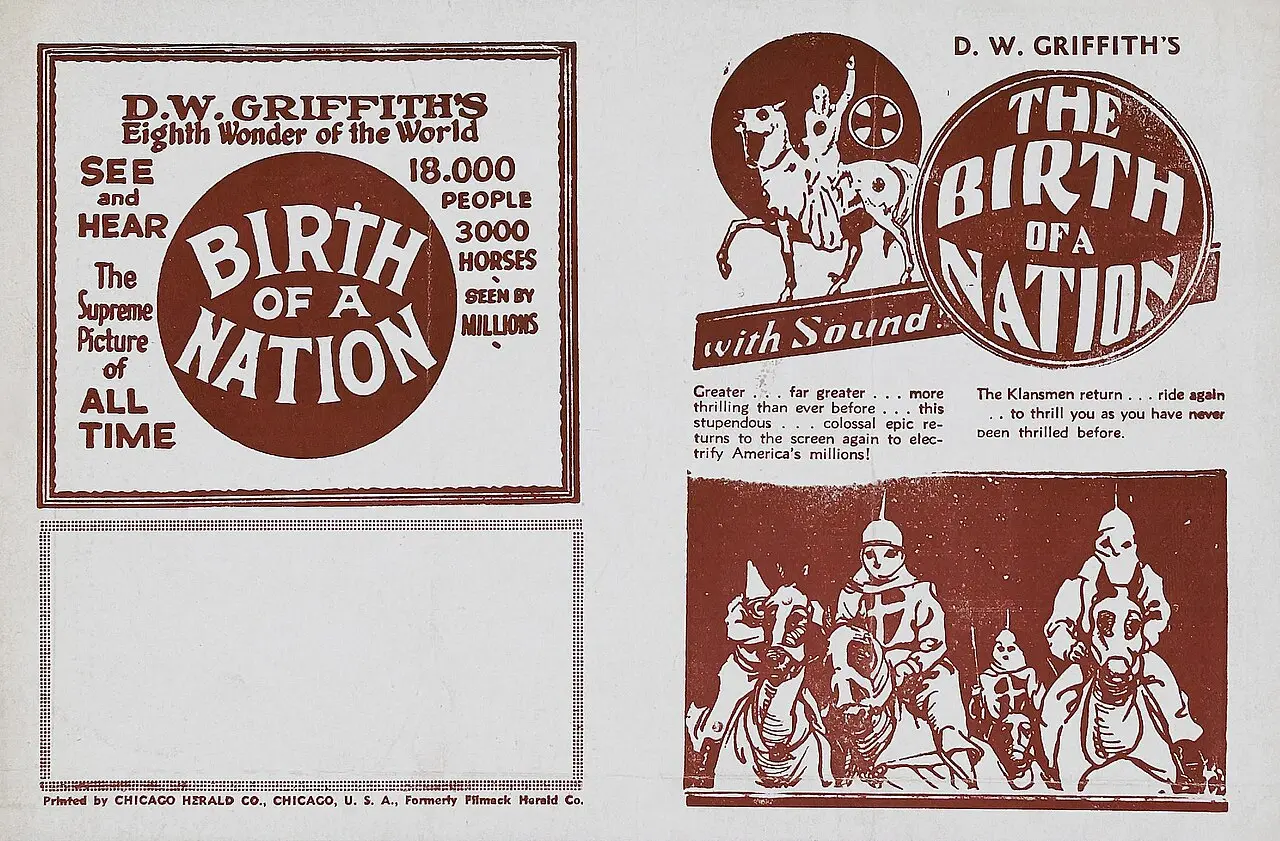
Three thousand people packed into Clune's Auditorium in downtown Los Angeles on the night of February 8, 1915, and saw the future of movies — along with one of the ugliest lies ever put on screen.
The film was called The Clansman, though within weeks it would be renamed The Birth of a Nation. Directed by D. W. Griffith and adapted from two novels by Thomas Dixon Jr., it ran twelve reels — nearly three hours — at a time when most movies were twenty-minute novelties. It told a sweeping story of the Civil War and Reconstruction through two families, one Northern and one Southern, with battle scenes of unprecedented scale, intimate close-ups, cross-cut editing, and, at its New York opening, a full original orchestral score. Audiences had never seen anything like it. It ran seven months at Clune's and became the first true blockbuster.
Griffith had invented the grammar of modern cinema. The problem was the sentence he wrote with it. The Birth of a Nation portrayed the Ku Klux Klan as heroic saviors of the South, while Black Americans — played largely by white actors in blackface — were depicted as villains and caricatures. It was, as historians now plainly state, racist propaganda dressed up as history.
The damage was real. The film was a sensation, and the Ku Klux Klan — nearly extinct since the 1870s — seized on it as a recruiting tool. As film historian Paul McEwan has noted, audiences of the time were primed for its message, and the Klan rode the film's popularity back to national prominence. The movie also drew fierce opposition: the city of Los Angeles itself tried to stop its showing in February 1915, and protests and censorship battles followed it across the country.
The film's backers also invented the modern blockbuster rollout. Griffith's team toured the picture from city to city in a roadshow release, charging premium ticket prices and selling souvenir programs — a marketing playbook Hollywood still uses for its biggest releases.
Why does it matter? The Birth of a Nation is cinema's original moral paradox — the film that proved movies could be art while showing how easily art can serve hatred. Every filmmaker who followed learned Griffith's techniques; every honest history of film must also reckon with what he did with them. On the night of February 8, 1915, the movies grew up — and showed, permanently, that how a story is told matters as much as the story itself.
Photo: Epoch Producing Corp, public domain (via Wikimedia Commons)