
The Glowing Accident That Invented Electronics
On February 13, 1880, Thomas Edison noticed a strange one-way current inside a light bulb, a curiosity he filed away that later became the foundation of all electronics.
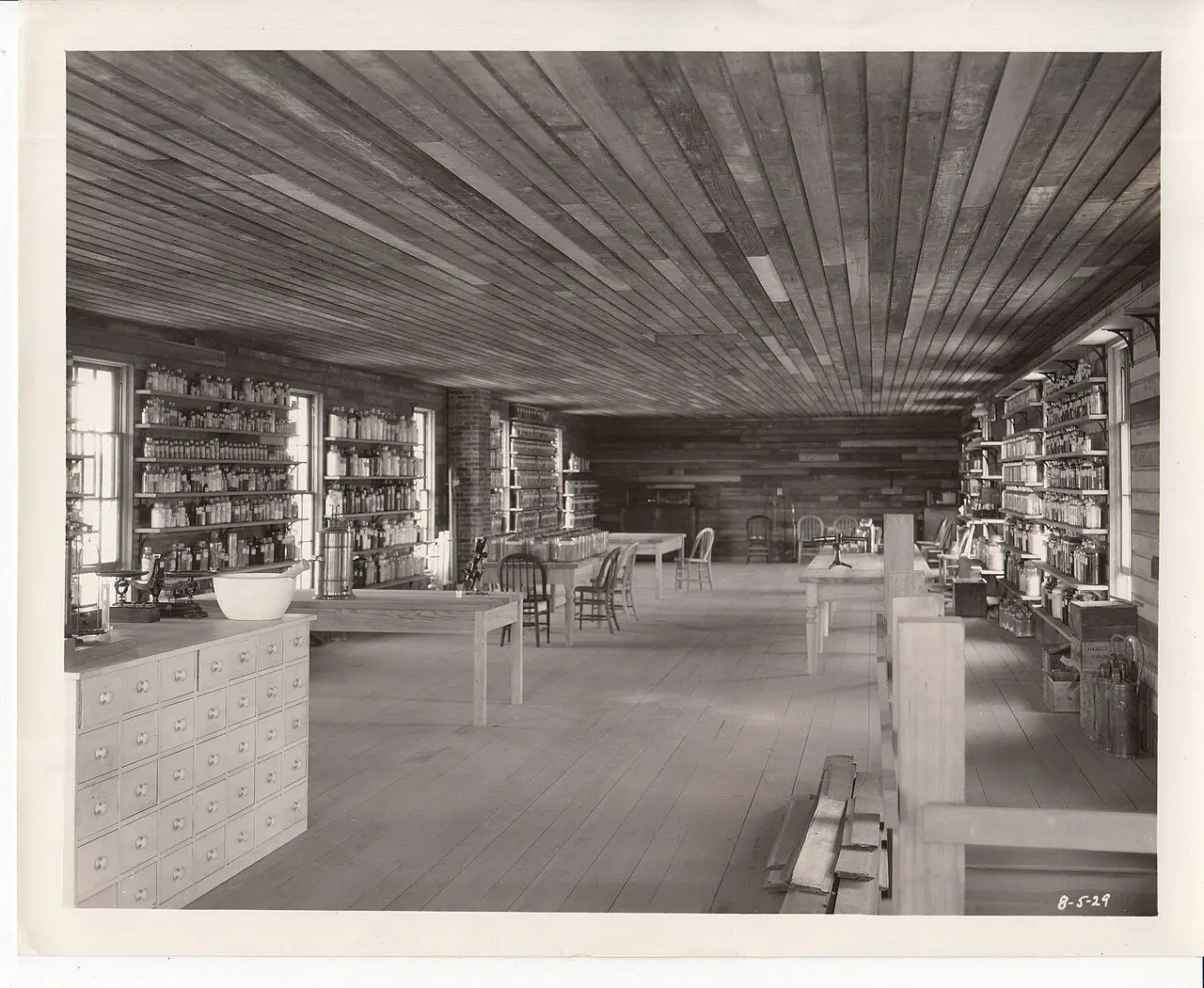
In the winter of 1880, Thomas Edison had a mystery on his hands, and Edison hated mysteries in his own machines. The carbon-filament lamps coming out of his Menlo Park laboratory in New Jersey worked, but they had an annoying habit: the insides of the glass bulbs blackened with use, and they blackened unevenly, darkest near the positive end of the filament. Filaments also broke for reasons nobody understood.
Edison decided to find out why. On February 13, 1880, he tried an experiment. He built several test bulbs with something extra sealed inside: a small wire, a metal plate, or a piece of foil, electrically separate from the glowing filament, so it could act as its own electrode. Then he hooked a galvanometer, an instrument for measuring electric current, between the filament and the extra plate, and watched.
What he saw was strange. When the plate was given a negative charge relative to the filament, nothing happened at all. But when the plate was made positive relative to the filament, a current flowed, from the hot filament, across the empty vacuum, to the plate. It flowed in one direction only, like water through a one-way valve.
Edison had just watched electrons boil off a heated metal and stream through empty space. He could not have known what he was seeing in those terms: the electron itself would not be identified for another 17 years. A British physicist named Frederick Guthrie had noticed something similar back in 1873, but Edison's experiment was the first careful laboratory observation of the phenomenon, and it would carry his name: the Edison effect, better known today as thermionic emission.
Here is the remarkable part. Edison did essentially nothing with it. He patented the arrangement in 1883 as an "electrical indicator" (U.S. Patent 307,031, granted in 1884) and moved on to the hundred other problems of building the electric age. To him it was a curiosity, a footnote to the light bulb.
The gold was left for others to mine. John Ambrose Fleming, a British physicist who had once consulted for Edison's own company in London, realized the one-way current could detect radio waves. In 1904 he built the thermionic valve, the two-element vacuum tube we now call the diode. Two years later, Lee de Forest slipped a control grid between the filament and the plate and created the triode, which could amplify a signal. Those glass tubes became the beating heart of radio, radar, long-distance telephony, and the first electronic computers. For half a century, nearly all of electronics ran on a principle Edison had stumbled over while trying to figure out why his light bulbs turned black.
There is a lesson in that blackened bulb. Edison went looking for a defect and found a doorway. The next time something in your own work misbehaves in an interesting way, take a closer look: you might be staring at the future.
Photo: National Park Service, public domain (via Wikimedia Commons).