The Giant Mirror in the Sky: Echo 1 Launches, August 12, 1960
On August 12, 1960, NASA launched a 100-foot balloon into orbit — a passive satellite that bounced phone calls and TV signals around the world.
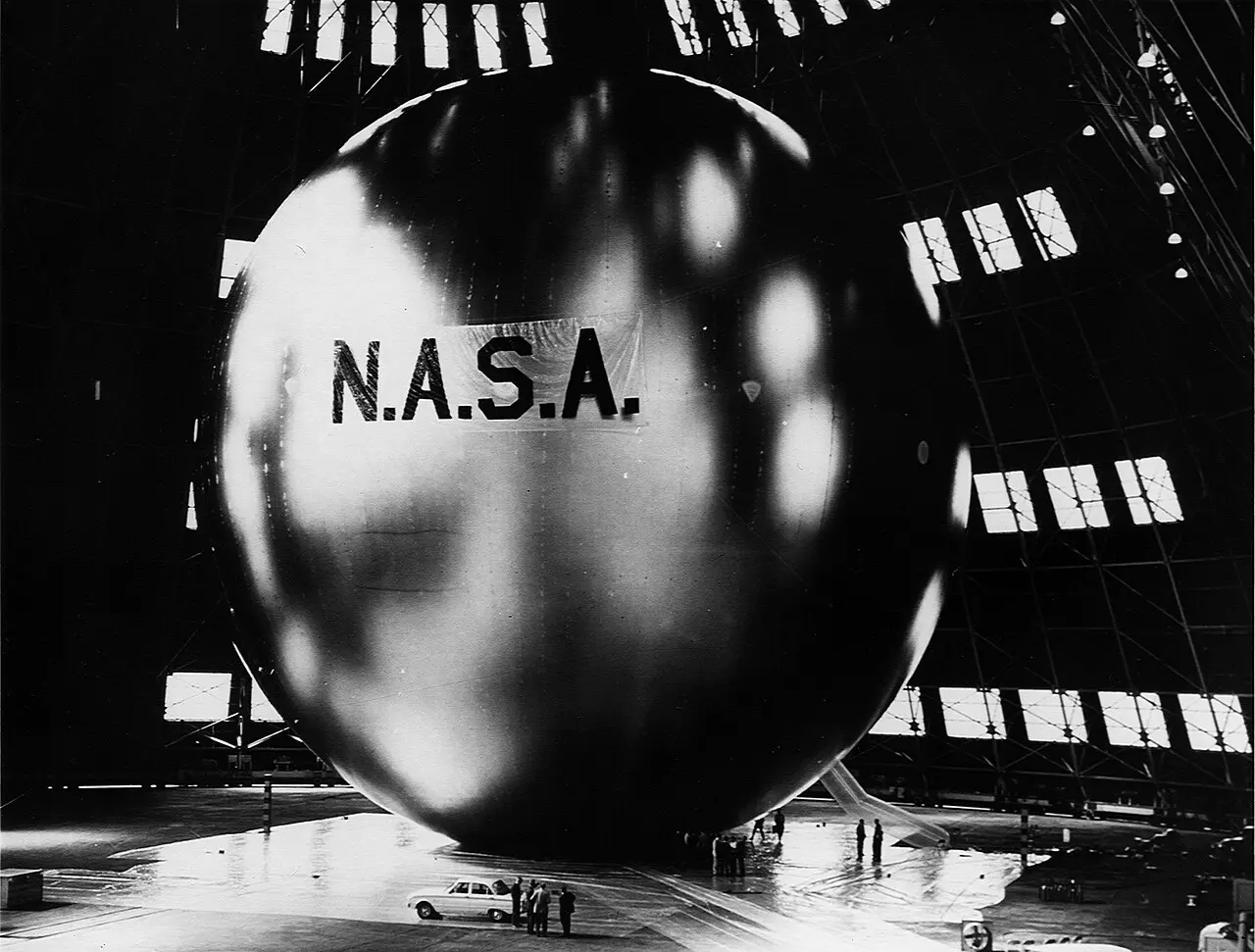
The first great communications satellite had no transmitter, no receiver, and no electronics worth mentioning. It was a balloon. On August 12, 1960, NASA launched Echo 1 — a 100-foot sphere of aluminized plastic — into orbit, and proved that you could bounce a phone call off the sky.
The idea belonged to an older dream. Engineers had already bounced radar off the Moon in 1946, but the Moon was a quarter-million miles away and the signal came back whisper-faint. A big reflector just a thousand miles up would be far easier to hear. Echo was designed as exactly that: a passive mirror in orbit, a surface for ground stations to aim at. It carried no radio of its own — its entire communications system was its shiny skin.
Getting it there was not easy. A 1959 inflation test exploded in the upper atmosphere, raining shiny fragments that startled the East Coast. In May 1960, the first real Echo was lost when its Thor-Delta rocket's steering jets failed and the payload fell into the Atlantic. The backup — technically Echo 1A — lifted off from Cape Canaveral on August 12 at 3:39 a.m. Greenwich time, folded into its rocket like a parachute. Once in orbit, residual gas puffed it into a perfect sphere about 100 feet across, weighing only about 150 pounds.
Hours later came the first message. A signal carrying President Dwight Eisenhower's voice was beamed from California to the balloon and caught in New Jersey, at Bell Labs in Holmdel: "The satellite balloon, which has reflected these words, may be used freely by any nation for similar experiments in its own interest." Telephone calls, radio, and television pictures soon followed, relayed between continents by nothing more than reflection.
Echo 1 was big enough to see with the naked eye — NASA published schedules so people could watch it glide overhead, and ham radio operators bounced their own signals off it for fun. Scientists used it to measure the density of the upper atmosphere and to test satellite triangulation for better maps. It stayed up for nearly eight years before burning up on May 25, 1968.
Active satellites that amplify and retransmit — Telstar, then the geosynchronous giants — soon made the passive balloon obsolete. But Echo proved the principle first: that space could be a switchboard. Every satellite phone call, every live broadcast from the far side of the world, descends from a Mylar balloon that was, essentially, a giant mirror with "N.A.S.A." painted on the side.
Photo: NASA, public domain (via Wikimedia Commons).