The Gates Opened: Auschwitz Is Liberated
On January 27, 1945, Soviet soldiers entered the Auschwitz camp complex in Poland and freed about 7,000 prisoners — as the world began to learn the full horror of the Holocaust.
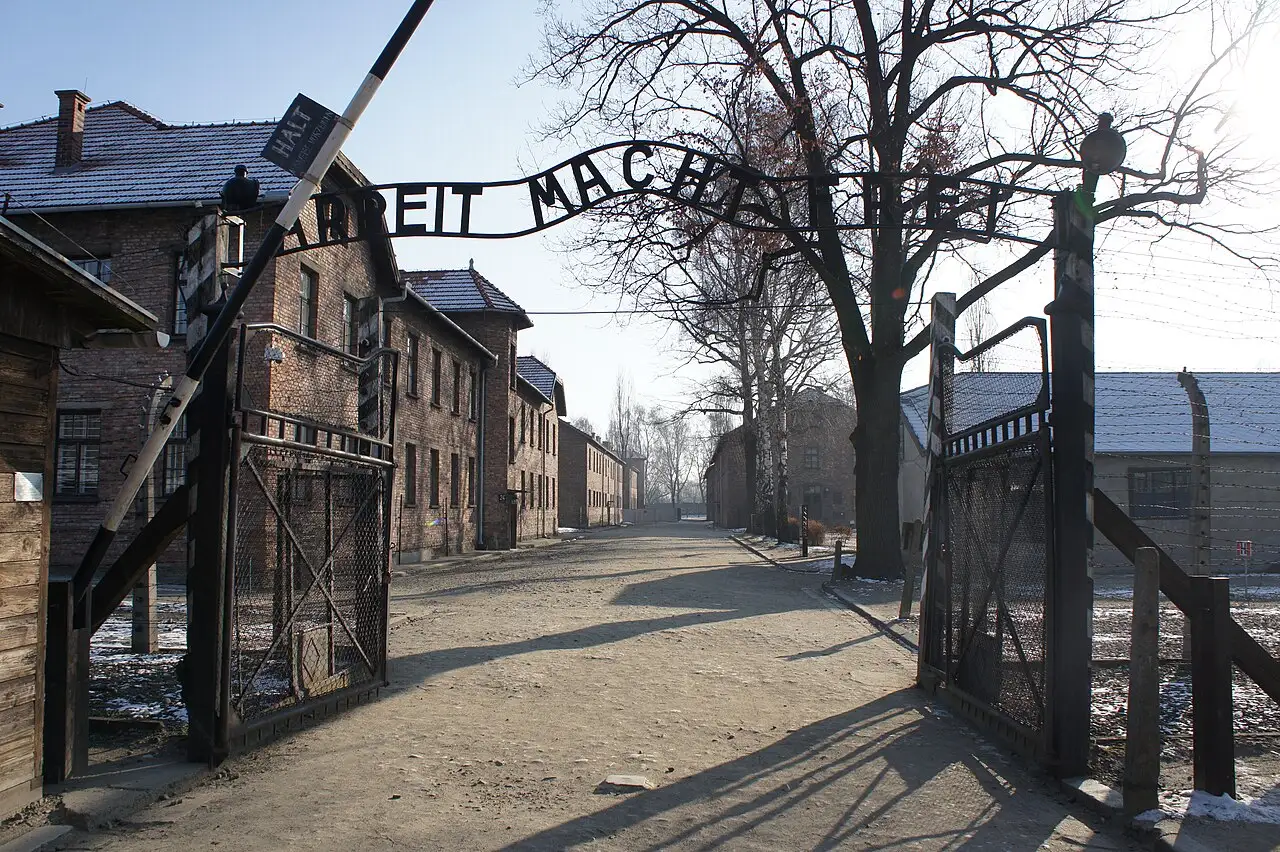
On the morning of January 27, 1945, soldiers of the Soviet Red Army, pushing west through Poland in the war's final months, reached a vast fenced compound near the town of Oświęcim. They had not come looking for it — but what they found inside would change how the world understood evil.
This was Auschwitz, the largest of the Nazi camps. Between 1940 and 1945, about 1.3 million people had been deported there — most of them Jews — and some 1.1 million were murdered. The soldiers found a camp the fleeing SS had tried to empty: days earlier, nearly 60,000 prisoners had been forced west on brutal death marches, and those who could not keep walking were shot along the way. The roughly 7,000 prisoners left behind were too weak, too sick, or too young to be marched away.
What the liberators saw stunned even battle-hardened troops. Lieutenant General Vasily Petrenko, commander of the Soviet 107th Infantry Division, later said he was shocked by what he found — prisoners reduced to living skeletons, and storehouses of evidence of murder on an industrial scale.
Among the survivors was 10-year-old Eva Mozes Kor, who with her twin sister had endured the camp's cruel medical experiments. Years later she recalled that snowy January day: "We were alive. We had survived. We had triumphed over unbelievable evil."
The liberation of Auschwitz did not end the war — camps across Europe would keep being freed until Germany's surrender in May — but it ripped away any remaining doubt about what the Nazis had done. In the years that followed, survivors like Primo Levi and Elie Wiesel bore witness in memoirs the world could not ignore. Poland established a museum on the site in 1947, and it was named a UNESCO World Heritage Site in 1979.
In 2005, the United Nations designated January 27 as International Holocaust Remembrance Day. Every year, the world pauses on the anniversary of the gates opening — to remember the 1.1 million murdered at Auschwitz, the six million Jews killed in the Holocaust, and all of its victims — and to affirm that such hatred must never be allowed to rise again.
The soldiers who walked through those gates in 1945 freed the living. Remembering them is how we honor the dead.
Photo: Bibi595, CC BY-SA 3.0 (via Wikimedia Commons). The main gate of Auschwitz I, with its infamous "Arbeit macht frei" inscription, photographed in modern times.