The Fortress Surrenders: Port Arthur Falls
On January 2, 1905, after a brutal five-month siege, Russia's mighty fortress of Port Arthur gave up to Japan — a defeat that stunned the world and announced Japan as a great power.
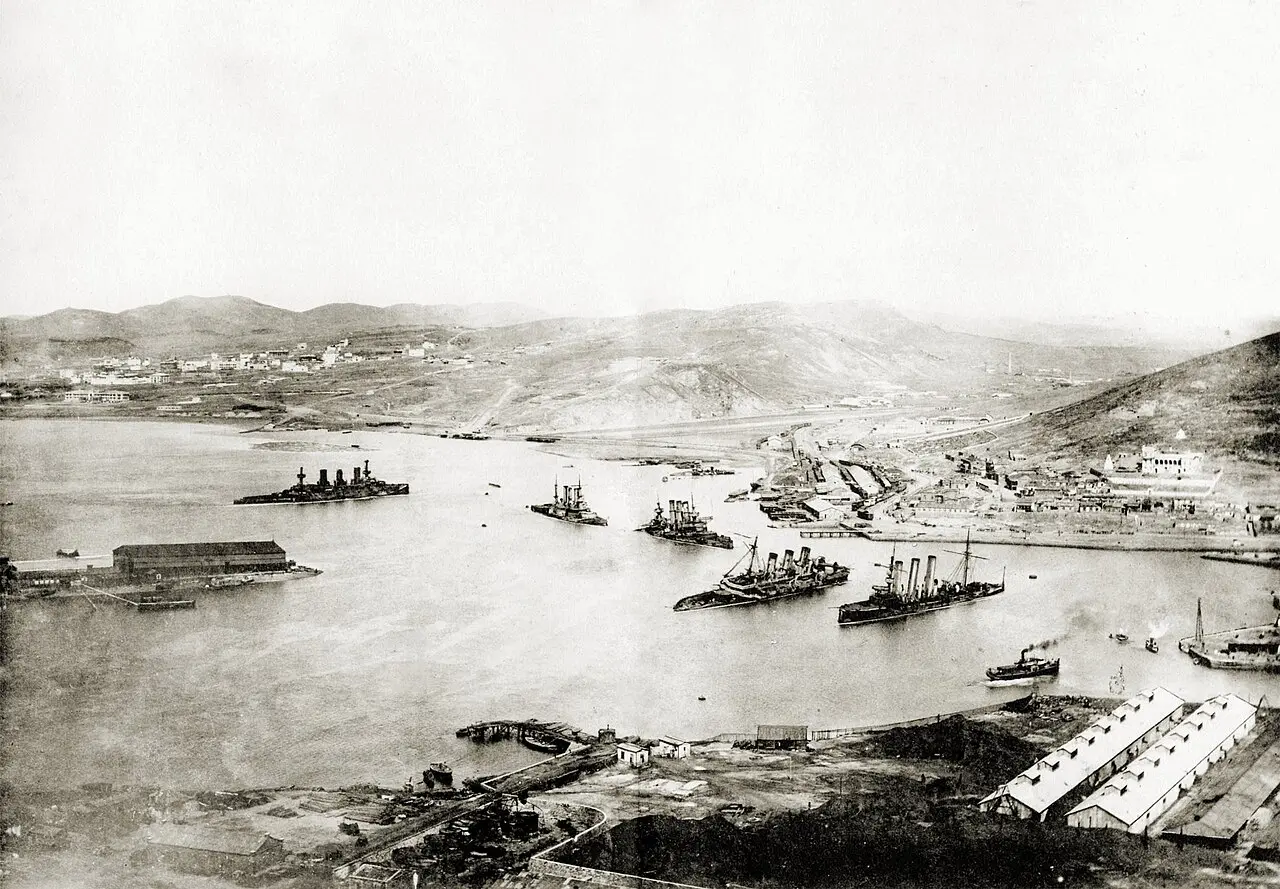
It was supposed to be unbreakable. The Russian naval fortress at Port Arthur, perched on the tip of the Liaodong Peninsula in China, was one of the most heavily fortified places on earth — ringed by forts, trenches, and artillery, and guarded by the pride of the Russian Pacific Fleet. Japan had spent five months and a staggering river of blood trying to crack it.
The siege had become a slaughterhouse for both sides. Japanese troops under General Nogi Maresuke hurled themselves at the forts in frontal assaults that won ground a few bloody yards at a time, while Japanese engineers tunneled mines beneath the fortifications and blew them skyward — Fort Chikuan went up on December 18, 1904, after the death of the brilliant Russian defense organizer General Roman Kondratenko three days earlier. The Russians, commanded by Lieutenant General Anatoly Stessel, held on through shelling, starvation, and scurvy even as the Pacific Fleet they were guarding was pounded into wrecks in the harbor. By New Year's Day 1905, the last forts had fallen.
Stessel had had enough. On January 1 he sent a message to the surprised Nogi proposing negotiations to end "useless loss of life" — and he did it without consulting his senior officers, the Tsar, or the high command, all of whom wanted to fight on. On January 2, Russian and Japanese delegates met to arrange the surrender, and the capitulation was formally signed on January 5 at Shuishiying. Some 24,000 Russian soldiers went into captivity; the Japanese had lost tens of thousands of men taking the fortress.
The surrender detonated like a shell across the world. A European empire had been beaten on land and sea by an Asian nation — the first such defeat in the modern era. In Russia, the humiliation helped ignite the 1905 revolution that nearly toppled the Tsar. Stessel himself was court-martialed on his return to St. Petersburg, sentenced to death for incompetent defense, and later pardoned — the Japanese had been astonished to find that large stores of food and ammunition remained in the fortress he had given up.
For Japan, the fall of Port Arthur erased the humiliation of the 1890s and announced a new player in the game of empires. It was the moment the twentieth century's balance of power visibly began to shift east.
Photo: public domain, photographer unknown (via Wikimedia Commons). This contemporary photograph shows Port Arthur's harbor from Gold Hill after the capitulation, with wrecked Russian warships — including the Peresvet, Poltava, Retvizan, and Pobeda — visible in the bay.