The Flag That Was Still There
On September 14, 1814, Francis Scott Key watched a huge American flag rise over Fort McHenry at dawn and began writing the poem that became the national anthem.
For 25 hours, the sky over Baltimore burned. And one man aboard a British warship could do nothing but watch — and wait for morning.
It was September 1814, and America was losing the War of 1812 badly. The British had just marched into Washington and set the Capitol and the White House ablaze. Now their fleet had turned to Baltimore, and Fort McHenry — the star-shaped fort guarding the harbor — was all that stood in the way.
Francis Scott Key, a Washington-area lawyer, had sailed out under a flag of truce with the American agent John Skinner to negotiate the release of Dr. William Beanes, a physician the British were holding prisoner. The British agreed to free Beanes — but then refused to let any of the Americans leave. They had overheard too much about the attack plans, so Key and his companions were detained, first aboard HMS Surprise and then back on their own vessel, forced to watch what came next.
What came next was the bombardment of Fort McHenry, through the night of September 13 and into the 14th. Through the rain and the dark, Key could see the fort's smaller storm flag still flying. Then the guns fell silent — and the flag was gone. Had the fort fallen?
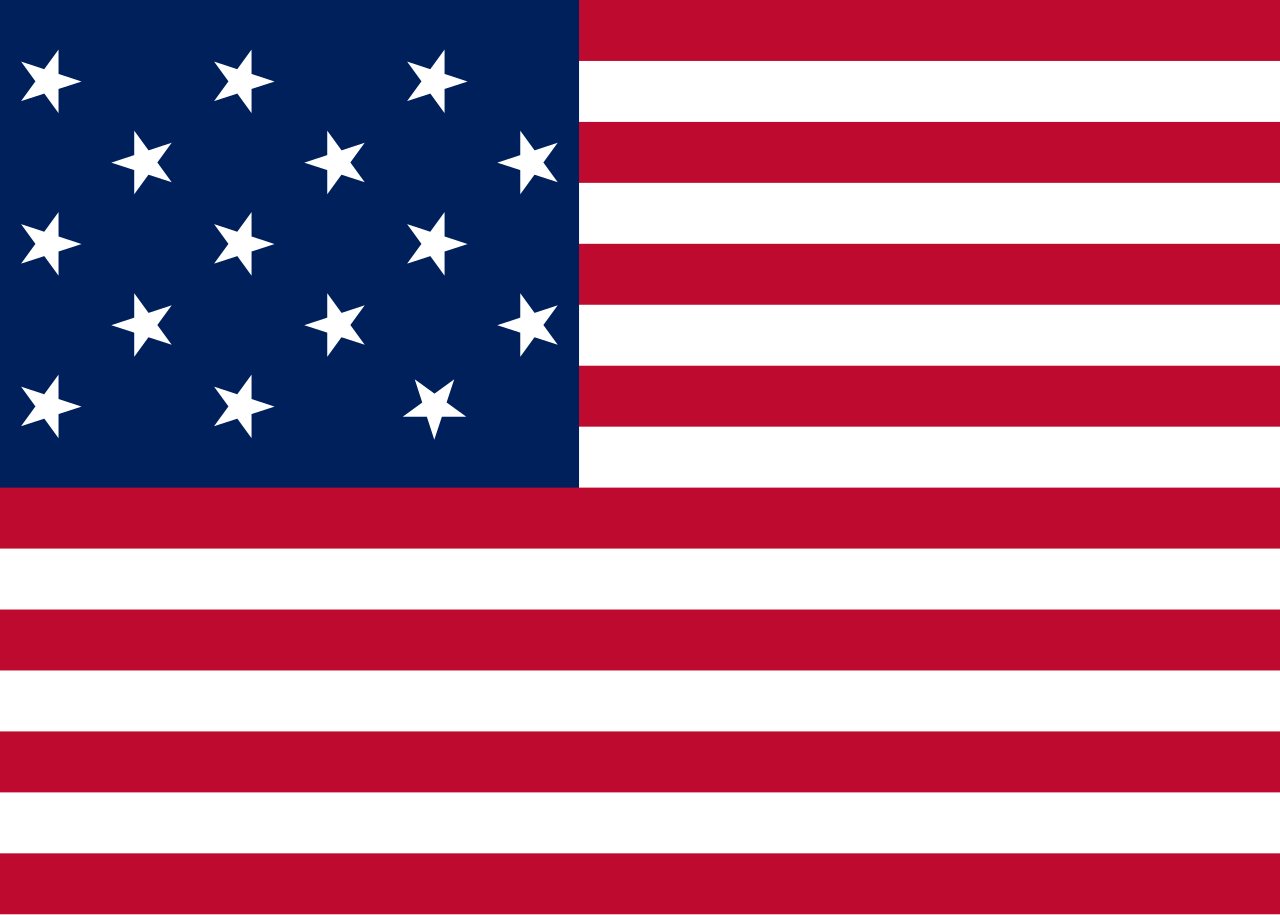
At dawn, his question was answered. Up the flagpole rose a new banner: an enormous garrison flag, 30 feet high and 42 feet long, with 15 stars and 15 stripes — sewn by Baltimore flagmaker Mary Young Pickersgill, assisted by her daughter and by Grace Wisher, a 13-year-old African American girl. It caught the morning light above a fort that had held. The British were withdrawing.
Key was overcome. On the way back to shore that morning, he began scribbling verses on the back of a letter he had in his pocket — "Defence of Fort M'Henry." He fitted the words to the tune of a popular song, "To Anacreon in Heaven." Within days the lyrics were printed in a Baltimore newspaper, and the song — soon called "The Star-Spangled Banner" — swept the young nation.
It took more than a century to become official. The Army and Navy adopted it first, President Wilson ordered it played at official occasions in 1916, and Congress finally named it the national anthem in 1931. The flag itself survived too — carried home by the fort's commander, Major George Armistead, kept by his family, and eventually given to the Smithsonian, where it rests today in the National Museum of American History.
Why does it matter? National anthems are usually commissioned — written by committee, approved by decree. Ours was scribbled by a relieved lawyer on the back of a letter, after the longest night of his life. Every time it is sung, it asks the same question Key asked at dawn in 1814, still waiting for its answer: "O say, does that star-spangled banner yet wave?"
Photo: Carl Lindberg, public domain (via Wikimedia Commons).