The Empty Prize
On September 14, 1812, Napoleon entered Moscow expecting triumph — and found a deserted city already going up in flames.
He had marched his army across a continent to reach it. When Napoleon Bonaparte rode into Moscow on September 14, 1812, there was no one left to surrender.
A week earlier, at Borodino, some 70 miles west of the city, the French and Russian armies had fought one of the bloodiest single days of the entire Napoleonic Wars. Napoleon claimed the field, but the Russian commander, Mikhail Kutuzov, slipped away with his army intact — and made a fateful decision. Rather than sacrifice his remaining troops defending the old capital, he would abandon Moscow itself.
So when the Grande Armée approached on the 14th, the great city stood empty. Most of its residents had fled east, taking what they could carry. The French soldiers who had dreamed of Moscow's palaces and plenty marched into silent streets. Napoleon set up his headquarters in the Kremlin and waited for what conquerors always wait for: a delegation from the defeated, begging for terms.
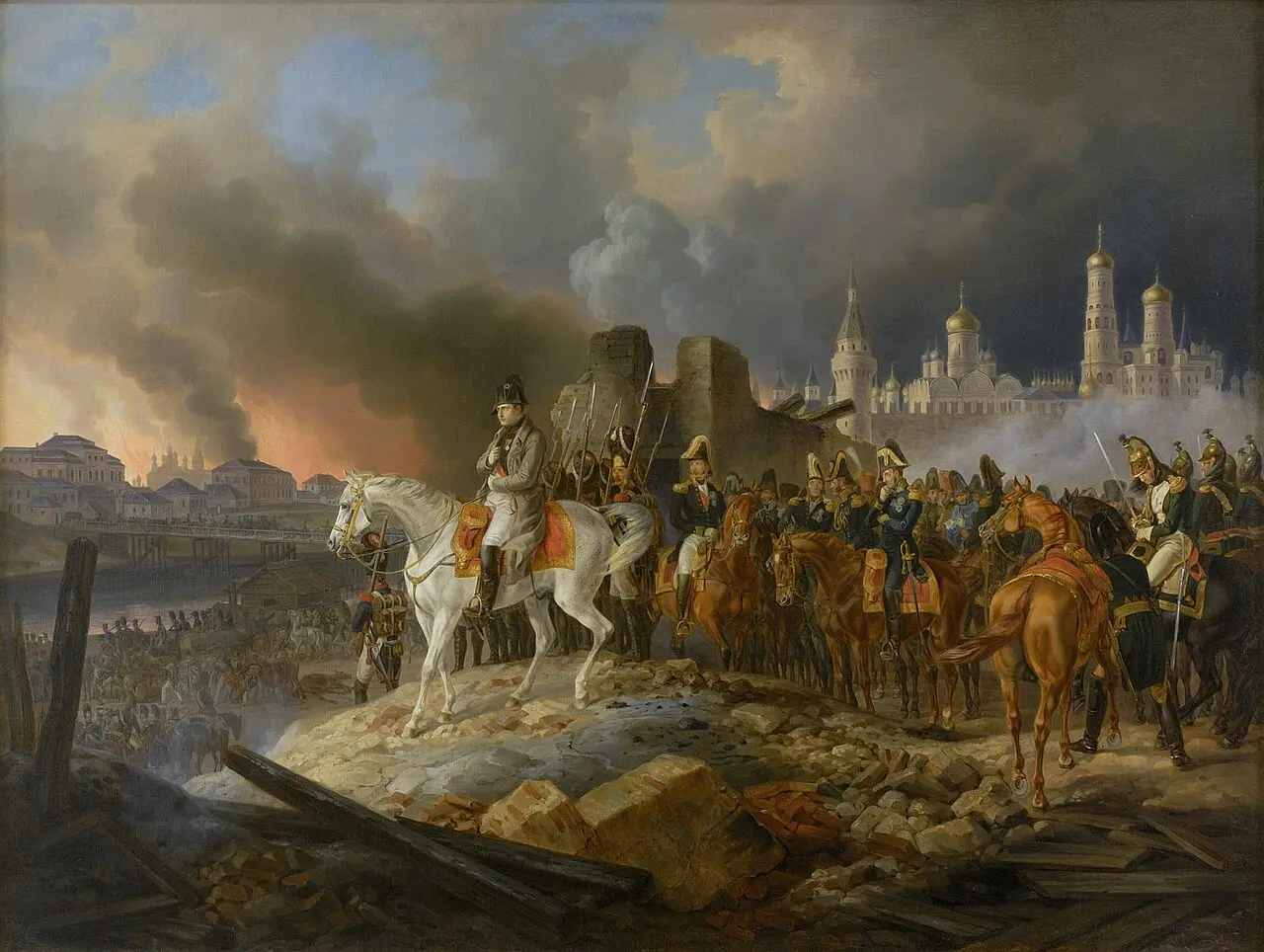
It never came. That night, fires began breaking out across the wooden city — set, by most accounts, on the orders of Moscow's governor, Fyodor Rostopchin, who preferred a ruined Moscow to a French one. Fanned by wind, the flames merged into a firestorm that raged for days and consumed roughly three-quarters of the city. Napoleon watched the glow from the Kremlin walls — the scene the German war artist Albrecht Adam would paint decades later, in 1841, showing the emperor on his white horse against the burning capital.
Still Napoleon waited. For nearly a month he sat in the ashes of Moscow, sending peace proposals to Tsar Alexander I. The Tsar did not answer a single one. There would be no surrender, no treaty, no supplies for the winter — only a burned city in a hostile land, thousands of miles from home.
On October 19, Napoleon finally gave the order to leave. What followed is one of history's great catastrophes: the retreat from Moscow through snow, starvation, and relentless Russian attacks. Of the several hundred thousand soldiers who had marched into Russia that summer, only a small fraction ever made it home.
Why does it matter? Moscow was the high-water mark of Napoleon's empire — the farthest his ambition ever carried him, and the place where it broke. He had beaten every army sent against him; he could not beat distance, winter, and an enemy willing to burn its own holy city rather than yield it. The empty prize of September 14, 1812, was the beginning of the end for the man who had seemed unstoppable.
Photo: Albrecht Adam, public domain (via Wikimedia Commons).