The Day the King Left the Building
On August 16, 1977, Elvis Presley was found dead at Graceland at age 42, ending the life of rock and roll's first global superstar.
He was supposed to fly to Maine that night.
On the morning of August 16, 1977, Elvis Presley was in good spirits at Graceland, his Memphis mansion. He had a tour to continue — a flight to Portland, Maine, that evening. But around 2:30 that afternoon, his girlfriend Ginger Alden found him unresponsive on the floor of his upstairs bathroom. He was rushed to Baptist Memorial Hospital, where doctors pronounced him dead at 3:30 p.m. He was 42. The coroner attributed his death to cardiac arrhythmia — an irregular heartbeat — though the role of prescription drugs would be fiercely debated for years.
The shock was total, and the grief was global. Within hours, legions of mourning fans were streaming toward Graceland; in the days that followed, the mansion became a shrine. The King of Rock and Roll was gone.
He had come from nothing. Born in a two-room house in Tupelo, Mississippi, on January 8, 1935 — his twin brother Jesse died at birth — Elvis grew up dirt-poor and drove a truck after high school. At 19, he walked into a Memphis recording studio and paid four dollars to record a couple of songs as a present for his mother. The studio's owner, Sam Phillips, heard something in the rough, soulful voice and invited him back; when Elvis cut the rhythm-and-blues number "That's All Right" with a country lilt, Phillips released it on Sun Records, and the South started listening.
What followed was the fastest ascent in pop history. In 1955, RCA bought his contract for a record $40,000. "Heartbreak Hotel" made him a national sensation in early 1956; "Hound Dog" and "Don't Be Cruel" followed. Teenagers went wild over his voice, his looks, his swiveling hips — parents were horrified, and by his third appearance on The Ed Sullivan Show, the cameras filmed him from the waist up. He fused Black rhythm and blues with white country music into something the world had never heard, and in doing so became the first truly global rock star.
The later years were harder — the fame, the isolation, the punishing tour schedule — but the music never stopped mattering. Elvis didn't just popularize rock and roll; he invented the modern idea of the pop superstar: the voice, the look, the scream of the crowd.
On August 16, 1977, the building finally emptied. But the King never really left.
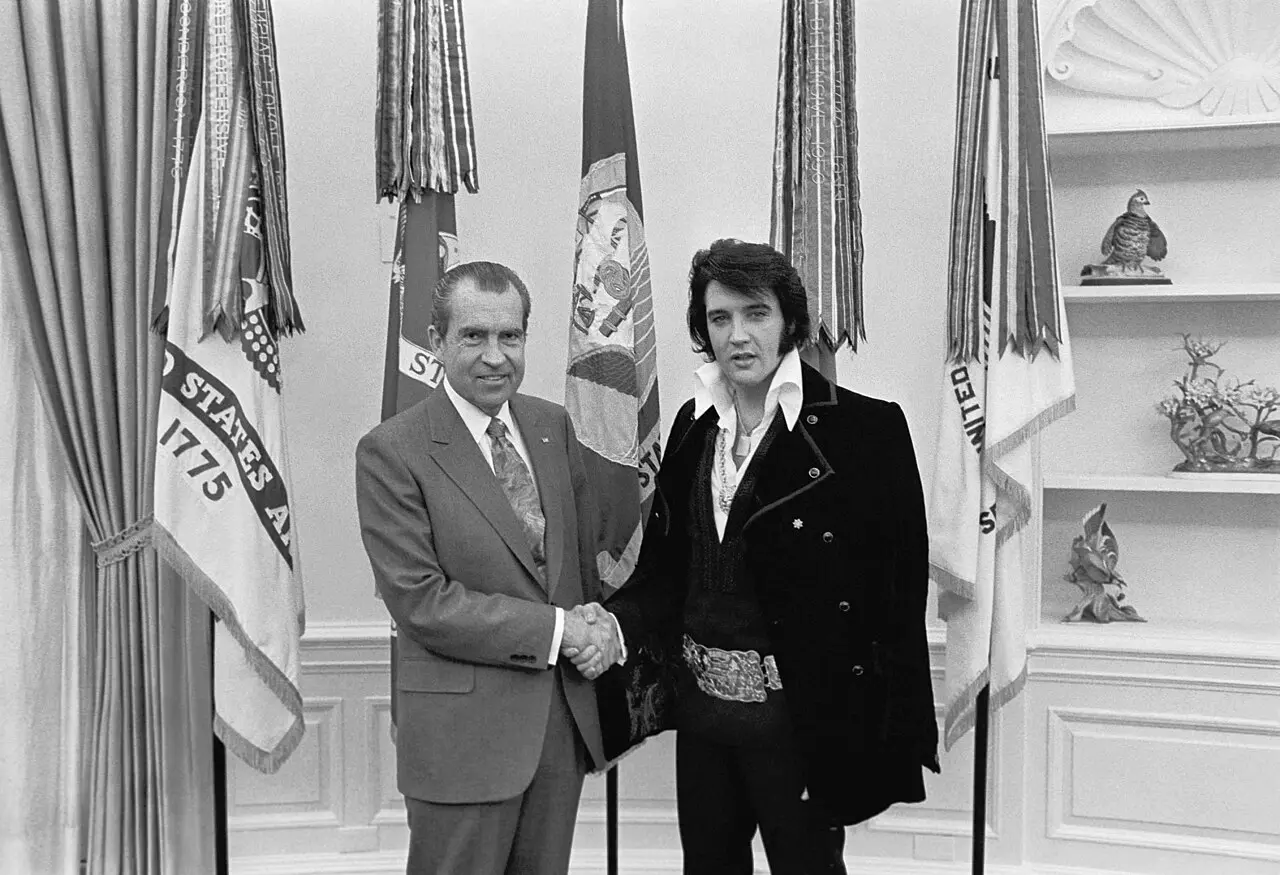
Photo: Ollie Atkins, White House Photo Office, public domain (via Wikimedia Commons).