Peterloo: When Sabres Answered the Call for Votes
On August 16, 1819, cavalry charged a peaceful crowd of 60,000 demanding parliamentary reform in Manchester, killing about 18 people at Peterloo.
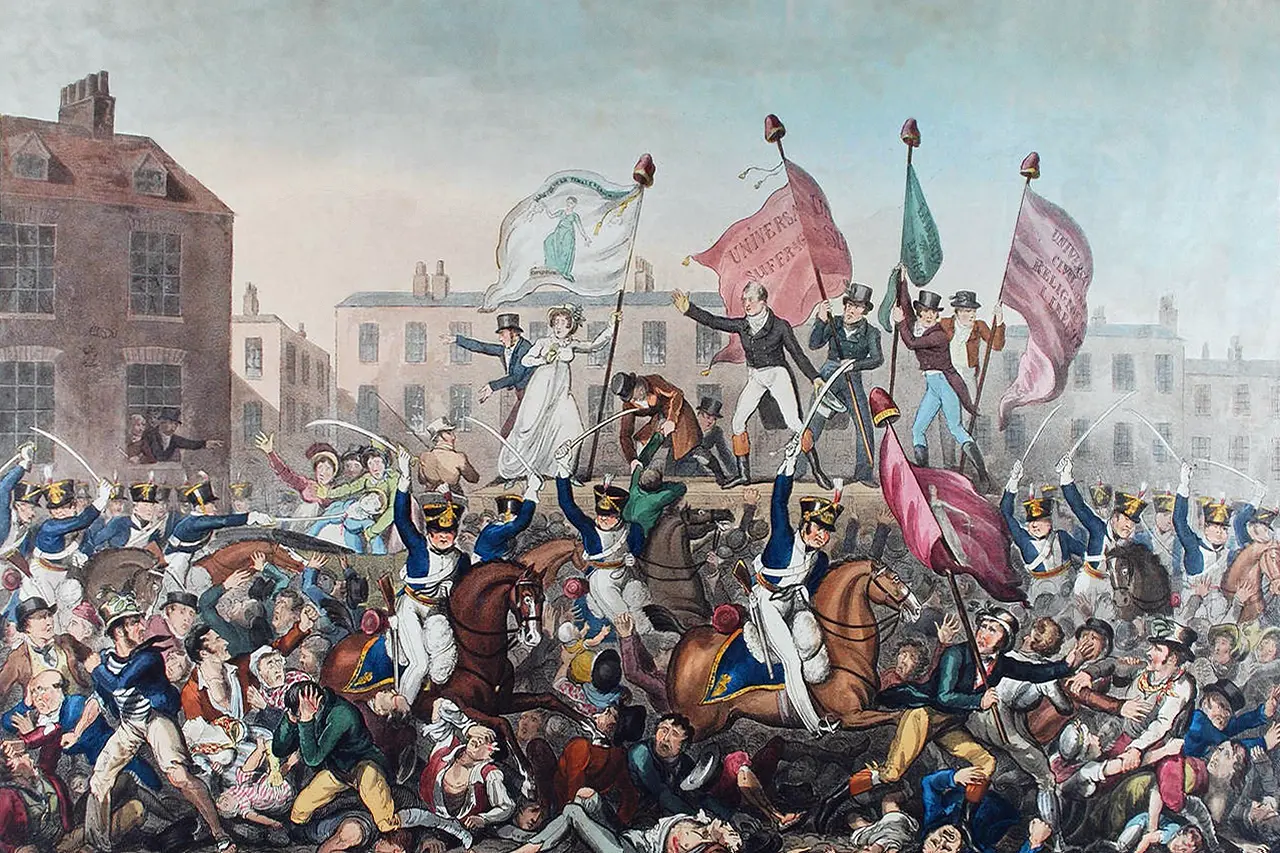
They came in their Sunday best, with banners and babies.
On the morning of Monday, August 16, 1819, around 60,000 people streamed into St Peter's Field in Manchester — mill workers, weavers, whole families, many in white dresses — for what was meant to be a peaceful rally. Their demand was simple: the right to vote. In industrial England, barely one in ten adult men could cast a ballot, and Manchester, the great manufacturing city of the age, had no representative in Parliament at all. Bread was ruinously expensive under the Corn Laws, work was scarce in the slump that followed the Napoleonic Wars, and a petition for reform bearing three-quarters of a million signatures had been flatly rejected two years earlier.
The orator of the day was Henry Hunt, the most famous radical speaker in England. Shortly after he began, the local magistrates ordered the Manchester and Salford Yeomanry — volunteer cavalry — to push through the dense crowd and arrest him on the platform. The horsemen charged in, knocking down a woman and killing a child. Then the magistrates called in the regular army: the 15th Hussars, sabres drawn.
What followed was over in minutes. The cavalry slashed and trampled through a crowd that had nowhere to run. Contemporary estimates of the dead ranged from about a dozen to nearly twenty; some 400 to 700 people were injured, many by sabre cuts. Hunt was arrested.
The radical Manchester Observer dubbed it "Peterloo" — a bitter joke at the expense of Waterloo, fought just four years earlier. The government's response was not an inquiry but endorsement: the authorities congratulated the magistrates, and by year's end Parliament had answered with the Six Acts, laws suppressing radical meetings and publications. Civil liberties sank lower than they had been before the massacre.
But Peterloo could not be unseen. The image of soldiers cutting down unarmed families demanding the vote seared itself into the national conscience and gave the reform movement a moral force it had never possessed. And it planted a seed: in 1821, Manchester businessman John Edward Taylor — who had witnessed the charge — founded the Manchester Guardian, the newspaper that would become The Guardian.
The right to vote that millions now take for granted was paid for in blood — on an August afternoon in 1819, by people whose only crime was showing up.
Photo: print by Richard Carlile, 1819, public domain (via Wikimedia Commons).