The Day America Handed Back the Panama Canal
On December 31, 1999, the United States transferred the Panama Canal to Panama, ending nearly a century of American control of the great waterway.
At noon on December 31, 1999 — Panama time — the flags changed. After eighty-five years of American operation, the Panama Canal belonged to Panama. The most famous shortcut on Earth had a new owner.
The canal's story began in French failure. In the 1880s, Ferdinand de Lesseps's company tried to cut through the isthmus and went bankrupt, with more than 22,000 workers dead of tropical disease. The United States bought the ruins in 1902; after backing Panama's independence from Colombia in 1903, America secured perpetual control of a ten-mile-wide Canal Zone under the Hay–Bunau-Varilla Treaty — $10 million down, plus $250,000 a year in rent.
When the SS Ancon sailed through on August 15, 1914, the canal remade world trade: a ship from New York to San Francisco saved some 7,800 miles by cutting through Panama instead of rounding South America. But the Canal Zone festered as a grievance — a slice of America cut through the middle of a sovereign country.
In September 1977, President Jimmy Carter and Panama's leader Omar Torrijos signed two treaties promising full Panamanian control by the end of 1999. The Senate fight was ferocious — "we bought it, we paid for it, we should keep it" — but the treaties passed, and a twenty-year handover began: nearly 370,000 acres and some 7,000 buildings, from military bases to schools, transferred piece by piece.
On the final day of the millennium, the Panama Canal Authority took the helm — and Jimmy Carter, the president who had staked his reputation on the treaties, was there to watch. The canal stayed neutral and open to vessels of all nations, as the treaties required — and Panama has run it profitably ever since, even completing a major expansion in 2016.
Panama has made the most of its inheritance. The canal handles roughly 14,000 transits a year, and in 2016 Panama completed a multi-billion-dollar expansion — new, wider locks that doubled its capacity for the giant container ships and LNG tankers of the modern era. Not everyone had been confident: some American critics warned Panama couldn't manage the engineering. A quarter-century on, the canal's safety and efficiency records have answered them.
The handover closed the book on an era of American empire-building and opened a quieter one: proof that great powers can, occasionally, give things back — and that the things work just fine.
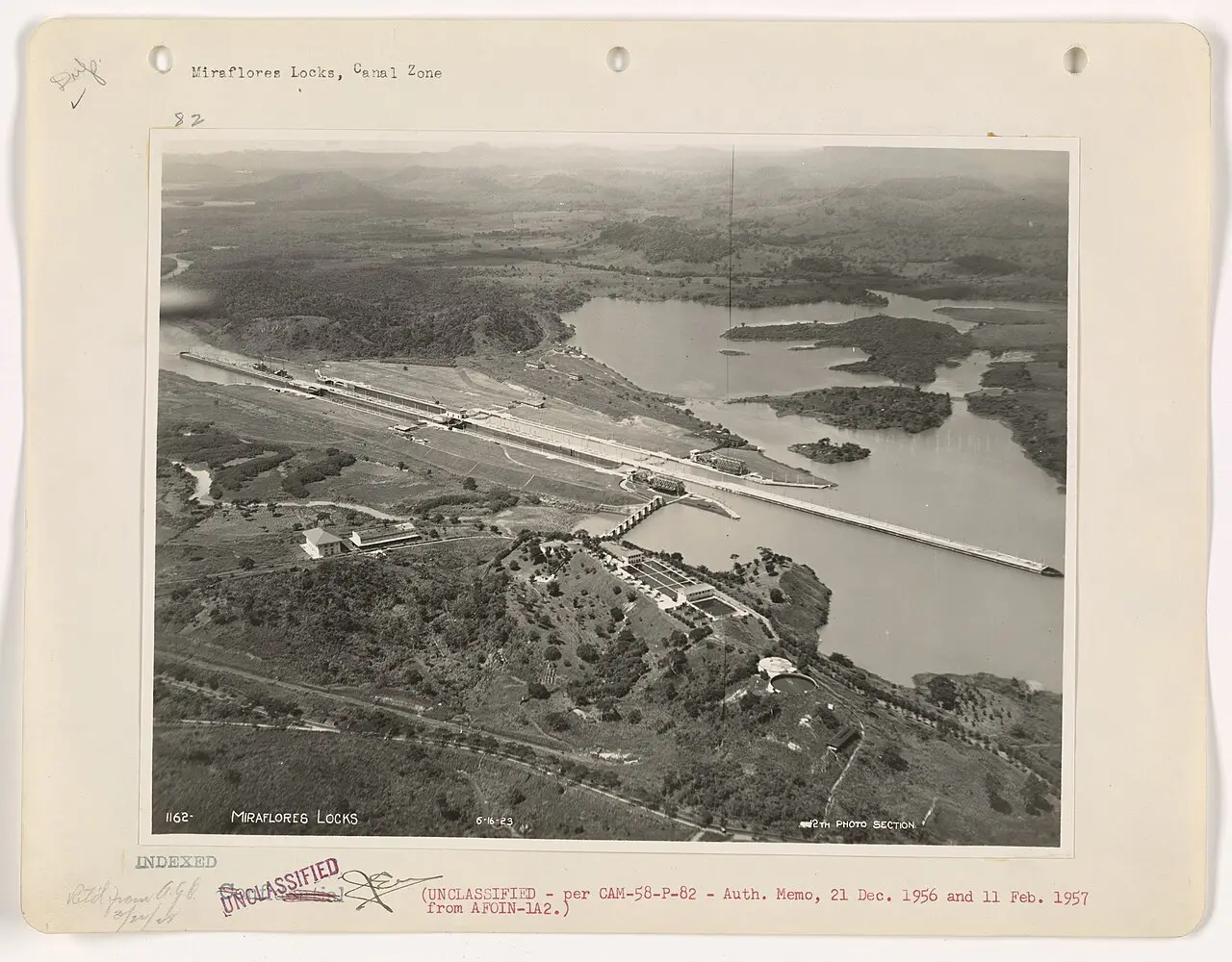
Photo: Miraflores Locks from the air, U.S. National Archives, public domain (via Wikimedia Commons).