The 9,000-Year Lease Behind Every Pint of Guinness
On December 31, 1759, Arthur Guinness signed a 9,000-year lease on a derelict Dublin brewery at £45 a year — the boldest bet in beer history.
On the last day of 1759, a 34-year-old Irishman signed the most optimistic contract in business history: a 9,000-year lease. Arthur Guinness was betting that people would still want his beer in the year 10759.
Guinness had been brewing ale in Leixlip, County Kildare, since 1755. But Dublin was where the money was — and a financial crisis had left city property cheap. His eye fell on a derelict brewery at St. James's Gate: four acres holding a brewhouse, a gristmill, two malt houses, and stables, abandoned nine years earlier. It sat beside the route of the planned Grand Canal, with water, barley farms, and the Dublin market all within reach.
On December 31, 1759, he leased the site from the Rainsford family: £100 down, £45 a year, for 9,000 years. (The lease was eventually bought out as the brewery sprawled far beyond its original four acres — the company outgrew even a nine-millennium contract.)
He started with ale, but in 1778 he began brewing porter — the dark, hearty beer London's dockworkers loved — and never looked back. Ten years after signing the lease, on May 19, 1769, he shipped his first export: six and a half barrels to England. By the 1880s, Guinness was a global brand, its barrels reaching from the Caribbean to Australia. The brewery even hired a statistician, William Sealy Gosset, whose work on quality control there gave the world Student's t-test — the most famous statistical tool in science, born in a brewery.
From that £45-a-year gamble grew the largest brewery in the world, a symbol of Ireland itself, and a pint poured today in more than 150 countries. The St. James's Gate site, all sixty-plus acres of it, still brews every drop of Guinness sold in Ireland and Britain.
The numbers tell the rest. In 1886, Edward Guinness — Arthur's grandson — floated the company on the London Stock Exchange for £6 million, with shares twenty times oversubscribed. The brewery's harp emblem, in use since 1862, became one of the most recognized logos on Earth — Ireland's own national harp faces the opposite way, so the two are never confused.
Every empire starts with a signature. Guinness's was on a lease longer than recorded history — a reminder that the boldest business move is sometimes just showing up on New Year's Eve with a pen.
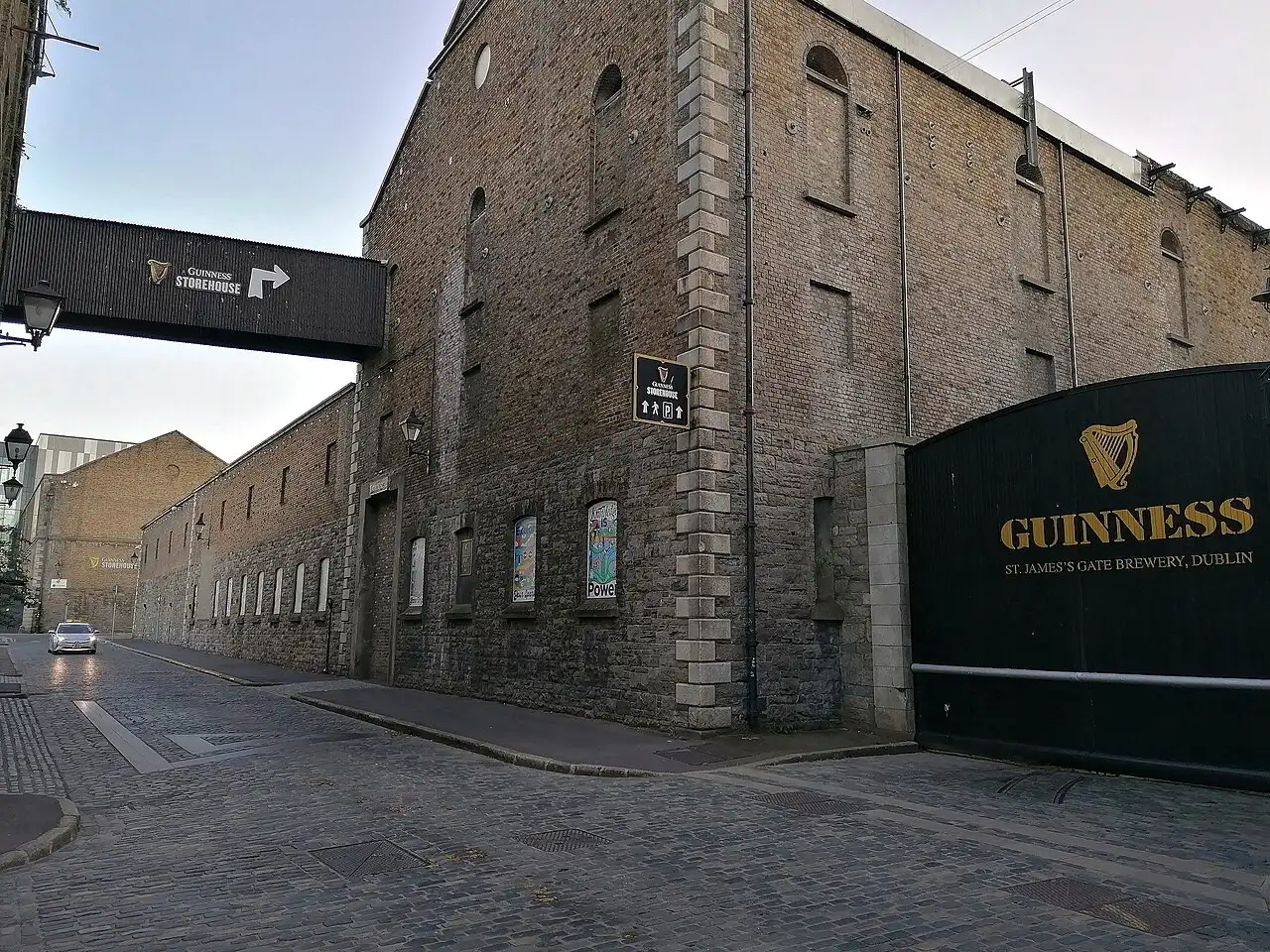
Photo: St. James's Gate, Dublin, by Karlunun, CC0 (via Wikimedia Commons).