The Day America Got Its Fiftieth Star
On August 21, 1959, President Eisenhower signed the proclamation admitting Hawaii as the 50th state — capping a statehood fight that had lasted more than forty years.
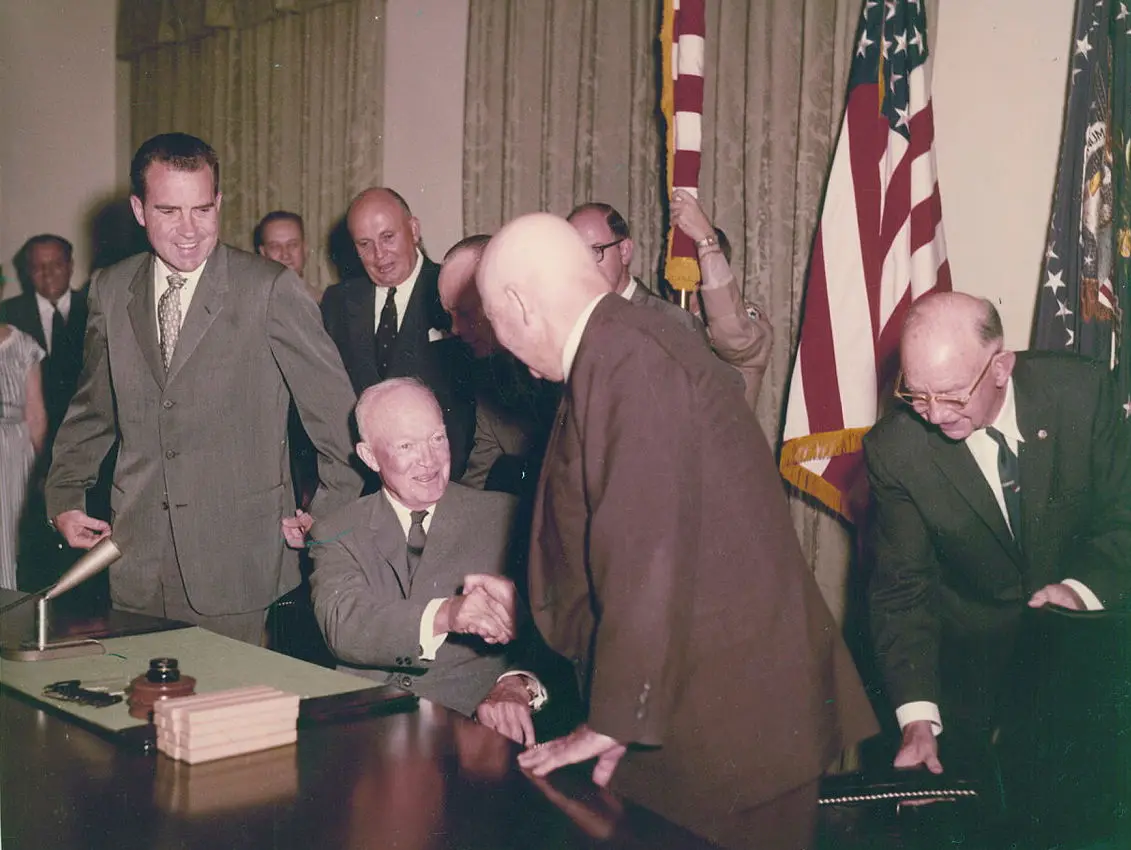
On the morning of August 21, 1959, church bells rang across Honolulu. Two thousand miles of Pacific separated Hawaii from the American mainland, but on that day the distance closed for good: President Dwight D. Eisenhower signed Proclamation 3309, formally admitting Hawaii as the fiftieth state of the Union.
The road to that signature had been long. Hawaii had been an organized U.S. territory since the Organic Act of 1900, and the first statehood bill was introduced in Congress in 1919 by Hawaii's territorial delegate, Prince Jonah Kūhiō Kalanianaʻole. For forty years, bill after bill died in committee — tangled in mainland politics, racial prejudice, and the islands' powerful sugar interests. Alaska's admission as the 49th state in January 1959 finally broke the logjam; Hawaii's turn came next.
That March, the Senate passed the Hawaii Admission Act — Senate bill S. 50 — 76 to 15 and the House 323 to 89, and Eisenhower — who had backed statehood for years — signed it into law on March 18. But one step remained: the people of Hawaii had to accept, and to ratify the state constitution their delegates had drafted in Honolulu back in 1950.
On June 27, 1959, they voted on a simple question: “Shall Hawaii immediately be admitted into the Union as a state?” The answer was overwhelming — 132,773 yes to 7,971 no, more than 94 percent in favor. Only one precinct in the entire territory, on the island of Niʻihau, voted against.
So on August 21, Eisenhower made it official, and in Honolulu the bells rang out in celebration. Three days later, the new state's first congressional delegation took the oath of office in Washington: Senators Hiram Fong and Oren Long, and in the House, Daniel K. Inouye — a 34-year-old Army veteran who had lost his right arm fighting in Italy with the famed 442nd Regimental Combat Team.
Statehood changed the islands fast. Within days, Pan American launched jet service to Honolulu, and the “jet rush” soon doubled passenger traffic, transforming Hawaii's economy from sugar and pineapple toward tourism. Strategically, the fiftieth state anchored America's presence in the Pacific at the height of the Cold War. Culturally, it brought into the Union a state unlike any other — a place where Native Hawaiian heritage blended with Asian, European, and American influences into something entirely new.
Hawaii still marks the occasion every year. Statehood Day — also called Admission Day — is a state holiday on the third Friday in August, the anniversary of the day the fiftieth star joined the flag.
Photo: White House Historical Association, public domain (via Wikimedia Commons).