Rhode Island's 1652 Law That Tried to End Slavery
On May 18, 1652, Rhode Island passed the first anti-slavery statute in English North America, capping servitude at ten years — a landmark law that was never enforced.
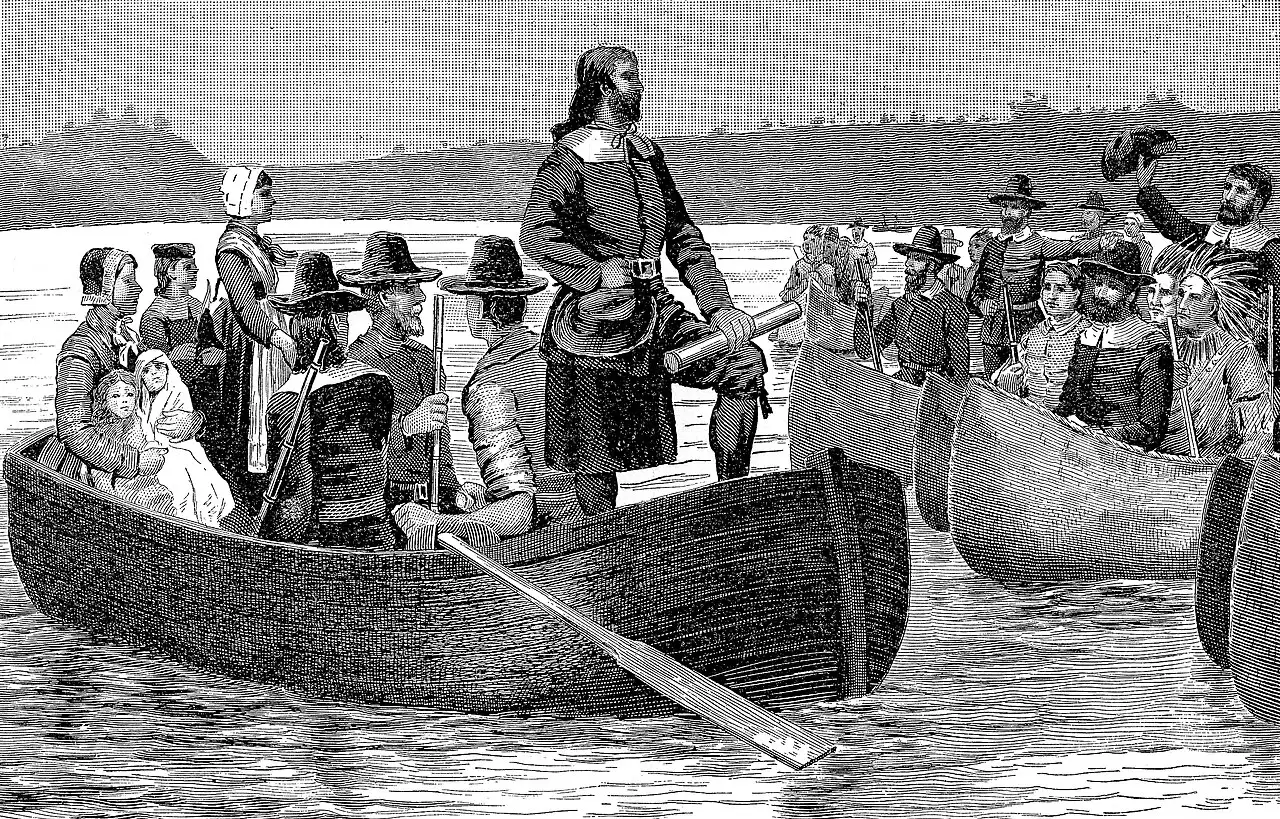
More than two centuries before the Emancipation Proclamation, a tiny colonial government did something no English colony had ever done: it put a limit on slavery. On May 18, 1652, Rhode Island's General Court of Commissioners, meeting at Warwick, passed the first anti-slavery statute in English North America.
The law was modest, and that modesty is the point. It did not free a single enslaved person outright. What it did was declare that no one — "black mankind" or white — could be held in lifetime bondage: after ten years of servitude, a servant had to be set free. Children taken into service under age fourteen were to be freed at twenty-four. The statute applied to the towns of Providence and Warwick, the two communities then joined in the colony's government. It treated African and English laborers alike, at a moment when most of the English-speaking world considered lifetime slavery a lawful and even scriptural institution.
Rhode Island was, in its way, built for such a law. The colony had been founded as a refuge by Roger Williams, exiled from Massachusetts for his beliefs, and its neighbors were dissenters and outcasts like Samuel Gorton of Warwick. These were people who had personally suffered for conscience's sake, and their little government was among the first anywhere to separate church from state. In 1652 that spirit extended, briefly, to the question of bondage.
Briefly — because the law was never enforced. There is no record of anyone being freed under it. The colony's merchants were hungry for cheap labor, and the wider economy was pulling the other way: sugar and molasses from Caribbean plantations flowed into Rhode Island, were distilled into rum, and the rum was shipped to West Africa in exchange for enslaved people — the cruel triangle that made Newport rich. In 1703 the General Assembly passed new laws explicitly recognizing the enslavement of African and Native people, effectively burying the 1652 statute. By the mid-1700s, Rhode Island held the highest percentage of enslaved people of any New England colony — about one in ten — and its merchants came to sponsor the great majority of slave ships leaving British North America.
The contradiction is staggering, and it is exactly why this forgotten law matters. The 1652 act shows that the moral argument against slavery was present in America from the very beginning — not imported later, but born here, in a small colonial courtroom, two hundred and eleven years before Lincoln's proclamation. It also shows something harder to face: that good laws, unenforced and unprotected against profit, die quietly. Rhode Island was the first colony to declare that bondage should have an end — and then became one of the greatest beneficiaries of the slave trade. The distance between those two facts is the distance between principle and practice, and crossing it took more than a statute. It took a war, an amendment, and generations of struggle.
Rhode Island eventually abolished slavery for good, passing a gradual emancipation act in 1784. But the first crack in the legal foundation of American slavery appeared on May 18, 1652 — in Warwick, in a law nobody enforced, that history never forgot.
Photo: C.R. Grant, public domain (via Wikimedia Commons).