Nine Days Without Landing: The Voyager's Impossible Flight
On December 23, 1986, Dick Rutan and Jeana Yeager landed the Voyager at Edwards Air Force Base, completing the first nonstop, non-refueled flight around the world.
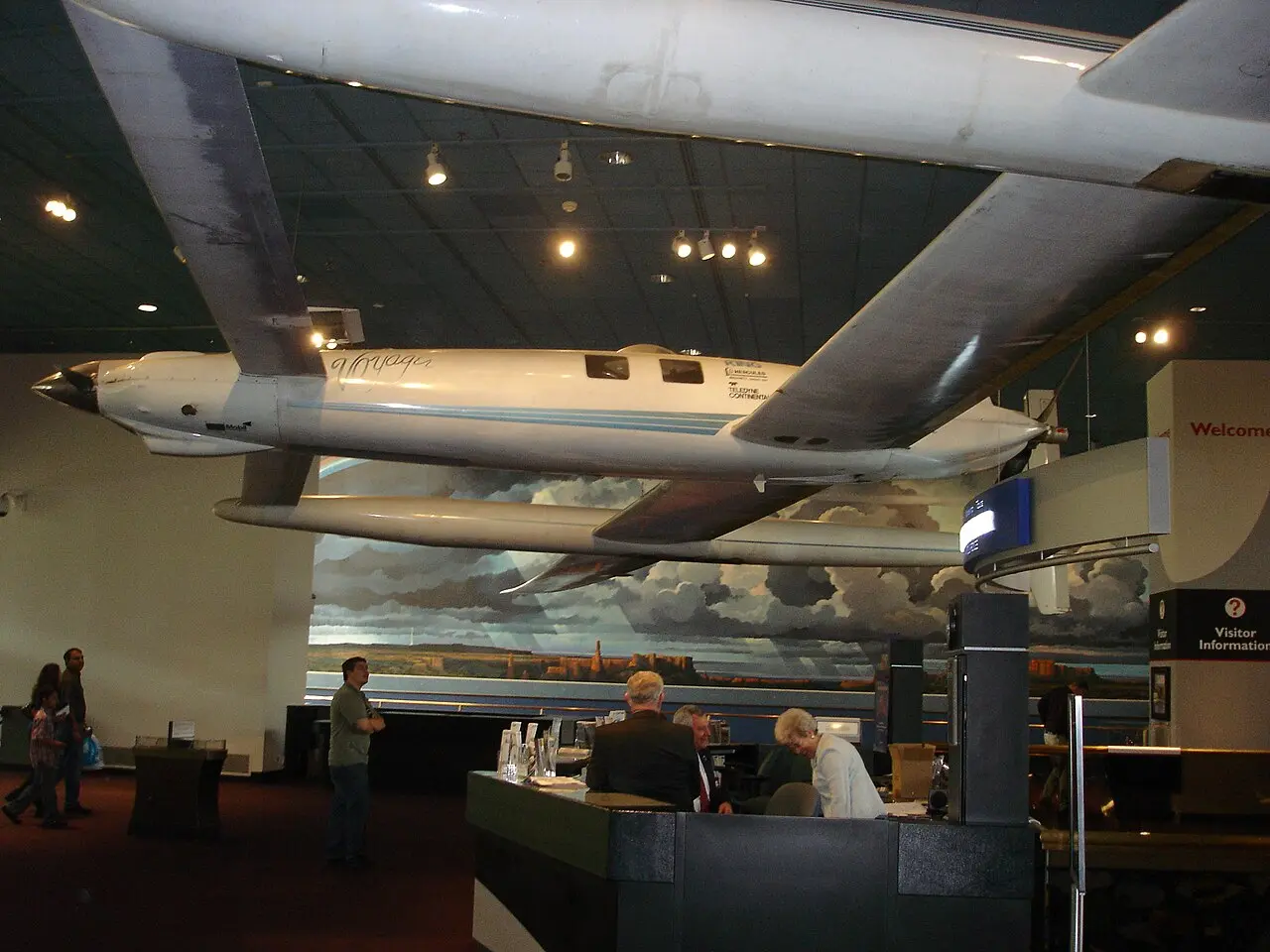
It looked like a flying fuel tank with a cockpit the size of a phone booth. On December 14, 1986, the Voyager lumbered off the runway at Edwards Air Force Base in California so heavily loaded with fuel that its wingtips scraped the pavement. Nine days later, it came home having done something no airplane had ever done: fly all the way around the world without stopping or refueling.
The plane was the dream of two brothers. Burt Rutan designed it; his brother Dick Rutan, a former Air Force pilot, would fly it with Jeana Yeager. It took six years to build - eighteen months of hands-on construction by Dick, Jeana, and crew chief Bruce Evans - and it was made almost entirely of feather-light graphite-honeycomb composite. The airframe weighed just 939 pounds.
At takeoff the Voyager weighed 9,694.5 pounds - more than ten times the weight of its airframe - and 7,011 of those pounds were fuel, packed into seventeen tanks. The wings were so overburdened that their tips scraped along the runway on the way up and were damaged. From the first second, there was no margin for error.
The flight was nine days of beautiful misery. The two pilots shared the controls in a cockpit too small to stand in, ate only a fraction of their food, and each lost about ten pounds. Turbulence battered them for hours at a time.
The scariest moment came on the final morning, December 23. Flying north along the Baja California coast, just 450 miles from home, the engine they were using quit, and the Voyager plunged from 8,500 to 5,000 feet before the backup engine caught.
Almost nine days to the minute after takeoff - 9 days, 3 minutes, and 44 seconds; roughly 25,000 miles at an average of about 116 miles per hour - the Voyager circled Edwards and landed before 23,000 cheering spectators, with just a few gallons of fuel to spare. The team earned the Collier Trophy, aviation's highest honor. The airplane now hangs in the Smithsonian's National Air and Space Museum.
Why it matters: the Voyager flight was a bet that elegant engineering and human endurance could beat the tyranny of fuel. It nearly doubled the previous distance record, and it proved that the boldest ideas in aviation don't always come from governments or giant companies - sometimes they come from a Mojave Desert workshop.
Photo: Jorfer, public domain (via Wikimedia Commons).