June's Deadliest: Hurricane Audrey Strikes Louisiana
On June 27, 1957, Hurricane Audrey slammed into Louisiana with a devastating storm surge, killing 390 to 500 people — the strongest June hurricane ever recorded in the Atlantic.
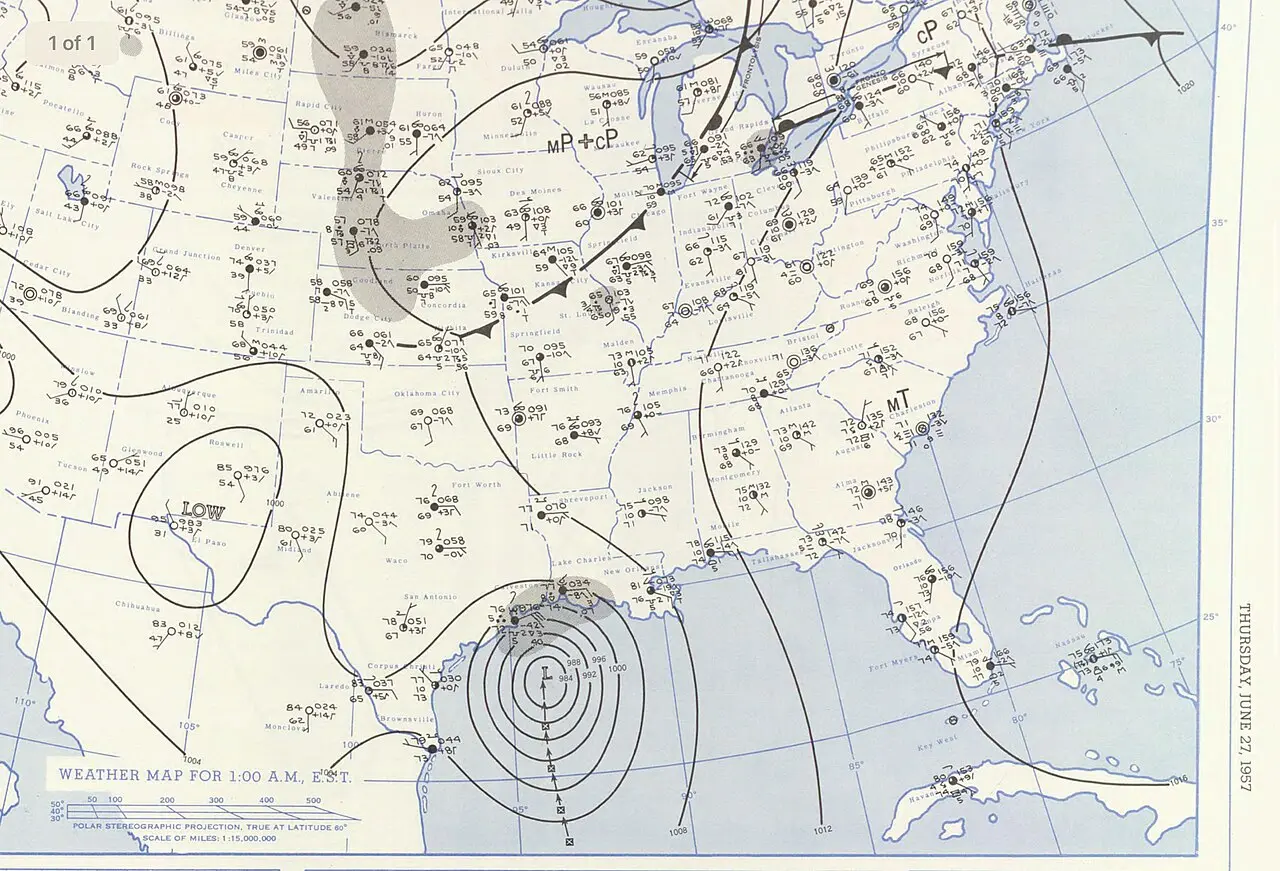
The people of Cameron, Louisiana, went to bed on June 26, 1957, believing they had plenty of time. They were wrong.
The storm that would become Hurricane Audrey had formed just three days earlier in the Bay of Campeche, and it was moving faster and strengthening more quickly than anyone expected. Warnings went out the day before, but many coastal residents — seasoned by years of hurricanes — figured they could evacuate in the morning. Audrey arrived hours ahead of schedule, cutting off escape routes before dawn.
At about 8:30 a.m. on June 27, the hurricane slammed ashore near the Texas-Louisiana border with winds of 125 mph and a central pressure of 946 millibars — the strongest hurricane ever recorded in the Atlantic basin during the month of June, a record it still holds. But wind was not the killer. A storm surge of 10 to 12 feet — some reports said higher — swept miles inland across the low, swampy coast, erasing entire communities. In Cameron, a brick courthouse and a cement-block icehouse were said to be the only buildings left standing; in nearby Creole, barely a handful of structures survived.
The human cost was staggering: between 390 and 500 people died, most of them drowned by the surge, including some 200 children. More than 1,200 were injured, and damage topped $150 million in 1957 dollars. It was the deadliest American hurricane since the 1928 Okeechobee disaster, and at the time the sixth deadliest in U.S. history.
As Audrey pushed inland, it kept dealing damage: more than a dozen tornadoes touched down across the South, and parts of the Midwest saw over 10 inches of rain. In the Gulf, the storm battered offshore oil operations, causing millions in damage to an industry still learning to work at sea. The staff of the Weather Bureau office in Lake Charles stayed at their posts through the worst of it and later received a meritorious citation for their service — one of the few bright notes in the disaster. The name Audrey was retired from the hurricane naming lists, and in 2007 Congress formally recognized the storm's 50th anniversary.
Audrey's legacy was written in policy as much as in grief. The storm exposed how dangerously slow and vague hurricane warnings could be, and it accelerated the adoption of radar tracking and clearer evacuation communication — the ancestor of the warning systems that save lives today. Grieving residents even sued the U.S. Weather Bureau for failing to warn them properly; a jury ruled against them under the Federal Tort Claims Act. Every June, southwest Louisiana still remembers the morning the sea came inland.
Photo: NOAA, public domain (via Wikimedia Commons).