‘I Have Returned’: MacArthur Wades Ashore at Leyte
On October 20, 1944, Douglas MacArthur walked through the surf onto a Philippine beach — keeping a promise he had made two and a half years earlier.
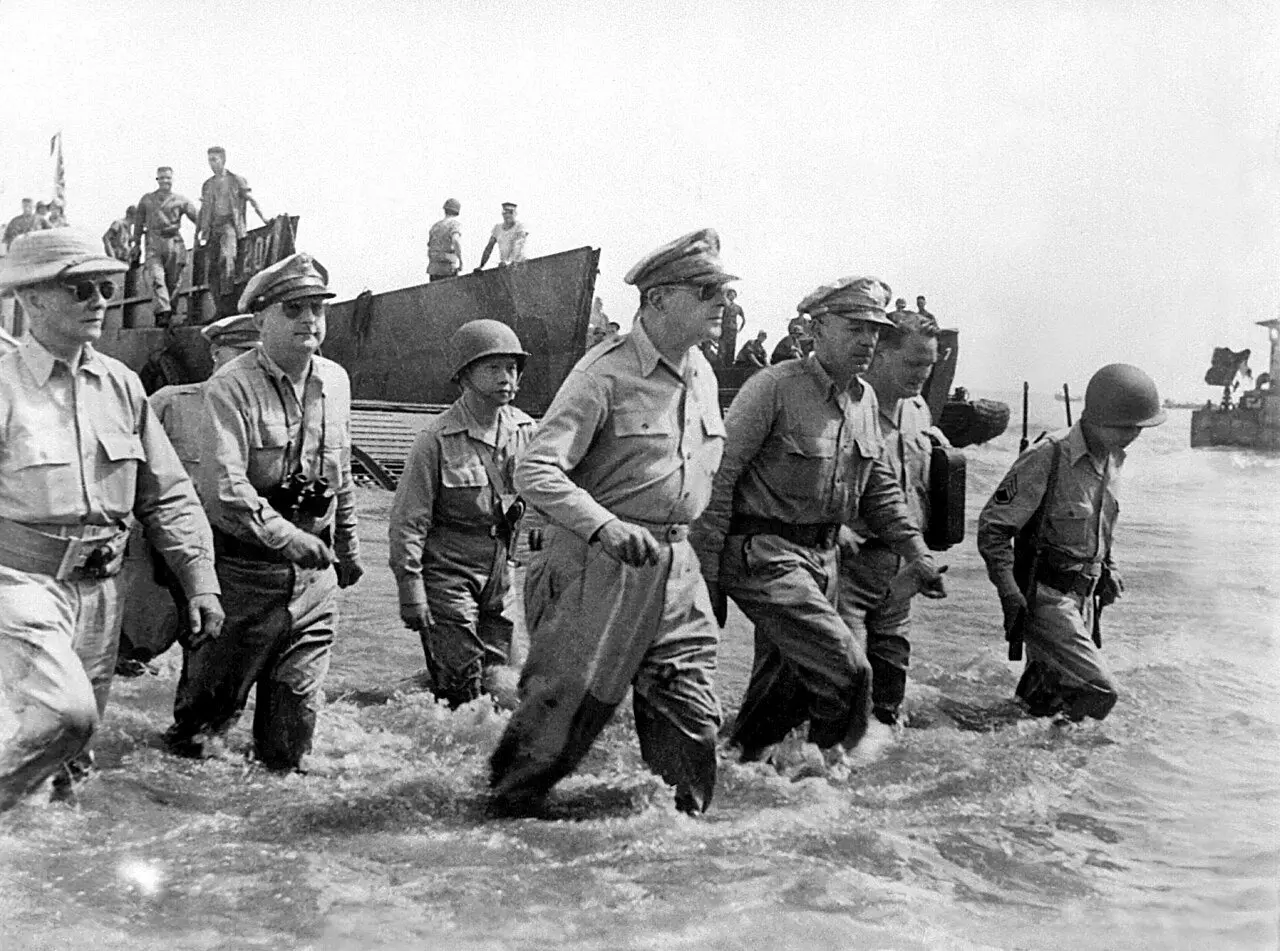
He had rehearsed the sentence in his mind for thirty-one months. As the landing craft ground to a halt in knee-deep water off the Philippine island of Leyte, the general stepped down into the surf and waded the last stretch to the beach. Then, before a portable radio transmitter, Douglas MacArthur spoke the words he had carried with him since 1942: "People of the Philippines: I have returned."
The promise had been made in the darkest days of the Pacific war. In March 1942, with the Philippines falling to Japan, MacArthur was ordered to leave the islands for Australia to organize a counterattack. He slipped away from the island fortress of Corregidor by PT boat, leaving behind thousands of American and Filipino troops. Before stepping aboard, he vowed: "I shall return." The words became a rallying cry for the Filipino resistance — and a personal vow MacArthur refused to abandon, even when some in Washington wanted to bypass the Philippines entirely in the drive toward Japan.
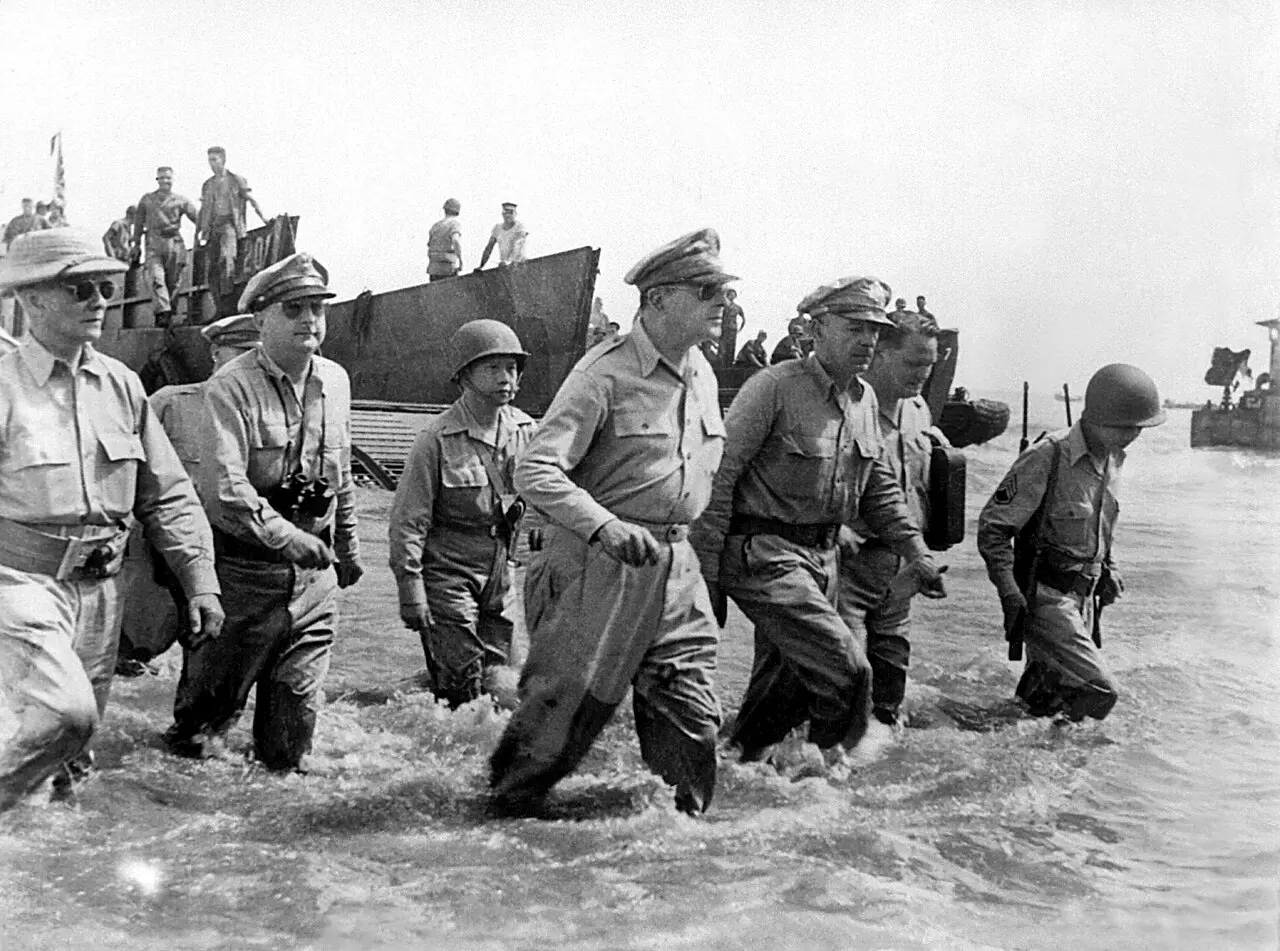
The argument for the Philippines won out. After U.S. victories at Midway and across the Pacific, the Joint Chiefs backed MacArthur's plan, which could be launched sooner than an invasion of Formosa. On October 20, 1944, troops of the Sixth Army stormed ashore on Leyte. A few hours behind the assault waves came MacArthur himself, landing at Red Beach with Philippine President Sergio Osmeña and his staff. His craft grounded short of the shore — and so the general walked through the surf, an arrival captured in one of the most reproduced photographs of the war.
The photograph, taken by U.S. Army Signal Corps photographer Gaetano Faillace, would become an icon — though not without a persistent rumor that it had been staged. William J. Dunn, the CBS correspondent who was present that day (the only man in the famous photo wearing neither helmet nor hat), later called that idea one of the war's most ludicrous misconceptions. The landing was real: snipers were still active, and the beach was under sporadic mortar fire.
MacArthur's full radio message that day continued: "By the grace of Almighty God our forces stand again on Philippine soil — soil consecrated in the blood of our two peoples. We have come, dedicated and committed, to the task of destroying every vestige of enemy control over your daily lives, and of restoring, upon a foundation of indestructible strength, the liberties of your people." Within days, the surrounding seas produced the Battle of Leyte Gulf — the largest naval battle in history — which broke the Japanese fleet for good.
But the return was only the beginning of a long and terrible campaign, and MacArthur knew what the wait had cost. Of the men he had left behind in 1942, only about one-third survived to see his return. The liberation of the Philippines would grind on for months, at a dreadful cost in Filipino civilian lives. Yet on that October afternoon, for a people who had held out on the strength of a promise, the sight of the general walking out of the surf meant that hope had finally come home.
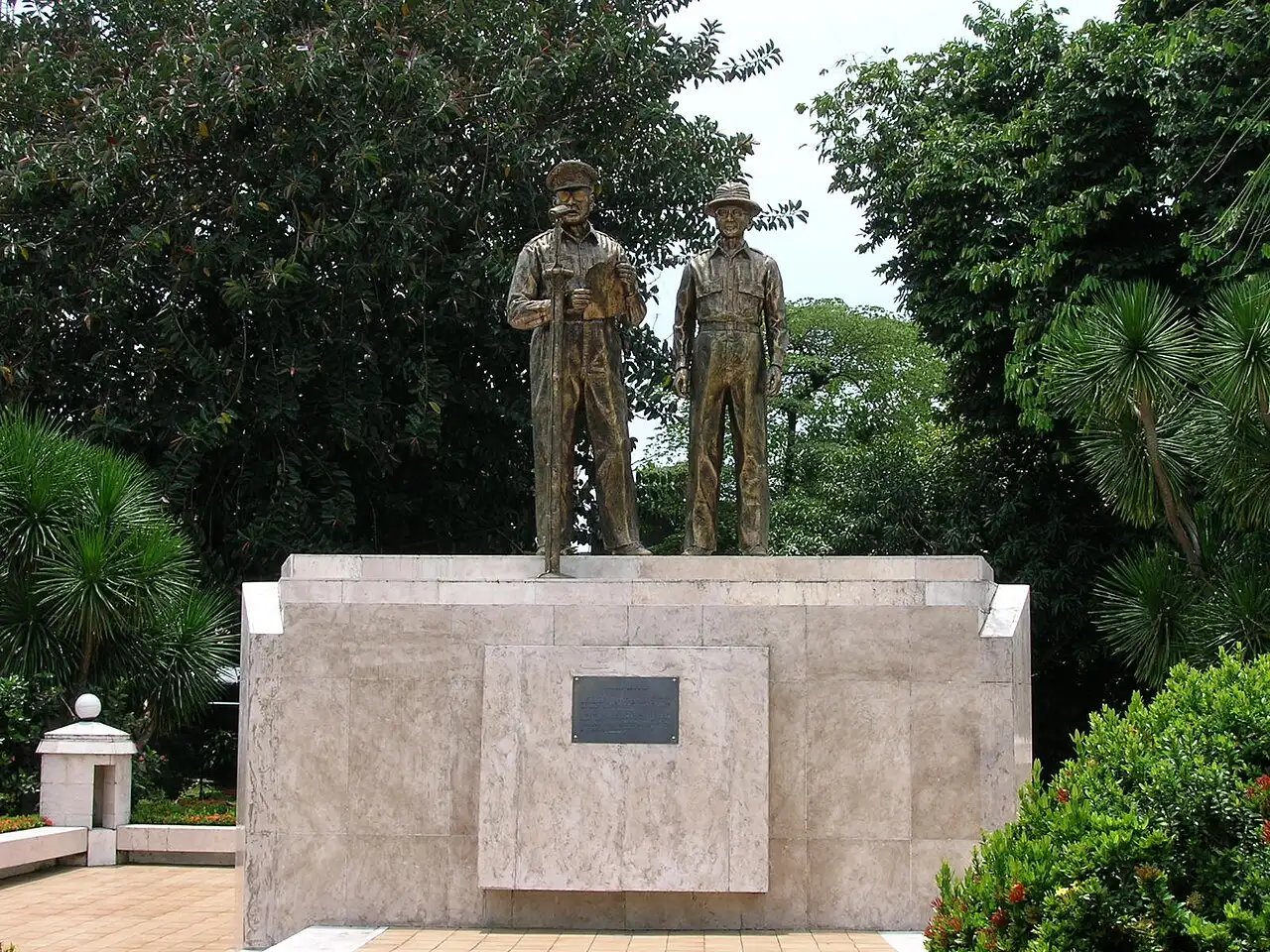
Today the spot is marked by the MacArthur Landing Memorial, where seven double-life-size bronze statues recreate Faillace's photograph — the general and his party wading through a shallow pool, frozen forever in the act of returning.
Photo: U.S. Army Signal Corps photograph, public domain (via Wikimedia Commons).
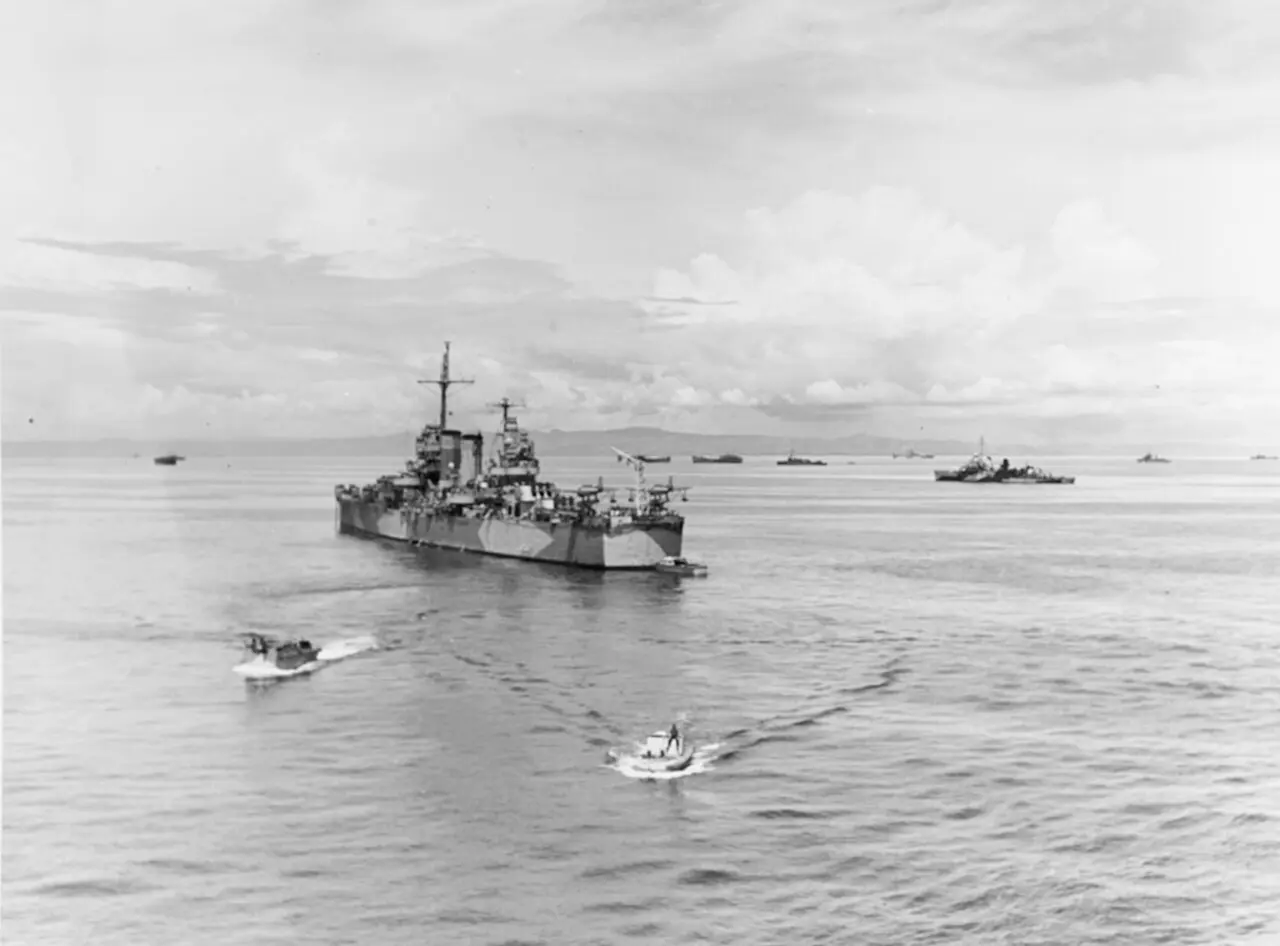
More images (via Wikimedia Commons): MacArthur and his party wading ashore at Leyte, October 1944 (public domain); the cruiser USS Nashville off Leyte, October 1944 (U.S. Navy, public domain); the MacArthur Landing Memorial at Palo, Leyte (Iloilo Wanderer, CC BY-SA 4.0).