December 9, 1990: Lech Walesa Wins Poland's Presidency
On December 9, 1990, shipyard electrician Lech Walesa won Poland's first free presidential election with 74 percent of the vote.
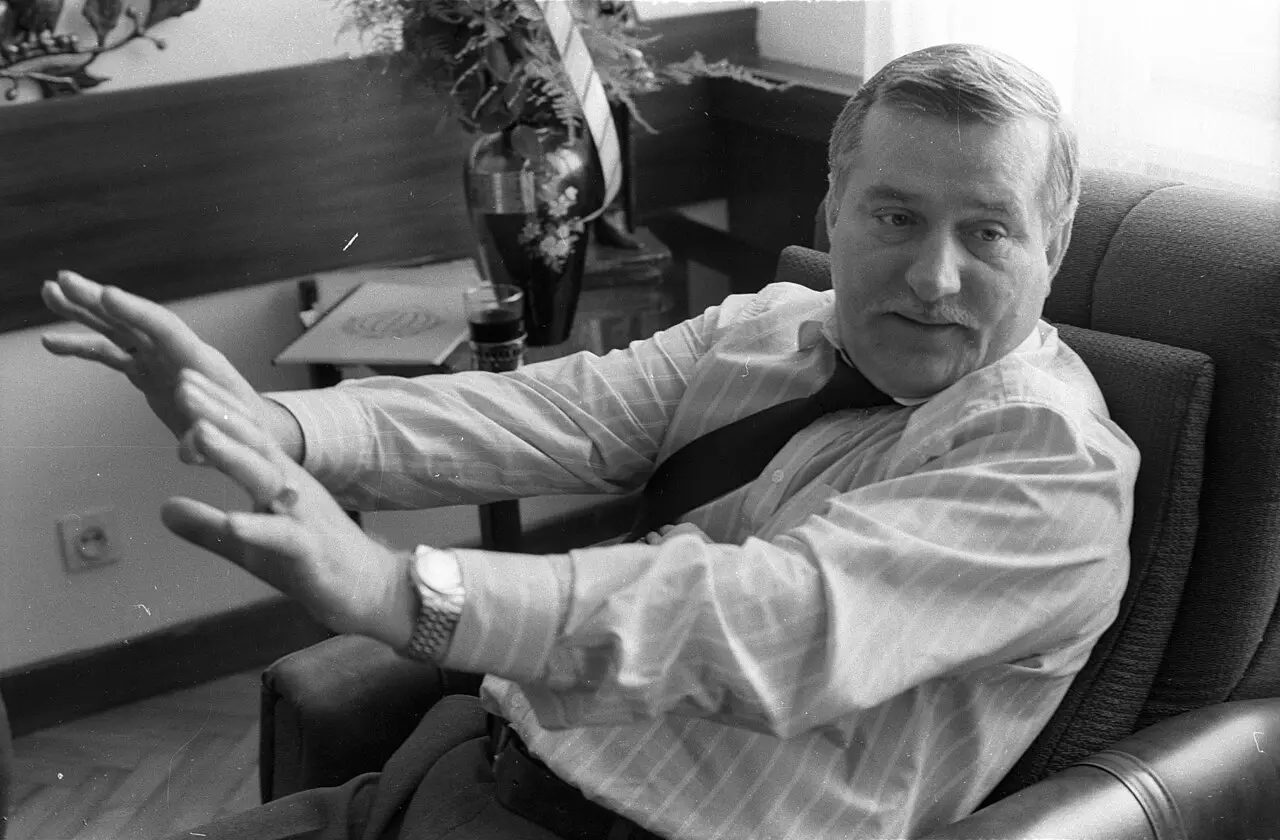
An electrician with a mustache and a union card became the president of Poland.
On December 9, 1990, Lech Walesa won the runoff election for president of Poland with 74.25 percent of the vote -- 10,622,696 ballots to 3,683,098 for his opponent, the outsider businessman Stanislaw Tyminski. It was the first direct presidential election in Poland's history, and the first free one since a 1926 coup. Walesa became Poland's first freely elected head of state in 63 years -- and its first non-Communist head of state in 45.
The road to that December day had been improbable at every step. The first round, on November 25, produced a shock: Tyminski, a near-unknown emigre entrepreneur, finished second, knocking out Prime Minister Tadeusz Mazowiecki -- the man who had led Poland's first non-Communist government. Six candidates had run; in the runoff, the Solidarity movement and the old establishment united behind Walesa, and he won the largest victory of any free election in Polish history. Turnout in the runoff was just over 53 percent.
Walesa's path to that victory had begun a decade earlier. In August 1980, strikes at the Gdansk shipyard forced Poland's Communist government to recognize Solidarity as an independent trade union. When the regime cracked down, Walesa was detained and Solidarity outlawed -- he was released in the fall of 1982, and the union survived underground. In 1989 the government gave way: Solidarity was legalized that April, and elections that June swept the Communists from power.
Walesa himself was the unlikeliest of presidents. An electrician at the Gdansk shipyard, he had led the strikes of August 1980 and co-founded Solidarity, the independent trade union that became the battering ram that broke Communist rule in Poland. For his nonviolent struggle he received the Nobel Peace Prize in 1983. He ran for president, he said, reluctantly -- his campaign slogan was "I don't want to, but I have to."
He was sworn in on December 22, 1990, and his presidency was as turbulent as his rise: constant battles with parliament, a process he called "war at the top," and defeat in his 1995 re-election bid. He left office at the end of 1995, but the democratic Poland he handed over bore his imprint -- the shipyard worker who faced down an empire with strikes and negotiations, and proved that a union card could be mightier than an army.
Photo: Fortepan, CC BY-SA 3.0 (via Wikimedia Commons).