Born March 21, 1685: The Orphan Who Became the Greatest Composer of All
On March 21, 1685, a boy from a family of town musicians was born in Eisenach, Germany — and grew up to become Johann Sebastian Bach.
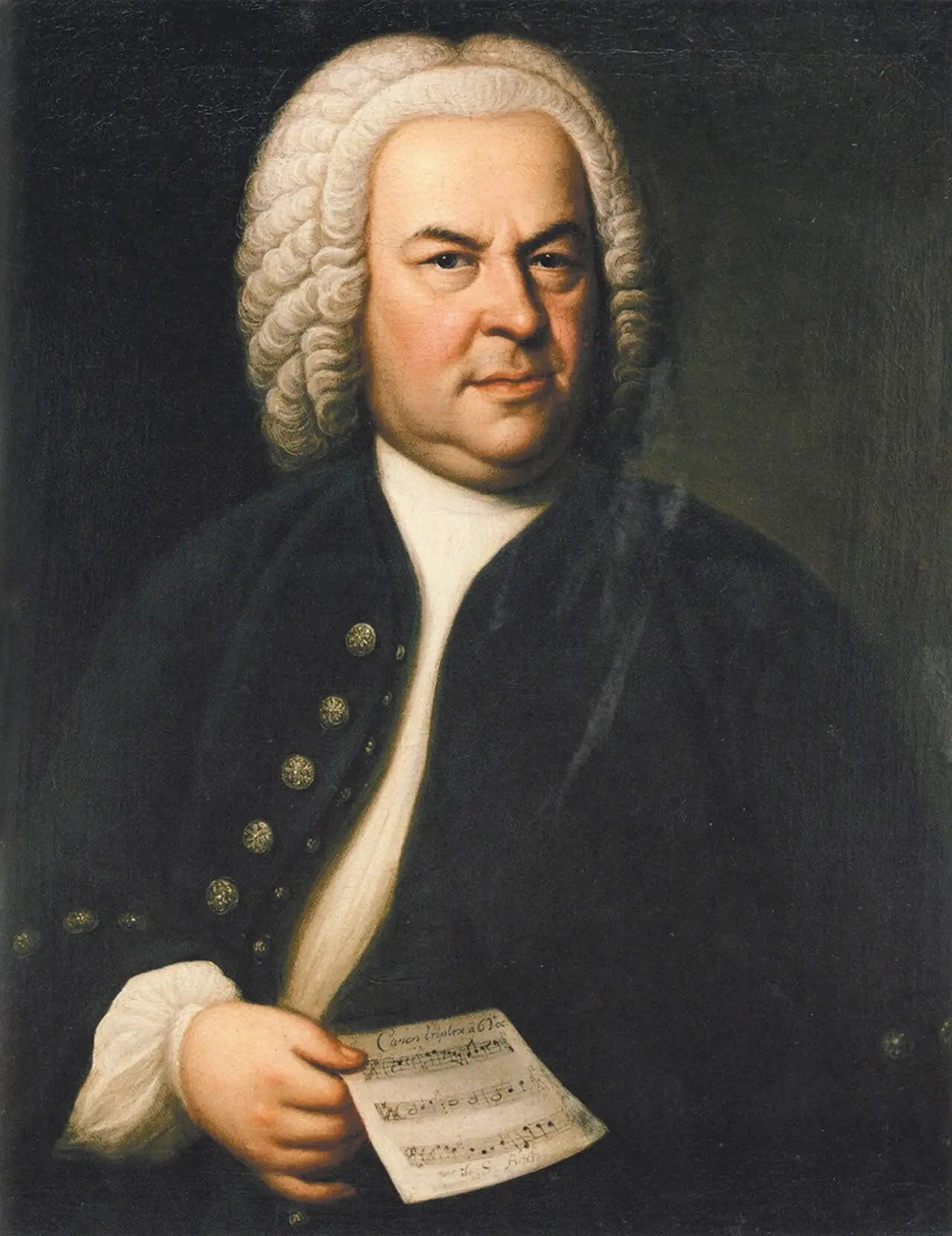
On March 21, 1685 — March 21 by the Julian calendar his family used, March 31 by the modern one — a baby was born in Eisenach, a small town in Thuringia, Germany, into a family so musical that the town practically hummed with Bachs. Nobody could have guessed that the infant, Johann Sebastian, would one day be called the greatest composer who ever lived — or that his music would outlive empires.
The Bachs had been town musicians for generations. His father, Johann Ambrosius, directed Eisenach's town musicians and taught young Sebastian the violin and harpsichord. His uncles were all professional musicians — church organists, court chamber players, composers — and one uncle, Johann Christoph, introduced him to the organ. In that household, music wasn't a career choice. It was the family business.
Then tragedy struck twice: his mother died in 1694 and his father a year later, leaving the ten-year-old an orphan. He went to live with his eldest brother, Johann Christoph, an organist in nearby Ohrdruf, who gave him his first serious keyboard lessons on the clavichord and opened up his music library. The boy devoured the works of the great composers of the day, copying scores out by hand just to study how they were built.
At fourteen, Bach won a choral scholarship to the prestigious St. Michael's School in Lüneburg, far from home, where he sang in the choir and played the school's three-manual organ. A few years later, hungry to learn, he set out on foot — more than 200 miles each way — to the city of Lübeck, just to hear the legendary organist Dieterich Buxtehude play. He had permission for a short leave. He stayed for months.
What followed was one of the most staggering careers in the history of art. As organist, court musician, and finally cantor in Leipzig, Bach poured out masterpieces in nearly every form the Baroque era knew: the Brandenburg Concertos, the Goldberg Variations, The Well-Tempered Clavier, the Mass in B minor, the St. Matthew and St. John Passions, the Cello Suites, the Toccata and Fugue in D minor — more than a thousand works, built on a mastery of counterpoint no one has ever matched.
And yet, in his lifetime, Bach was famous mainly as an organist and organ expert, not as a composer. After his death in Leipzig in 1750, his music fell out of fashion — until 1829, when the young Felix Mendelssohn conducted the St. Matthew Passion in Berlin and the world remembered what it had nearly lost. Ever since, Bach has stood at the summit: the man who surveyed every style and tradition of his age and enriched them all.
Every pianist who practices scales from The Well-Tempered Clavier, every cellist who plays the opening of the First Cello Suite, every choir that sings the St. Matthew Passion is keeping alive the curiosity of a ten-year-old orphan who copied music by hand because he was hungry to understand it. Bach's life is proof that genius is less about where you start than about how hungrily you learn.
Photo: Elias Gottlob Haussmann (1748 portrait), public domain, via Wikimedia Commons.