Bloody Sunday: The Bridge That Changed American Voting
On March 7, 1965, peaceful marchers were beaten on Selma's Edmund Pettus Bridge — and the nation answered with the Voting Rights Act.
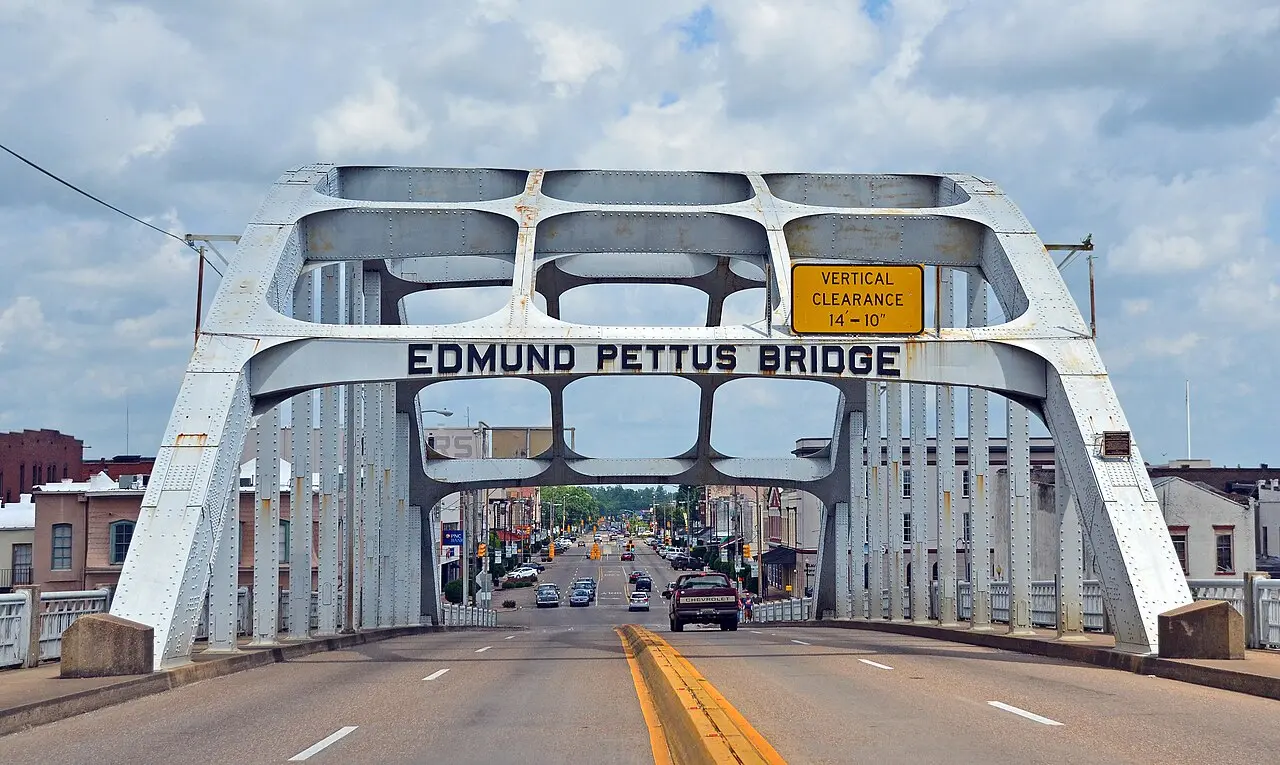
They walked onto the bridge singing, and they were met with tear gas and clubs.
On March 7, 1965, about 600 civil rights marchers set out from Brown Chapel A.M.E. Church in Selma, Alabama, intending to walk 54 miles to the state capital in Montgomery. Their demand was simple: the right to vote. Across the South, Black citizens were systematically shut out of the ballot box by literacy tests, poll taxes, intimidation, and violence. The marchers were also honoring Jimmie Lee Jackson, a 26-year-old church deacon who had been fatally shot by a state trooper during a peaceful protest just days before.
The march was led by 25-year-old John Lewis of the Student Nonviolent Coordinating Committee and Hosea Williams of the Southern Christian Leadership Conference. The group crossed the Edmund Pettus Bridge — named for a Confederate general — and on the far side found a wall of Alabama state troopers and local sheriff's possemen waiting. Ordered to disperse, the marchers stood their ground. The troopers charged on horseback, swinging billy clubs and firing tear gas into the crowd.
Lewis was badly beaten and hospitalized; he was one of 17 marchers hospitalized that day, with dozens more treated for injuries. Amelia Boynton, a veteran activist, was beaten unconscious, and a photograph of her lying wounded on the bridge was published around the world. The marchers fled back across the bridge into Selma, chased and clubbed as they ran. The day became known as Bloody Sunday.
But the violence backfired. Television cameras had captured the attack, and the images shocked the nation. Within days, demonstrations erupted in 80 cities. Two days later, Martin Luther King Jr. led more than 2,000 marchers to the bridge, turning back only to avoid violating a court order. On March 15, President Lyndon B. Johnson addressed a joint session of Congress, declaring, "We have already waited 100 years and more, and the time for waiting is gone" — and calling for a voting rights law.
The marchers got their march. On March 21, under court protection and federal guard, some 3,200 people set out from Selma again, averaging about 10 miles a day along U.S. Route 80. By the time they reached Montgomery on March 25, they were 25,000 strong. Five months later, on August 6, 1965, President Johnson signed the Voting Rights Act, banning the discriminatory practices that had kept Black Americans from the polls.
John Lewis would later say the act was written by the people of Selma. He went on to serve in Congress for more than three decades. The Edmund Pettus Bridge is now part of a National Historic Trail, and every year marchers cross it again to remember what happened there on March 7, 1965 — the day peaceful protesters were beaten for walking, and the country's conscience finally caught up with them.
Photo: Clément Bardot, CC BY-SA 4.0 (the Edmund Pettus Bridge, Selma, Alabama).