The Telegram from the Bottom of the World
On March 7, 1912, Roald Amundsen walked into a Tasmanian post office and told the world he had beaten everyone to the South Pole.
The ship slipped into Hobart harbor on March 7, 1912, and its captain went ashore in disguise.
Roald Amundsen had just done something no human being had ever done — and almost nobody on Earth knew it yet. Nearly three months earlier, on December 14, 1911, Amundsen and four companions — Olav Bjaaland, Helmer Hanssen, Sverre Hassel, and Oscar Wisting — had stood at the South Pole, the bottom of the world. Now, after a five-week voyage from Antarctica aboard the little ship Fram, he had come to Tasmania to tell the world.
The story of how he got there reads like a manual on preparation. Amundsen had originally planned to conquer the North Pole, but when others claimed that prize first, he secretly redirected his expedition south — not even telling his own crew until they were at sea. He set up his base, Framheim, on the Ross Ice Shelf and spent the Antarctic winter obsessively preparing: studying Inuit clothing and dog-handling, laying supply depots along his route, and waiting for the right moment.
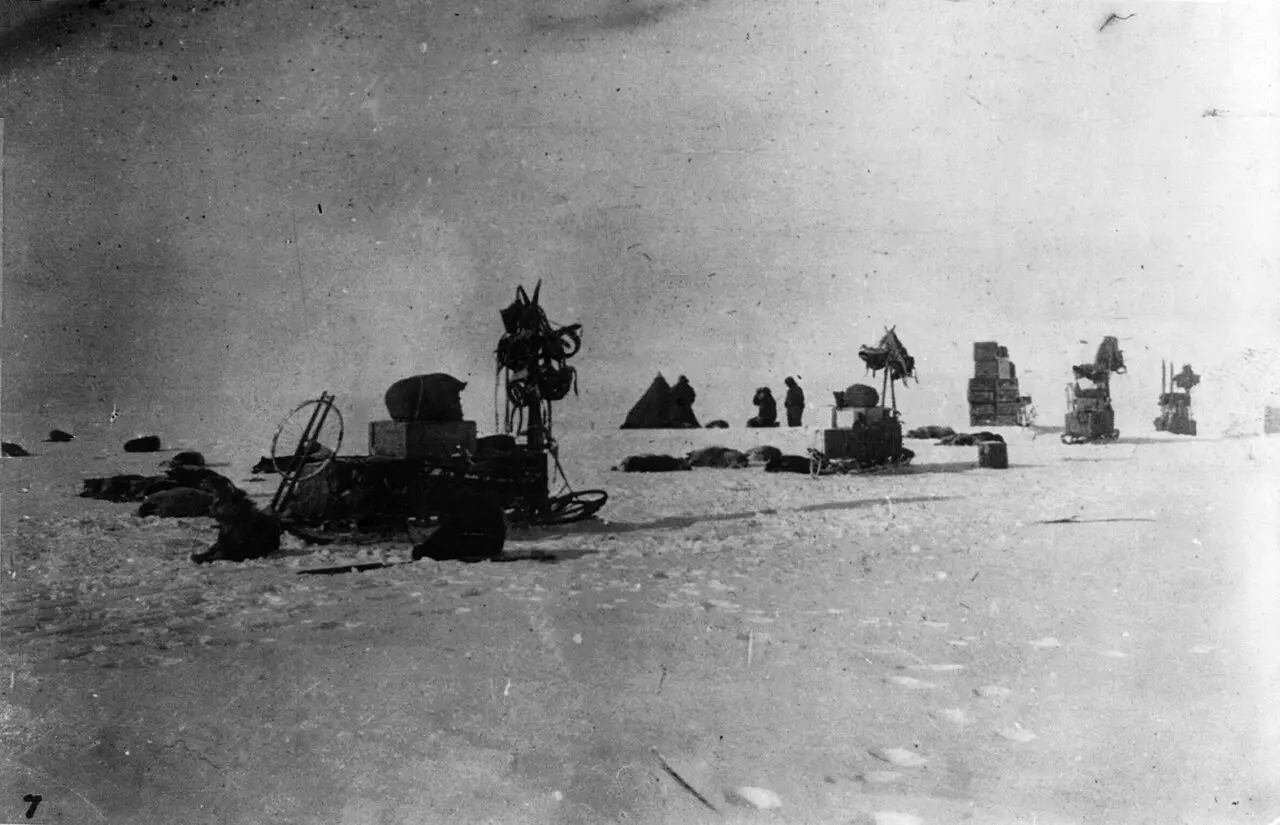
On October 19, 1911, five men set out with four sledges and 52 dogs. They climbed the previously unknown Axel Heiberg Glacier onto the polar plateau and, on December 14, reached 90 degrees south with 16 surviving dogs. Amundsen named the camp Polheim — "Home on the Pole" — and raised the Norwegian flag. The men left a small tent containing a letter describing their achievement, in case they never made it home. The round trip took 99 days and covered some 3,440 kilometers. They returned to Framheim on January 25, 1912, with 11 dogs.
The whole time, a rival expedition was on the ice. Britain's Robert Falcon Scott reached the South Pole on January 17, 1912 — about five weeks after Amundsen — to find the Norwegian flag already flying. Scott and his four companions would perish on the return journey, their bodies found months later.
Amundsen understood the value of news. Anchoring the Fram in the Derwent River at Hobart, he ordered his crew to stay aboard while he went ashore first and walked straight to the General Post Office. There he sent coded telegrams — to his brother Leon, to his mentor Fridtjof Nansen, and to King Haakon VII of Norway — announcing his triumph. The next day he cabled a full account to London's Daily Chronicle, which had bought exclusive rights to his story. The era's greatest exploration race was over, and the winner had announced it by telegram from a post office in Tasmania.
Amundsen's victory owed nothing to luck, as he himself insisted — only to planning: good equipment, appropriate clothing, skilled dogs, and precautions taken for every difficulty. A century later, his March 7 telegram remains a perfect symbol of the heroic age of exploration — the moment the last great geographic prize fell, and the world learned about it in a few hundred words tapped out in Morse code.
Photo: unknown photographer, public domain (Amundsen's expedition camp on the Antarctic plateau, 1911–12; Library of Congress).