Bhopal: The Night the Sky Turned Poisonous
On December 3, 1984, a methyl isocyanate leak at a Union Carbide pesticide plant in Bhopal, India, became the worst industrial disaster in history.
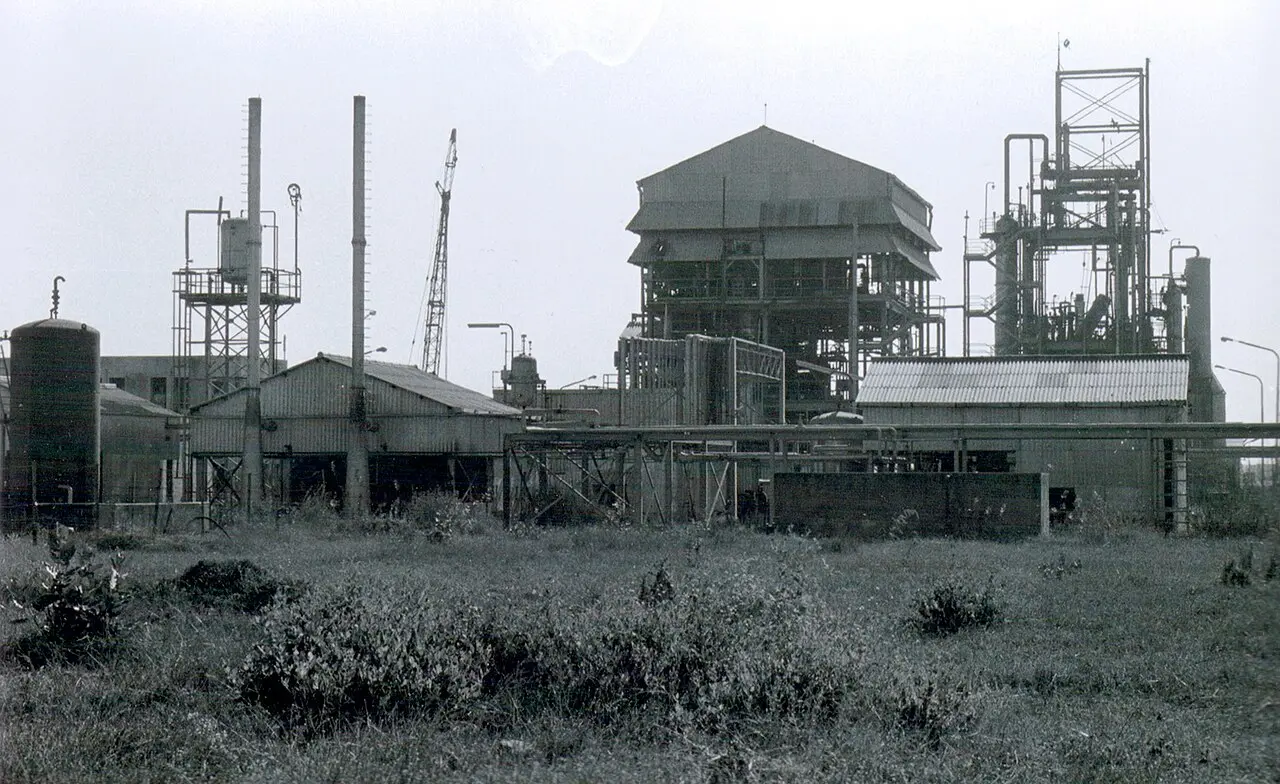
In the first hours of December 3, 1984, a toxic cloud drifted low over the sleeping city of Bhopal — and the world learned what an industrial disaster could look like.
The cloud was methyl isocyanate, a chemical used to make pesticides, leaking from the Union Carbide India Limited plant on the city's outskirts. The company was majority-owned by the American chemical giant Union Carbide Corporation. Some forty tons of the gas escaped in the night, settling over densely populated neighborhoods where families had no warning and no way to flee.
The toll was staggering. Around two thousand people died almost immediately; the official count of immediate deaths was later set at 2,259, with some estimates putting the two-week toll near 8,000. More than half a million people were exposed, and hundreds of thousands suffered injuries — many of them permanent — to their lungs, eyes, and immune systems. It remains the worst industrial disaster in history.
The plant had been built in 1969, as India pushed to modernize its agriculture — the pesticides it made were part of the country's Green Revolution. But cost-cutting and neglected safety systems turned a useful factory into a loaded weapon.
The aftermath stretched for decades. Union Carbide's CEO was briefly detained in India, then released and returned to the United States; an extradition request followed years later. In 1989, the company agreed to a $470 million settlement. Efforts to win compensation dragged through courts in both countries; by 1993 there were more than 13,000 death claims and over 630,000 demands for medical compensation. In 2010, eight former officials were convicted of negligence and sentenced to two years in prison. Survivors and their families fought for years over compensation and for the cleanup of the contaminated site.
But Bhopal also changed the law. In the United States, the disaster drove the 1986 Superfund amendments, the Emergency Planning and Community Right-to-Know Act — which created the public Toxic Release Inventory — and the 1990 Clean Air Act amendments, which established the Chemical Safety Board. India passed its Environment Protection Act in 1986. The principle was simple: people have a right to know what dangerous chemicals are stored in their neighborhoods.
Why it still matters: Bhopal is the reason the words "worst-case scenario" appear in safety regulations around the world. It stands as a permanent warning that cutting corners on safety is never just a business decision — it is a decision about other people's lives.
Photo: Bhopal Medical Appeal and Martin Stott, CC BY-SA 2.0 (via Wikimedia Commons).