
Barbie's Big Debut: The Doll That Changed Toy Aisles Forever
On March 9, 1959, Mattel unveiled Barbie at the American International Toy Fair, and the eleven-inch 'Teen-age Fashion Model' became the most famous doll in history.
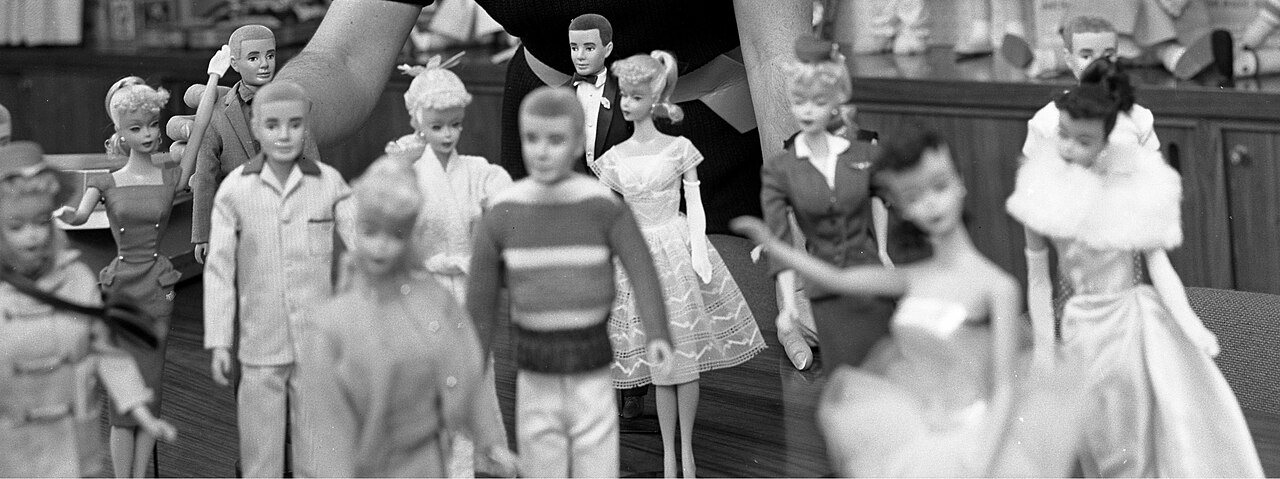
On March 9, 1959, toy buyers crowded into New York's American International Toy Fair — and stopped at the Mattel booth. There stood something the toy world had never seen: an eleven-inch doll with the figure of a grown woman, wearing a black-and-white zebra-striped swimsuit, her blond hair swept into a topknot ponytail. Her name was Barbie, and she was about to become the most famous doll on earth.
Barbie was the brainchild of Ruth Handler, who had co-founded Mattel with her husband Elliot in 1945. Handler had watched her daughter Barbara play — not with baby dolls, but with paper dolls of adult women, imagining grown-up lives for them. Handler saw a gap no toy company had filled: a doll that let little girls rehearse the future instead of practicing motherhood.
The toy industry's men were skeptical, but Handler persisted. On a 1956 trip to Europe she spotted the Bild Lilli doll in a Swiss shop — a German novelty doll based on a comic-strip character, sold to adults. Its grown-up proportions were exactly what Handler had in mind. She bought three, brought them home, and with the help of designer Jack Ryan reworked the doll into something for children. She named it Barbie, after Barbara. Mattel would later buy the rights to Lilli outright.
The first Barbie cost $3 and was marketed as a "Teen-age Fashion Model," with a wardrobe designed by Mattel's Charlotte Johnson and tiny clothes hand-stitched by workers in Japan, where the dolls were manufactured. She sold more than 300,000 dolls in her first year — a smash hit. In 1961 Mattel introduced her boyfriend Ken, named for the Handlers' son.
Barbie became a cultural lightning rod. To her fans, she was liberation in plastic: over the decades she worked as an astronaut, a doctor, a pilot, and a presidential candidate — proof, Handler wrote in her memoir, that "through the doll, the little girl could be anything she wanted to be." To her critics, her impossible proportions set a harmful example, and her endless Dream Houses and designer outfits celebrated materialism. Both arguments have raged for more than sixty years, which may be the truest measure of her power.
Before Barbie, the toy aisle told girls their future was a cradle. After her, it told them the future was a choice — even if the world is still arguing about the terms. March 9, 1959, is officially Barbie's birthday, and the doll from that Toy Fair booth now belongs to history: more than sixty years on, she remains the template every toy that followed had to answer.
Photo: Los Angeles Times (photographer unknown), CC BY 4.0 (via Wikimedia Commons), courtesy of the UCLA Library Digital Collections. The photograph shows early Barbie and Ken dolls from the first years of the line.