
Two Islands, One Flag
On August 31, 1962, Trinidad and Tobago became an independent nation, ending centuries of colonial rule under a new red, white, and black flag.
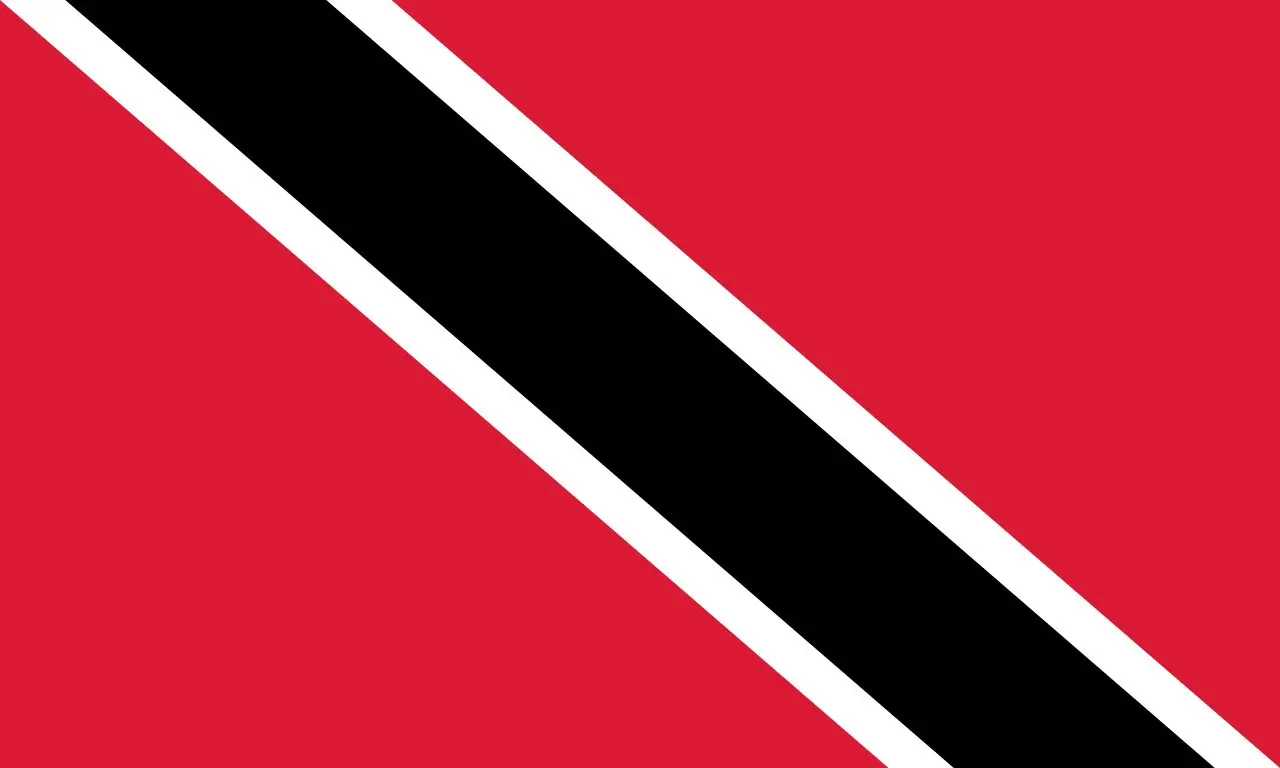
At midnight on August 31, 1962, a new flag rose over Port of Spain: red for the vitality of the land and its people, white for the sea and the equality of all, black for the strength and dedication of the nation. Trinidad and Tobago — two Caribbean islands with centuries of colonial history behind them — was a free country.
The road to that midnight had run through one remarkable man. Dr. Eric Williams, a historian turned politician, founded the People's National Movement in 1956 and swept to power on a promise to end colonialism in the Caribbean. When a British attempt to bundle the islands into a West Indies Federation collapsed — Jamaica pulled out, prompting Williams's famous verdict, 'One from ten leaves nought' — he negotiated directly with London for full independence.
Williams was a scholar before he was a politician. He won an Island Scholarship to Oxford, graduated first in his class in history, and earned his doctorate in 1938. His thesis became the 1944 book Capitalism and Slavery, which argued that the profits of the transatlantic slave trade and plantation slavery helped finance Britain's Industrial Revolution — a thesis that reshaped how historians understood the economics of empire, and that is still debated today.
The two islands had long, tangled pasts. Trinidad spent nearly 300 years under Spanish rule before Britain seized it in 1797; Tobago changed hands between European powers for centuries before Britain took permanent hold in 1814. The islands were administratively joined in 1889. Their people — descended from Indigenous peoples, enslaved Africans, Indian indentured laborers, and immigrants from Europe, China, and the Middle East — had built one of the most culturally vibrant societies in the hemisphere, the birthplace of calypso and the steelpan.
The steelpan — the instrument this story mentions in passing — deserves its own verse. Born in Trinidad in the 1930s, it grew out of the tamboo bamboo bands that had replaced banned African drums. Young musicians in Port of Spain discovered that the dented bottoms of discarded metal containers could be tuned to distinct pitches; by the 1940s, with oil drums left behind by the petroleum industry, the steelpan took shape. It is the only acoustic musical instrument invented in the twentieth century — forged, fittingly, from the scrap of the oil business.
Williams also took on the Americans. The U.S. naval base at Chaguaramas, on Trinidad's northwest peninsula, dated to the 1941 destroyers-for-bases deal between Britain and the United States — negotiated without consulting Trinidadians, which angered Williams. In December 1960 he denounced the arrangement in a famous philippic remembered as 'Massa Day Done.' The pressure worked: Washington agreed to return 21,000 acres of base land and to fund four major development projects, including a new college campus at the University of the West Indies.
Independence Day 1962 was celebrated the way the new nation did everything: loudly. Military parades marched at the Savannah in Port of Spain and in Scarborough, Tobago. National Awards honored distinguished citizens. Fireworks lit both islands. Williams became the country's first prime minister, with Queen Elizabeth II remaining as titular head of state until Trinidad and Tobago became a republic in 1976.
Sixty-four years on, August 31 remains the country's biggest national holiday — and the twin-island nation that declared itself free that night has never looked back.
Fourteen years after that midnight flag-raising, the country finished the job: in 1976 Trinidad and Tobago adopted a republican constitution, replacing Queen Elizabeth II as head of state with a president — Sir Ellis Clarke, the last governor-general, became the first president. He was sworn in on August 1, and September 24, when parliament first sat under the new constitution, is now celebrated as Republic Day.
Photo: Public domain (via Wikimedia Commons).