Thirty-Six People and a Red Cross: How Geneva Changed War
On October 26, 1863, delegates from sixteen nations gathered in Geneva and founded the Red Cross — born from one man's horror at a battlefield.
The worst day of Henry Dunant's life began on a summer morning in 1859, on a battlefield he had no business being near.
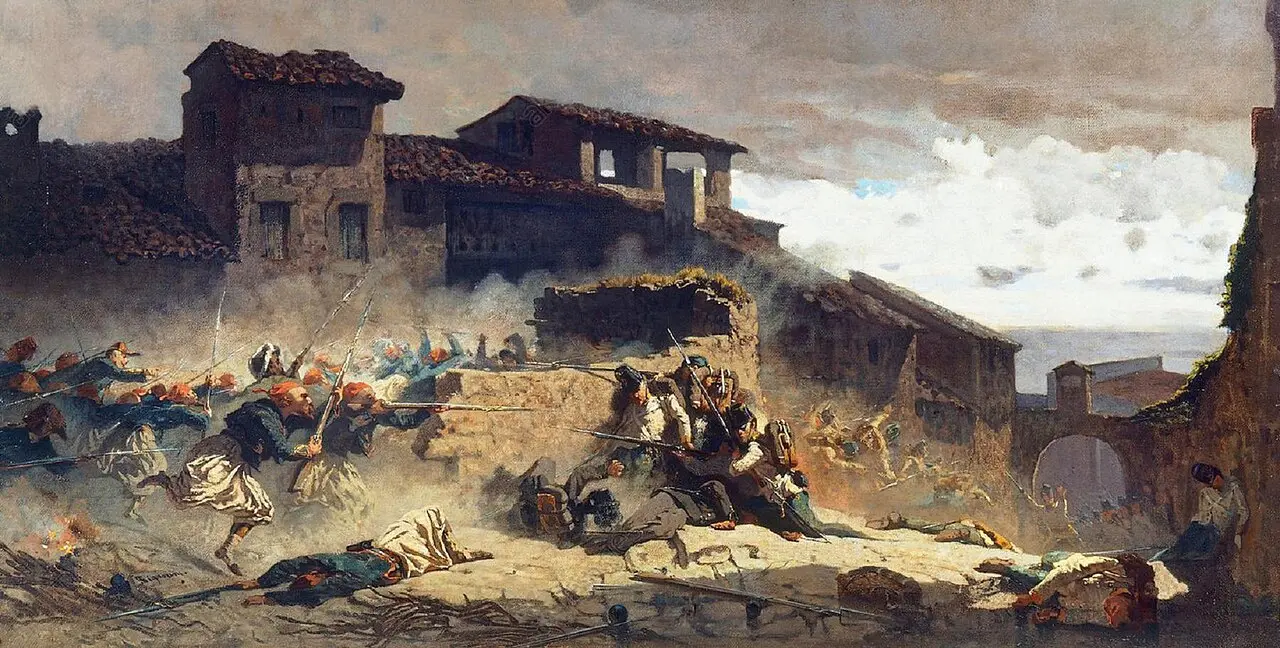
Dunant was a 31-year-old Swiss businessman. He had traveled to northern Italy to meet the French emperor Napoleon III about a land deal in Algeria. Instead he walked into the aftermath of the Battle of Solferino — one of the bloodiest days of the 19th century. French and Austrian armies had smashed into each other near the village of Solferino on June 24, and by nightfall some 40,000 men lay dead or wounded across the fields. There were almost no medical services. The wounded were left where they fell, crying out for water.
Dunant did what few businessmen on a land deal would do: he stayed. For days he organized the women of the nearby town of Castiglione to bring food and water to the wounded — French, Austrian, and Italian alike. His rallying cry, as he told it later, was "Tutti fratelli" — we are all brothers. He helped set up makeshift hospitals in churches and houses, and he never forgot what he saw.
Back in Geneva, Dunant spent his own money to publish a book about it: "A Memory of Solferino" (1862). It was not just a memoir. Buried in its pages were two radical proposals. First, that every country should form volunteer relief societies, trained in peacetime, to care for wounded soldiers in wartime. Second, that nations should sign an international treaty guaranteeing protection for the wounded — and for the medics who treated them — on the battlefield.
The book landed in the right hands. Gustave Moynier, a Geneva lawyer who led the Geneva Society for Public Welfare, took it up. In February 1863 the society appointed a five-man committee to turn Dunant's ideas into reality: Moynier, Dunant, the Swiss general Guillaume-Henri Dufour, and two doctors, Louis Appia and Théodore Maunoir — the "Committee of Five." Eight days later they renamed themselves the International Committee for Relief to the Wounded. Dunant spent months traveling Europe's royal courts, persuading governments to send delegates to a conference.
That conference opened in Geneva on October 26, 1863. Thirty-six people attended — official delegates from sixteen European states, plus representatives of relief organizations and the five committee members themselves. For four days they debated how to make Dunant's dream work. On October 29 they adopted ten resolutions: the founding charter of the Red Cross. Nations would form relief societies. Wounded soldiers would be treated as neutral. Volunteers would be protected. And medical workers would wear a single, universal emblem: a red cross on a white armlet — the reverse of the Swiss flag's colors, chosen in honor of the initiative's Swiss origins.
The resolutions were only the beginning. The next summer, twelve nations signed the first Geneva Convention (August 22, 1864), turning the conference's wishes into binding law. The movement grew into the International Red Cross and Red Crescent, today one of the largest humanitarian networks on Earth.
Dunant himself paid a terrible price for his crusade. He neglected his business, went bankrupt in 1867, resigned from the committee, and faded into poverty and obscurity for decades — until a journalist rediscovered him in a Swiss hospice in the 1890s. In 1901 he received the first Nobel Peace Prize ever awarded, shared with the French pacifist Frédéric Passy. He gave much of the prize money away.
It all traces back to four days in Geneva in October 1863 — and, before that, to one businessman who stopped to help the wounded at Solferino instead of walking past them.
Image: "An Episode from the Battle of Solferino (1859)," by Telemaco Signorini, depicting fighting and wounded soldiers amid ruined buildings — the battle whose aftermath inspired Dunant's campaign; public domain (via Wikimedia Commons).