Thirty Seconds in Tombstone: The Gunfight at the O.K. Corral
On October 26, 1881, thirty seconds of gunfire in Tombstone, Arizona made the O.K. Corral the most famous shootout in American history.
It lasted about thirty seconds. Around three o'clock on the afternoon of October 26, 1881, in a vacant lot in Tombstone, Arizona Territory, four lawmen walked up to five armed men and ordered them to surrender their weapons. About thirty shots were fired. When the smoke cleared, three men were dead, three were wounded — and the most famous gunfight in American history had a name, though not, as it turns out, the right address.
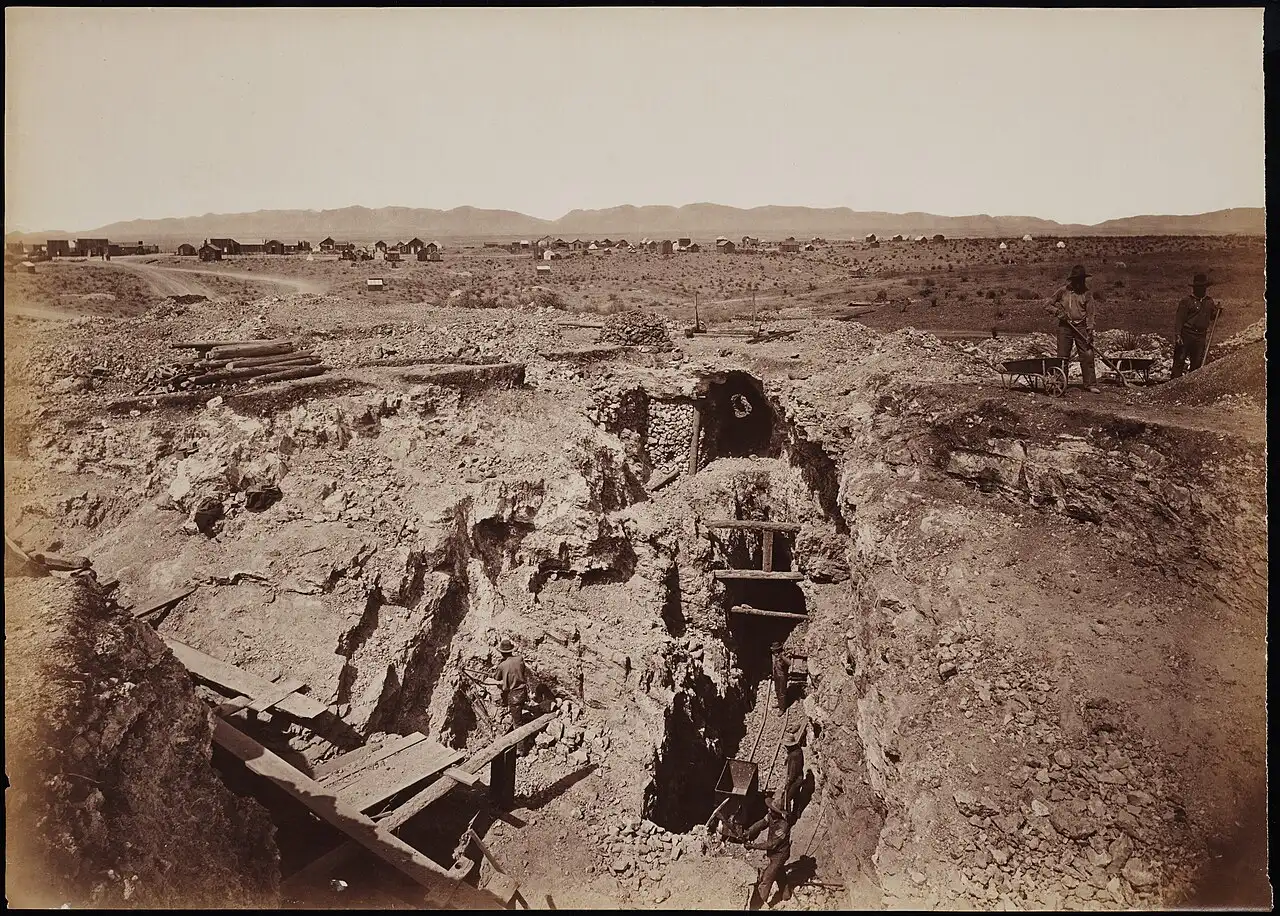
Tombstone was barely two years old, a silver-boom town that had exploded from a few tents to more than 7,000 people after silver was discovered nearby in 1879. Its mines made millionaires, and its saloons, gambling halls, and brothels made it one of the wildest towns in the West. The wealth drew outlaws, too — a loose gang of cattle rustlers and thieves called the Cowboys, including two sets of brothers: Ike and Billy Clanton, Tom and Frank McLaury. They had been feuding for months with the Earp brothers — Virgil, Wyatt, and Morgan — and Wyatt's friend Doc Holliday, a former dentist turned gambler. Virgil Earp was both Tombstone's town marshal and a Deputy U.S. Marshal, and the flashpoint was a city ordinance that banned carrying guns inside town limits.
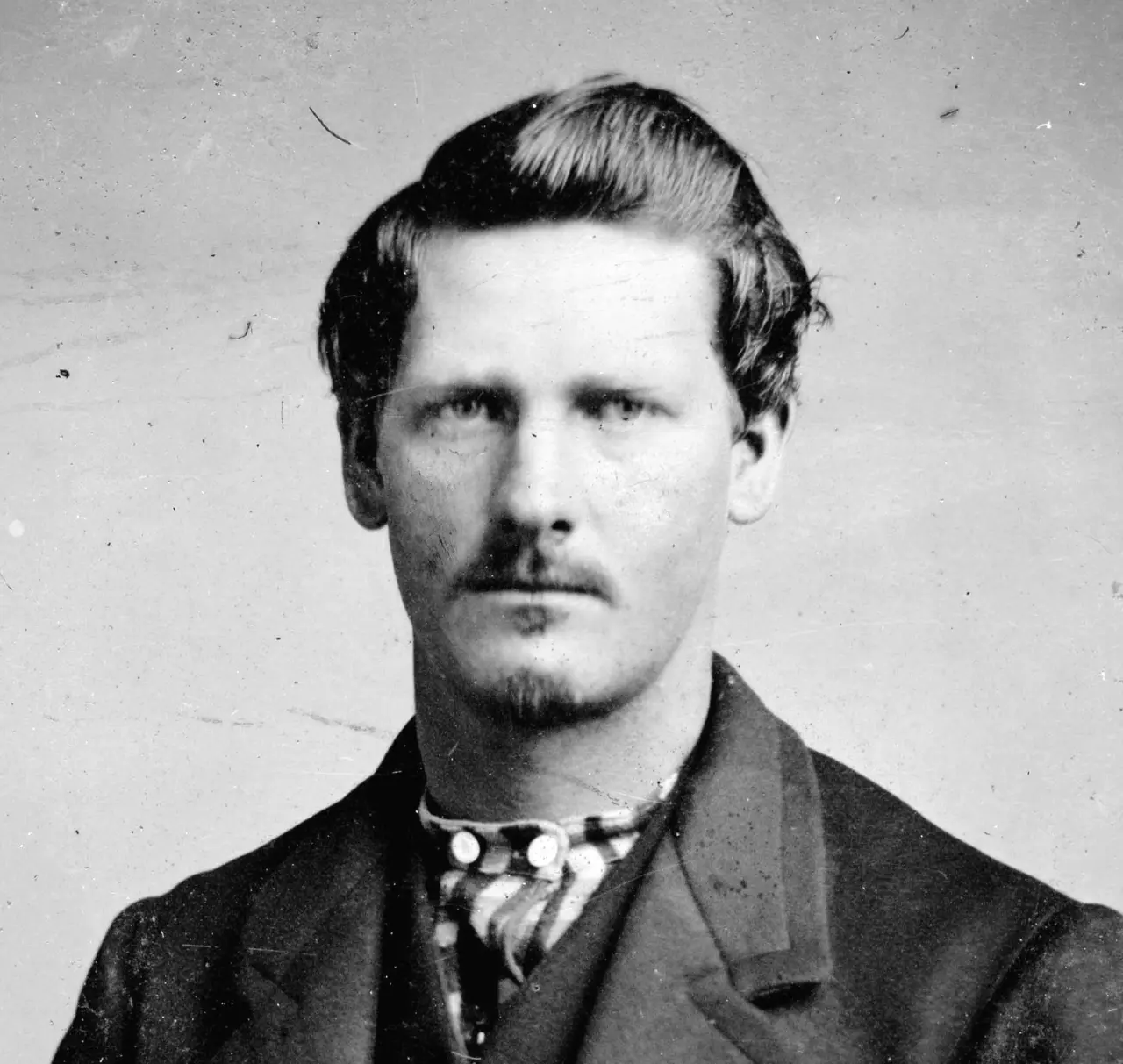
Tensions had been boiling all day. Ike Clanton had spent the night drinking and threatening to kill the Earps, and that morning Virgil had disarmed him. By mid-afternoon, word reached the Earps that Billy Clanton and the McLaury brothers were gathered, armed, in a lot on Fremont Street. Virgil swore in his brothers and Holliday as temporary deputies on the spot, and the four lawmen walked down Fremont Street to disarm them.
What happened next is still argued over — who fired first may never be settled. The shooting exploded in a narrow lot beside C. S. Fly's photography studio, six doors west of the O.K. Corral's rear entrance. The corral itself, which fronted Allen Street, was never the scene of the fight at all; the name stuck anyway. In about half a minute, roughly thirty shots rang out. Billy Clanton and both McLaury brothers were killed. Virgil and Morgan Earp and Holliday were wounded — Wyatt, incredibly, was not touched. Ike Clanton, who turned out to be unarmed, fled along with Billy Claiborne.
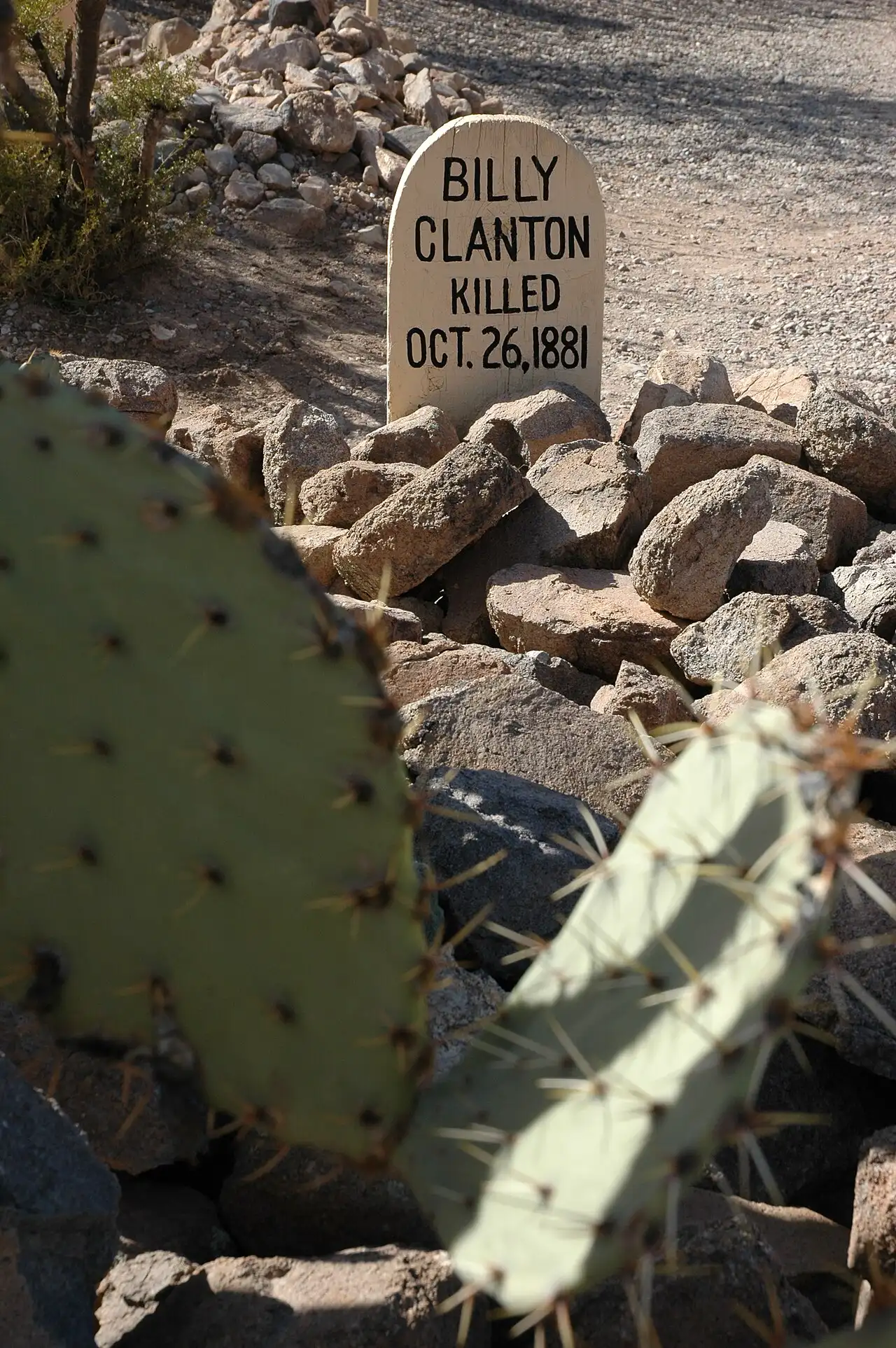
The law wasn't finished with it. Ike Clanton filed murder charges, and a thirty-day hearing before Justice of the Peace Wells Spicer picked over every shot. Spicer ruled that the Earps and Holliday had acted within the law. But the feud wasn't over: that December, Virgil was ambushed and maimed in a nighttime attack; the following March, Morgan was shot dead through the glass door of a saloon. Wyatt, newly appointed a Deputy U.S. Marshal, settled accounts his own way in a bloody vendetta ride across Cochise County.
Strangely, almost nobody outside Arizona had heard of the fight at the time. It became a legend half a century later, when Stuart Lake's 1931 biography "Wyatt Earp: Frontier Marshal" — published two years after Earp's death — turned Wyatt into a folk hero. Hollywood did the rest: "My Darling Clementine" in 1946, "Gunfight at the O.K. Corral" in 1957 — the film that finally gave the shootout its famous, slightly inaccurate name — and "Tombstone" in 1993. Today the town that silver built reenacts those thirty seconds for visitors, on the same dusty streets where it really happened.
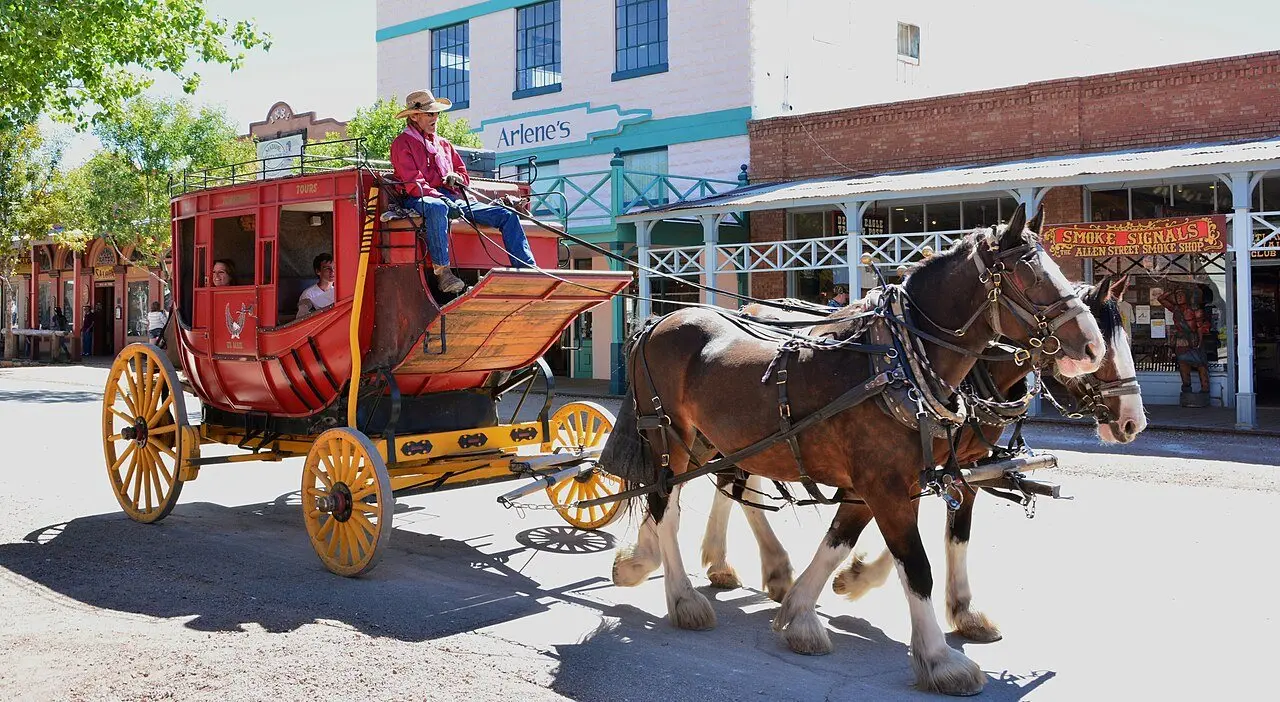
Photo: Mike McBey, CC BY 2.0 (via Wikimedia Commons) — a stagecoach on Allen Street in present-day Tombstone, Arizona.
More images (via Wikimedia Commons): Wyatt Earp, 1869 (public domain); the grave marker of Billy Clanton, "killed Oct. 26, 1881" (Woody Hibbard, CC BY 2.0); the Tough Nut Mine at Tombstone (Carleton E. Watkins, public domain).