The World's Smallest Country Is Born: The Lateran Treaty
On February 11, 1929, a cardinal and a dictator signed a deal in Rome's Lateran Palace that created Vatican City as a sovereign state.
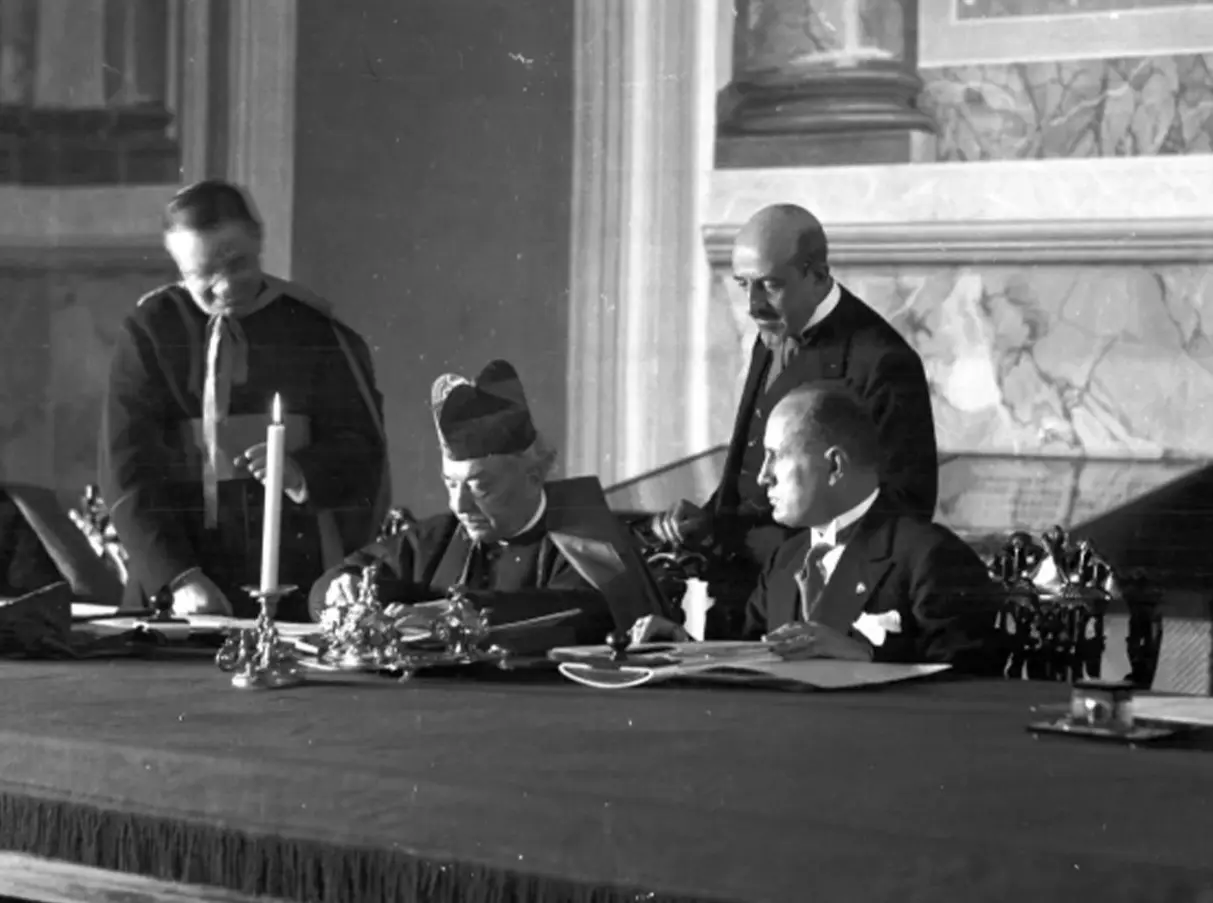
For nearly sixty years, the popes had called themselves prisoners in the Vatican. It began in 1870, when the armies of a newly unifying Italy seized Rome and stripped the papacy of the Papal States it had ruled for a thousand years. Every pope since had refused to recognize the Italian state, declined to leave the Vatican grounds, and declared the standoff — the "Roman Question" — unsettled. On February 11, 1929, the feast of Our Lady of Lourdes, it was settled with a signature.
In the Lateran Palace in Rome, two men sat down across a table from each other. One was Cardinal Pietro Gasparri, the Vatican's secretary of state, signing for Pope Pius XI. The other was Benito Mussolini, Italy's Fascist prime minister, signing for King Victor Emmanuel III. The agreements they signed — the Lateran Pacts — did three things. A treaty of conciliation created Vatican City as a fully independent state: just 109 acres around St. Peter's Basilica, the smallest country on earth, with the pope as its sovereign. A financial convention paid the Holy See 750 million lire in cash and a billion in bonds as compensation for the lost Papal States. And a concordat made Catholicism Italy's state religion, put religious instruction in every public school, and gave Church marriages full civil recognition.
Each side thought it was getting the better of the bargain. Mussolini, who had spent two and a half years negotiating, believed he had tamed the Church — he is reported to have said he had buried the pope's temporal power, not resurrected it. Pius XI, for his part, declared a day of thanksgiving, saying the agreement had given God back to Italy and Italy back to God, and controversially praised the dictator in terms that scandalized many Catholics. The celebration did not last: within two years Mussolini was raiding Catholic youth clubs, and in 1931 the pope answered with an encyclical, written in Italian rather than Latin so every parish could read it, denouncing the regime's overreach.
Whatever the motives, the treaty remade the map. Vatican City remains a sovereign state to this day — the pope is both a spiritual leader and a head of state, receiving ambassadors and addressing the United Nations. The 1929 settlement was revised in 1984, ending Catholicism's status as Italy's official religion, but the little country's independence was never in doubt. One afternoon's paperwork in a Roman palace had ended a sixty-year siege and put the world's smallest nation on the map, permanently.
Photo: Istituto Luce, anonymous photographer, public domain (via Wikimedia Commons).