
Free at Last: The Day Mandela Walked Out of Prison
On February 11, 1990, Nelson Mandela walked out of prison after 27 years, fist raised, and set South Africa on the road to democracy.
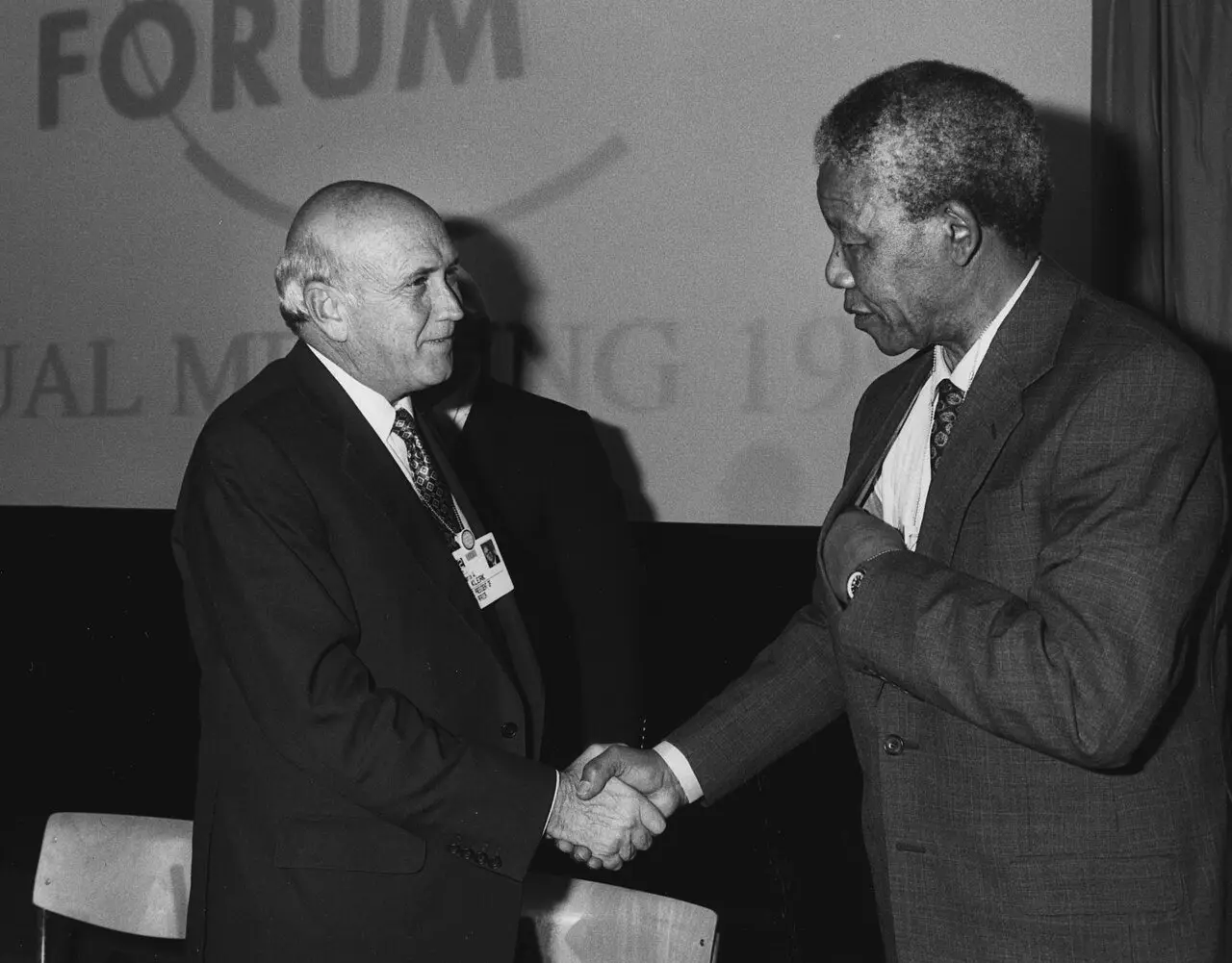
For 27 years, the government of South Africa had locked Nelson Mandela away and tried to erase him. No photographs of him were allowed. His name was barely spoken in public. He had gone into prison a rugged young activist in his forties and, as far as the world could see, simply vanished.
On the afternoon of February 11, 1990, the world finally saw him again.
Mandela's story of imprisonment began in 1962, when the apartheid regime sentenced him to five years for leaving the country illegally and urging workers to strike. Two years later came the famous Rivonia Trial, where he and other anti-apartheid leaders were convicted of sabotage. The sentence was life. He spent 18 of those years on Robben Island, the windswept prison colony off Cape Town, breaking rocks in a limestone quarry under a glare that damaged his eyes. Later he was moved to Pollsmoor Prison, and in December 1988 to Victor Verster Prison near Paarl.
While he sat in his cell, history raged on without him: the Soweto uprising of 1976, the township revolts of the 1980s, boycotts and sanctions from around the world. His absence only made him larger. By the time President F. W. de Klerk unbanned the African National Congress and announced Mandela's release, the prisoner had become the most famous political figure on the planet.
The walk itself has become one of the defining images of the 20th century. Shortly after 4 p.m., Mandela emerged through the gate of Victor Verster hand-in-hand with his wife Winnie, both raising fists in triumph. Television cameras carried the moment live to every corner of the globe. "As I finally walked through those gates," he would later write, "I felt even at the age of 71 that my life was beginning anew. My 10,000 days of imprisonment were at last over."
What followed was pure chaos and pure joy. A crowd of some 100,000 people packed the Grand Parade outside Cape Town's City Hall, waiting for Mandela's first public speech in 27 years. When he finally spoke, his words carried no bitterness: "Friends, comrades and fellow South Africans. I greet you all in the name of peace, democracy and freedom for all. I stand here before you not as a prophet but as a humble servant of you, the people."
The road after that day was anything but smooth. Four years of negotiations, and often of terrible violence, lay ahead. But the direction was set. In 1993 Mandela and de Klerk shared the Nobel Peace Prize, and on April 27, 1994, South Africans of every race voted together for the first time, electing Mandela the country's first Black president.
Why does one afternoon in 1990 still matter? Because Mandela walked out of a prison that had every reason to make him bitter, and chose reconciliation instead. A single person's dignity, held for 27 years, helped remake an entire nation. That is a kind of freedom no wall can hold.
Photo: World Economic Forum, CC BY-SA 2.0 (via Wikimedia Commons).