The Virginian Who Broke Into Britain's Most Exclusive Club
On December 1, 1919, Nancy Astor took her seat in the House of Commons, becoming the first woman ever to sit in the British Parliament.
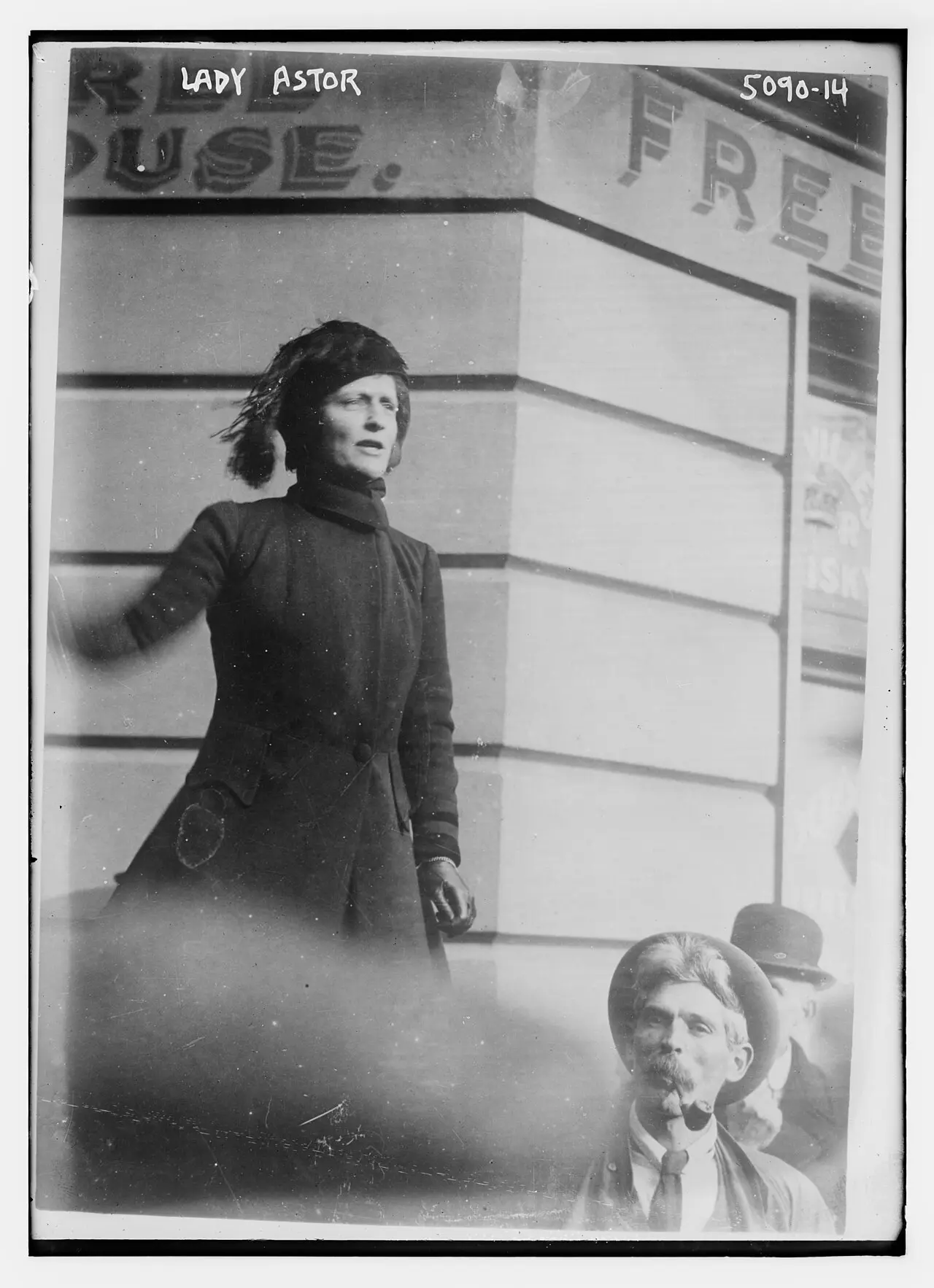
She had crossed an ocean to get there — and on December 1, 1919, Nancy Astor walked into the most stubbornly male room in Britain and sat down.
Astor had been born in Danville, Virginia, in 1879, and married into the wealthy Astor family in 1906. Her husband Waldorf was the Conservative MP for Plymouth, and later Plymouth Sutton. When his father died in 1919, Waldorf inherited the title of Viscount Astor and had to give up his Commons seat for the House of Lords. Nancy decided to run for it herself.
The timing was no accident. In November 1918, Parliament had passed the Qualification of Women Act, allowing women to stand for election for the first time — and in the 1918 election, Constance Markievicz had won a seat in Dublin but, as a member of Sinn Féin, refused to take it. On November 28, 1919, Astor won the Plymouth Sutton by-election with 51 percent of the vote. Three days later, she took the oath and her seat, becoming the first woman to sit in the House of Commons.
She was entering a chamber of more than six hundred men, many of whom doubted she belonged there. She answered with wit and work. A gifted campaigner, she had already shown in Plymouth that she could appeal to voters across social classes with charm and sharp debating skill — qualities she carried straight into Westminster. Over twenty-six years in Parliament — she was re-elected seven times before retiring in 1945 — she championed welfare reforms, equal voting rights for women, and access to the professions. In 1923 she carried the first Private Member's Bill ever passed by a woman, the Intoxicating Liquor Bill, which banned the sale of alcohol to anyone under eighteen — a principle still in force today.
She also made a point of supporting other women MPs regardless of party, in an era when party loyalty usually came first. When she stepped down in 1945, twenty-four women were elected across the country — including Lucy Middleton, the Labour candidate who succeeded her in Plymouth Sutton — proof the door she had opened was staying open.
Her legacy is complicated: historians have also documented her 1930s sympathies for appeasement and reported bigoted remarks that stain her record.
Why it still matters: representation is not symbolism. When Astor took her seat, half the population of Britain gained its first voice inside the room where laws are made. Every woman who has sat in Parliament since walked through a door she pushed open.
Photo: Bain News Service, public domain (via Wikimedia Commons).