The Day the World Decided to Talk About AIDS
On December 1, 1988, the first World AIDS Day was observed worldwide, turning a feared and stigmatized disease into a subject of open global conversation.
In August 1987, two press officers in Geneva looked at a calendar and made a bet on December.
James W. Bunn and Thomas Netter worked as public information officers for the World Health Organization's Global Programme on AIDS. The epidemic was spreading, fear was spreading faster, and public conversation about it was choked by stigma. They had an idea: give the world a single day to talk about AIDS openly — and to remember the people it was killing. They took the idea to Dr. Jonathan Mann, the programme's director, who approved it.
Bunn, a former television journalist from San Francisco, picked December 1 with a newsman's instincts: long enough after the American elections to get coverage, and before the Christmas holidays swallowed the news cycle. The first World AIDS Day was observed on December 1, 1988.
Its first two years focused on children and young people. Some critics said that ignored the adults most at risk — but the theme worked as intended, softening the stigma and framing AIDS as a family disease rather than a moral judgment. The day was the first-ever global health day, and it grew fast. Its three purposes have never changed: raise awareness of the pandemic, show support for people living with HIV, and remember those who have died of AIDS-related illnesses. Each year since 1988 has carried its own theme, and popes have issued messages of support for patients and caregivers on the day. The World AIDS Campaign, launched in 1997 to keep the message alive year-round, became an independent organization in 2004. Today the day is one of eleven official global public health campaigns run by the United Nations, and the UNAIDS agency has overseen its planning since 1996.
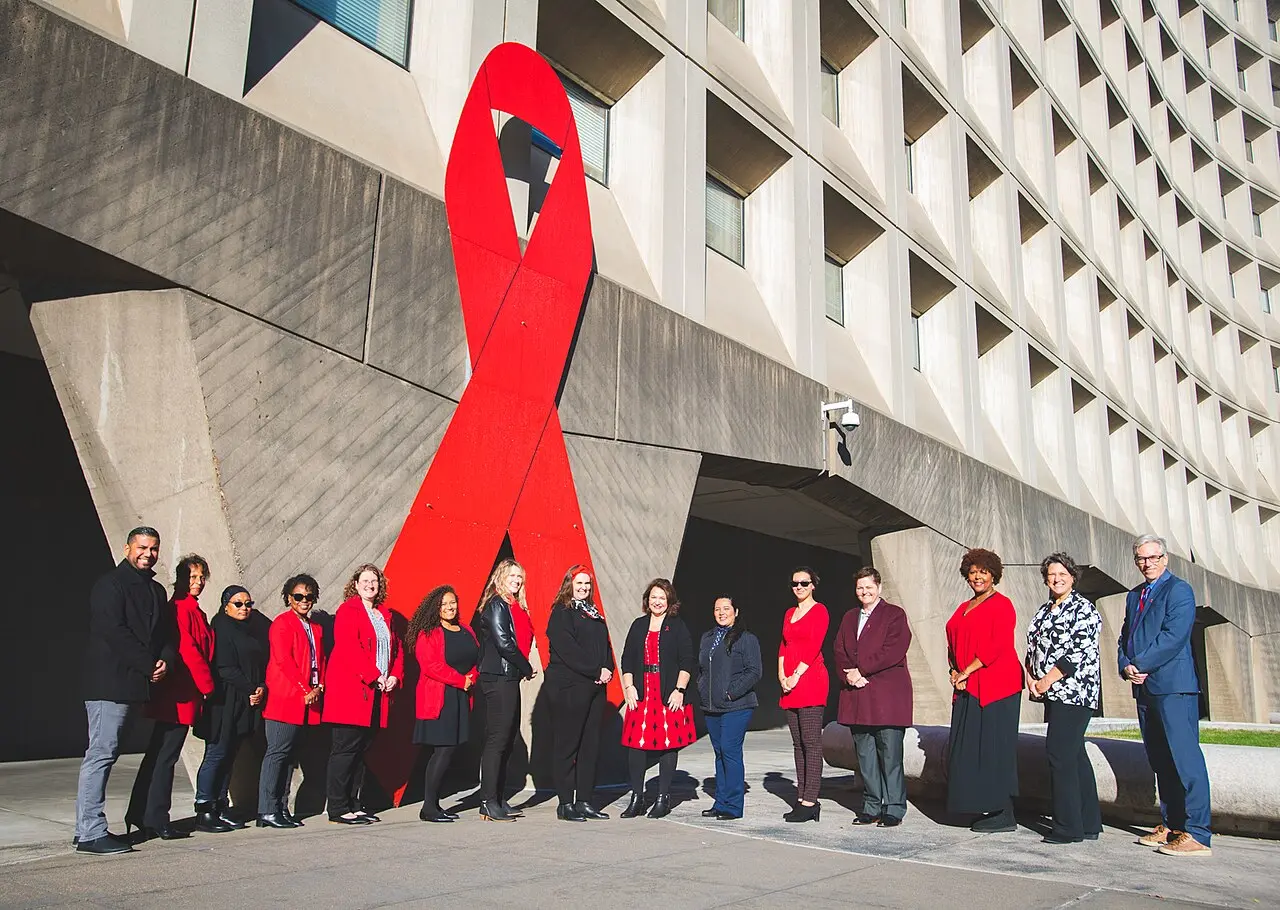
Today the red ribbon is its universal symbol, and governments mark the day worldwide — the White House has hung a giant 28-foot red ribbon on its portico every December 1 since 2007. Behind the symbolism is real progress: with wider access to antiretroviral treatment, the death rate from AIDS has fallen by nearly two-thirds since its 2004 peak.
Why it still matters: World AIDS Day proved that a calendar date can be a weapon against silence. Stigma thrives in the dark; the day's founders understood that dragging a disease into the daylight — with names, faces, and remembrance — is itself a form of treatment.
Photo: U.S. Department of Housing and Urban Development, public domain (via Wikimedia Commons).