The Treaty That Made — and Broke — a Nation
On December 6, 1921, Irish and British negotiators signed the Anglo-Irish Treaty in London, ending a brutal war — and setting the stage for another.
It was signed in the small hours of a December morning, after two months of grinding negotiation and centuries of conflict. The five Irishmen who put their names to the Anglo-Irish Treaty on December 6, 1921, understood exactly what the signatures would cost them. One of them said so, out loud, before the ink was dry.
The treaty ended the Irish War of Independence, the guerrilla conflict that had raged since 1919 between the Irish Republican Army and British forces. A truce had been called that July, and in October an Irish delegation — headed by Arthur Griffith, founder of Sinn Féin, and including the IRA's legendary intelligence chief Michael Collins — traveled to London. They carried plenipotentiary powers: the authority to sign a treaty without checking back home. Across the table sat Prime Minister David Lloyd George, Winston Churchill, and the rest of the British cabinet.
The deal gave Ireland more self-government than it had ever had: an Irish Free State, a self-governing dominion within the British Empire with a status "the same as that of the Dominion of Canada." British troops would leave most of the island. But the price was steep: an oath of allegiance to the British Crown, and a clause letting the six counties of Northern Ireland opt out of the new state — which they promptly did. Lloyd George made the alternative clear: refuse, and the war would resume at once.
The treaty was signed in London on December 6. Collins, who had wanted a republic and gotten a dominion, is said to have remarked afterward: "I have signed my death warrant." He was not wrong about the cost, if not the manner of it. Back in Dublin, the Dáil debated the treaty furiously and approved it — but only narrowly. The split over the oath and partition tore the independence movement in two.
Within months, former comrades were at war with each other: the Irish Civil War of 1922–23, fought between pro-treaty and anti-treaty forces, killed more people than the war against Britain had. Both Griffith and Collins were dead by the end of August 1922. A year after the signing, the Irish Free State came into being — independent in all but name.
The treaty gave Ireland its freedom and drew the border that still divides the island today. It ended one war and started another, and the bitterness of that choice shaped Irish politics for a century. Peace treaties end wars. They do not always end the fighting.
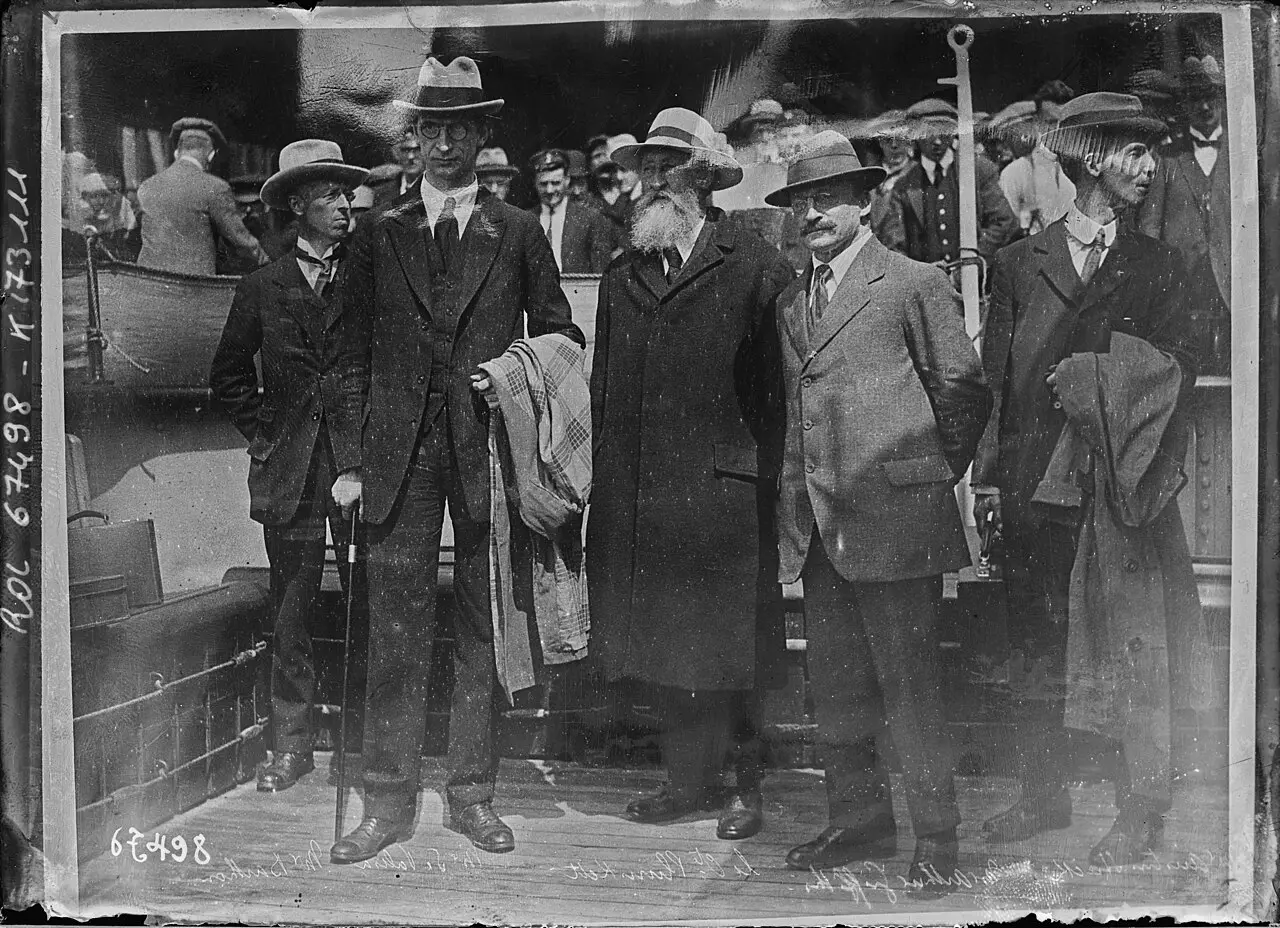
Photo: Agence Rol, Public domain via the Bibliothèque nationale de France (Wikimedia Commons).