
The Tower They Wanted to Tear Down
On March 31, 1889, Gustave Eiffel opened his 984-foot tower in Paris — once an eyesore, now the world's most famous landmark.
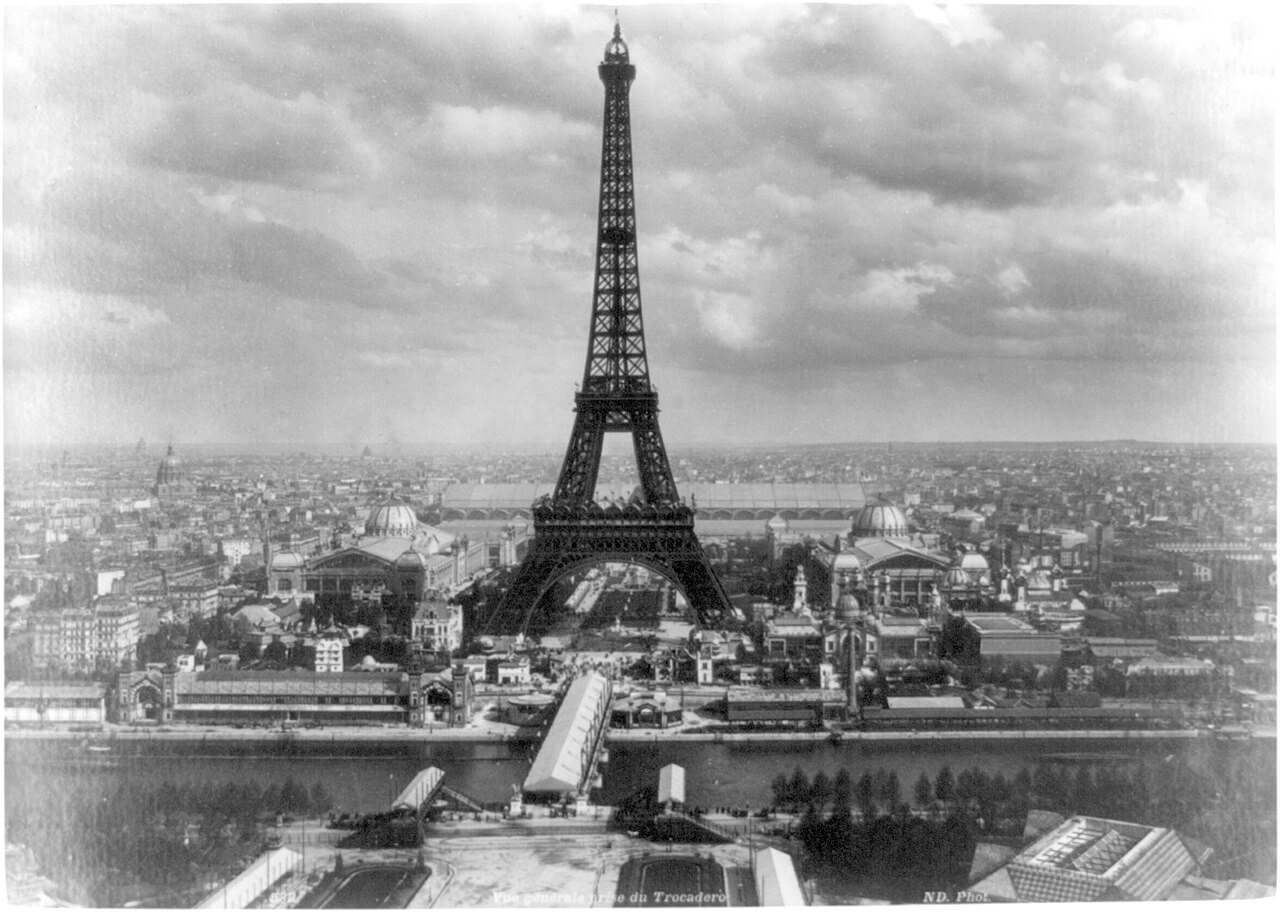
The elevators weren't finished, so on March 31, 1889, Gustave Eiffel did it the hard way: he climbed the stairs of his brand-new tower with a handful of hardy companions, raised an enormous French tricolor on the flagpole at the top, and let the fireworks fly from the second platform. Then the great bridge-builder came back down and addressed his guests — and the 200 construction workers who had built the thing. Paris's most famous landmark was officially open.
What exactly had he opened? An iron framework rising 984 feet on four masonry piers, its columns curving inward to form a single tower, with observation decks at three levels. Eiffel had contracted the Otis Elevator Company of the United States to design the tower’s famous glass-cage elevators — the very lifts still unfinished on dedication day. The tower had been built as the entrance gateway to the 1889 Exposition Universelle, the world's fair marking the centenary of the French Revolution. France had held a design competition for a monument on the Champ-de-Mars; out of more than a hundred entries, the committee chose the open-lattice wrought-iron tower of Gustave Eiffel — already famous as a master of metal bridges and the designer of the framework inside the Statue of Liberty.
Not everyone was thrilled. Critics called the tower structurally unsound and an eyesore blighting the heart of Paris. Eiffel ignored them and built it under budget in just over two years, with the loss of only one worker — remarkably few for a project of that scale. At 984 feet, it was the tallest man-made structure on Earth, a title it held until New York's Chrysler Building rose in 1930.
It almost didn't survive. The exposition's 20-year lease on the land expired in 1909, and the tower was slated for demolition. What saved it was invisible: radio. The tower made an ideal antenna, and its value for wireless transmission — military and then civilian — kept it standing.
The photograph for this story was taken in 1889, in the tower's first year: the iron giant rising over the fairgrounds, already impossibly Parisian.
Why it matters: the Eiffel Tower is proof that great works outlive their critics. Paris hated it before it loved it; the artists who called it an eyesore could not imagine a Paris without it. Every skyline-defining structure since — every tower that was "too tall," "too ugly," "too strange" — has been judged in the Eiffel Tower's long shadow. Gustave Eiffel didn't just build the world's tallest structure. He built the world's most recognizable one.
Photo: Neurdein, public domain (via Wikimedia Commons).