
The Three-Day Coup That Ended an Empire
On August 19, 1991, hardliners tried to seize the Soviet Union — and instead destroyed it in three days.
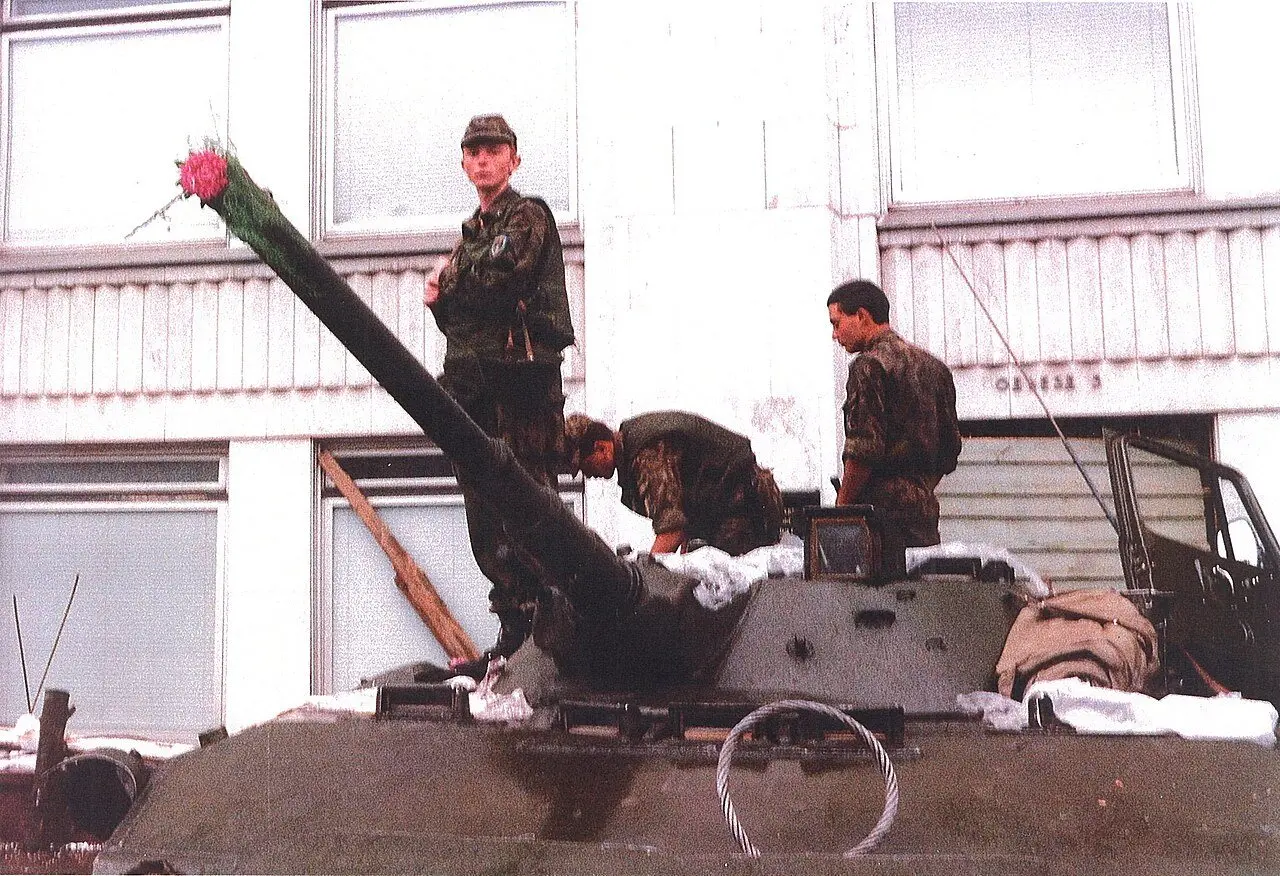
Muscovites woke up on August 19, 1991, to tanks in the streets and a strange announcement on television: President Mikhail Gorbachev was ill, and a self-appointed State Committee on the State of Emergency was taking power. The Soviet Union's old guard was making its move — and it would backfire spectacularly.
Gorbachev had spent six years trying to reform a crumbling system with perestroika (restructuring) and glasnost (openness). Conservative hardliners — the KGB chief, the prime minister, the vice president among them — feared his reforms would dissolve the Union. Their particular terror: a new Union Treaty that would devolve real power to the republics, scheduled for signing the very next day, August 20.
So they struck. Gorbachev was vacationing at his dacha on the Crimean coast when eight plotters arrived demanding he sign over power. He refused and was placed under house arrest, his phone lines cut. The Committee — known by its Russian acronym GKChP — declared a state of emergency, claimed Gorbachev was incapacitated by illness, and sent armored columns into Moscow. Independent radio was silenced; television broadcasts were replaced with nonstop loops of Tchaikovsky's ballet Swan Lake, a surreal soundtrack Muscovites would never forget.
The eight men behind the plot were the cream of the old establishment: Vice President Gennady Yanayev, Premier Valentin Pavlov, Interior Minister Boris Pugo, Defense Minister Dmitry Yazov, KGB chairman Vladimir Kryuchkov, defense-industry chief Oleg Baklanov, Peasants' Union chairman Vasily Starodubtsev, and state-enterprise boss Alexander Tizyakov. The coup destroyed them. All but Pugo were arrested — Pugo died of gunshot wounds on August 22, his death ruled a suicide — and though all were freed by early 1993 and amnestied by the Russian parliament in 1994, none ever held real power again.
But the plotters had misjudged everything. Boris Yeltsin, the popularly elected president of Russia, rushed to the Russian parliament building — the White House — condemned the coup as illegal, and demanded Gorbachev's release. Thousands of ordinary Muscovites defied the emergency decrees and built barricades around the building. Soldiers sent to arrest Yeltsin found themselves surrounded by civilians — and many simply refused to fire, or joined the resistance.
The coup's only blood was shed in the early hours of August 21, when protesters tried to block armored vehicles in a Moscow tunnel. Three young men — Dmitry Komar, Ilya Krichevsky, and Vladimir Usov — were killed. On the night of August 24, thousands of Muscovites filled the streets for their funeral; Gorbachev posthumously named all three Heroes of the Soviet Union, and Yeltsin asked their families to forgive him for failing to prevent their deaths.
By August 21 it was over. The coup collapsed, its leaders were arrested, and Gorbachev flew back to Moscow a diminished man — real power had shifted to Yeltsin. Only three people died in Moscow. Four months later, in December 1991, the Soviet Union itself ceased to exist.
The plotters had aimed to stop the republics from slipping away; the coup sped the breakup instead. Even as the tanks rolled in Moscow, Estonia restored its independence on the night of August 20 and Latvia followed on August 21. Two weeks later, the Soviet Union formally recognized the independence of all three Baltic states — the first dominoes of a collapse that would be complete by Christmas.
The August Coup was meant to save the Soviet system; instead, it proved that no amount of tanks could hold it together anymore.
Photo: Ole Husby, CC BY-SA 2.0 (via Wikimedia Commons).