The Tennis Match That Was Really About Equality
On September 20, 1973, Billie Jean King beat Bobby Riggs 6-4, 6-3, 6-3 before 30,000 fans and some 90 million TV viewers in the 'Battle of the Sexes'.
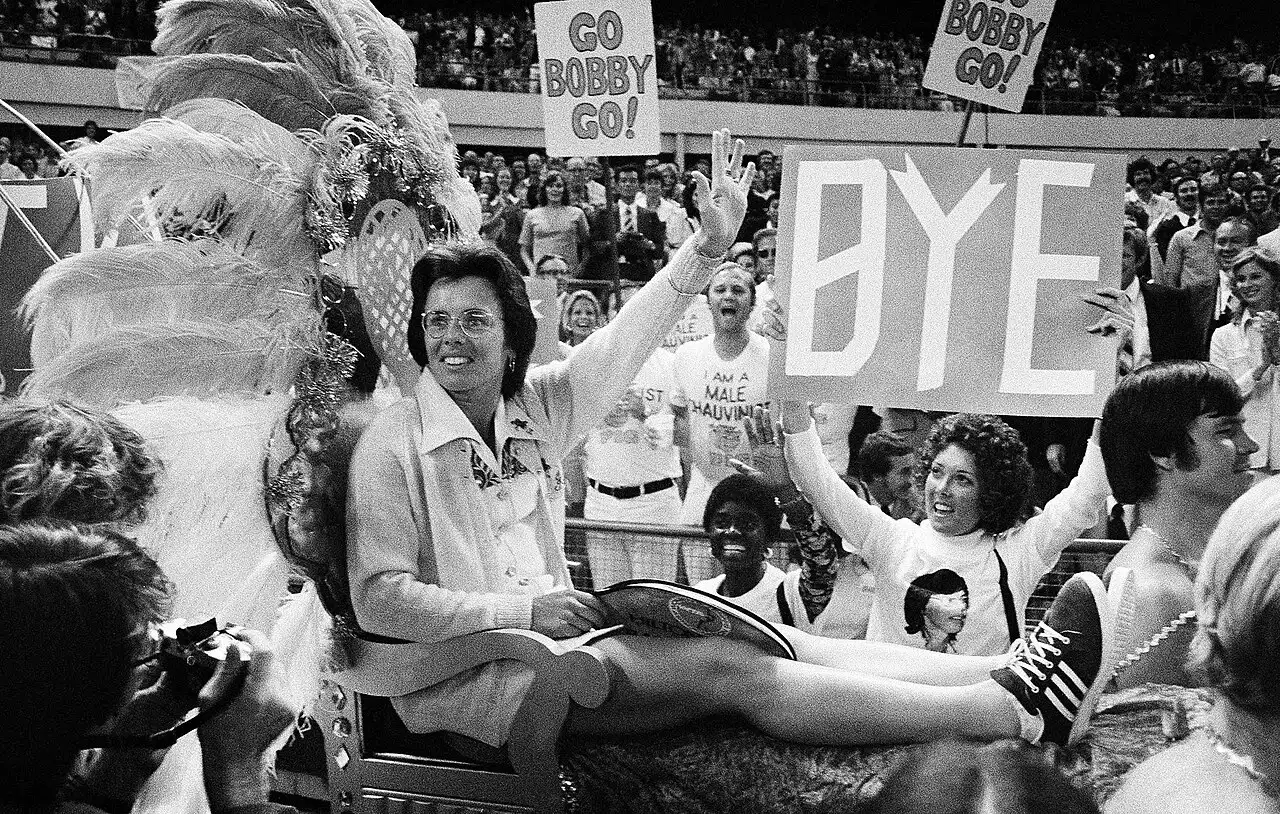
More than 30,000 people packed into the Houston Astrodome, and tens of millions more crowded around television sets on September 20, 1973, to watch a tennis match that was about much more than tennis.
Billie Jean King, 29, the best women's player in the world, had agreed to play Bobby Riggs, 55, a retired champion from a previous era. Riggs was a showman, and he had spent months boasting that even at his age he could beat any woman alive — that the women's game was inferior and that female players couldn't handle the pressure. Four months earlier, he had made good on his talk by trouncing the top-ranked Margaret Court 6-2, 6-1 in Ramona, California. The challenge to King hung in the air like a dare.
King had turned Riggs down before. But after Court's loss, she couldn't watch the women's game — and the movement behind it — be publicly humiliated. She accepted a winner-take-all match for $100,000, and the event ballooned into something between a sporting contest and a cultural referendum. The entrances told the story: King was carried into the stadium on a gold litter by bare-chested men, Cleopatra-style; Riggs arrived in a rickshaw pulled by female models. In the pre-match gift exchange, Riggs handed King a giant Sugar Daddy caramel sucker — a jab at her reputation for sugar-coating nothing — and King returned the favor with a live pig wearing a bow, a pointed reference to the male-chauvinist image Riggs cheerfully embraced. Legendary broadcaster Howard Cosell called the play-by-play for ABC.
The match itself was not close. King played patient, relentless tennis, refusing to be rattled by Riggs's gamesmanship. She won in straight sets: 6-4, 6-3, 6-3. An estimated 50 million Americans watched live, and roughly 90 million people worldwide — still the largest television audience for a tennis match in history.
What the victory meant went far beyond the scoreline. That same year, King founded the Women's Tennis Association to give female players a collective voice, and the U.S. Open became the first major tournament to pay men and women equal prize money. Her win was treated — by supporters and skeptics alike — as evidence that women's sports deserved to be taken seriously. King later said she felt the entire future of the women's game was riding on that one evening.
Riggs, to his credit, took the loss graciously. At the post-match news conference he admitted she had simply been too good — too fast, returning everything he threw at her.
Five decades later, every conversation about equal pay in sports traces something back to that night in the Astrodome. Billie Jean King didn't just win a tennis match. She won the argument.
Photo: Associated Press, public domain, via Wikimedia Commons.