Five Ships, 270 Men, and a Voyage Nobody Had Survived
On September 20, 1519, Ferdinand Magellan sailed from Spain with five ships and about 270 men on the voyage that would become the first circumnavigation of the Earth.
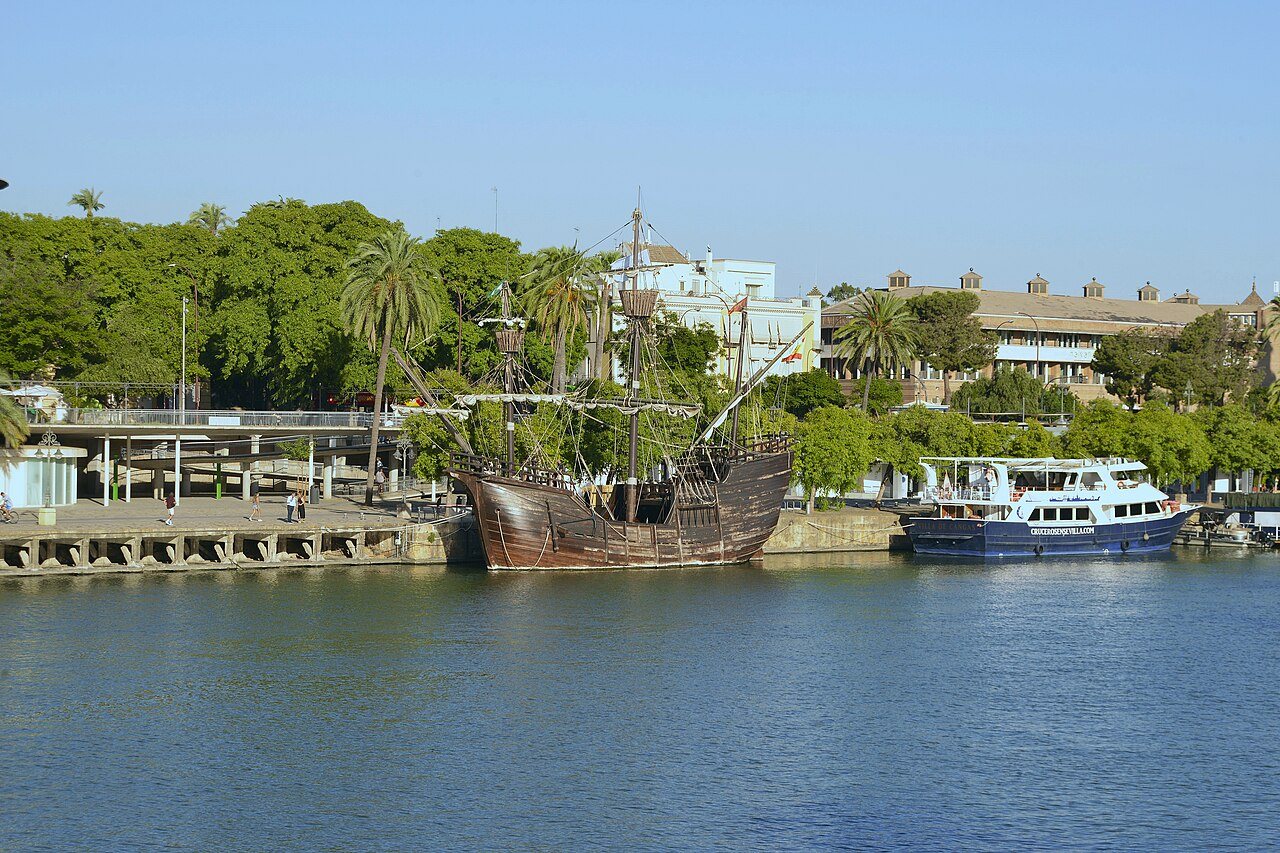
On the morning of September 20, 1519, five weather-beaten ships sailed out of Sanlúcar de Barrameda, Spain, into the Atlantic. Their captain was chasing a shortcut to the richest islands on Earth. Most of his men would never come home.
Ferdinand Magellan was Portuguese, but the king of Portugal had refused to fund him — so he pitched Spain's 18-year-old King Charles I instead. The prize was a western sea route to the Spice Islands, the Moluccas of present-day Indonesia, whose cloves and nutmeg were worth fortunes in Europe. Portugal controlled the eastern route around Africa; Spain desperately needed another way.
The fleet was modest: the flagship Trinidad, the San Antonio, the Concepción, the Victoria, and the Santiago — five small wooden ships carrying about 270 men and supplies for two years of travel.
The provisioning alone tells you how serious the undertaking was: the expedition's food — mostly wine and hardtack, plus salted meat, cheese, almonds, figs, and even seven cows and three pigs carried alive aboard — cost nearly as much as the ships themselves.
They had left Seville on August 10 and spent five weeks at Sanlúcar de Barrameda loading and waiting. On September 20, they finally sailed. What followed was a catalogue of suffering: storms in the Atlantic, a brutal winter on the coast of South America, a mutiny by Spanish captains who distrusted their Portuguese commander. Then, on November 1, 1520, the fleet found the narrow strait at the continent's southern tip — the passage that now bears Magellan's name.
Beyond it lay an ocean so calm that Magellan named it Mar Pacifico — the "peaceful sea." The crossing took 98 days. Men starved; they chewed leather stripped from the rigging and drank putrid water. They reached Guam, then the Philippines — where Magellan was killed in battle in April 1521, never living to see his dream completed.
Command passed to the Spaniard Juan Sebastián Elcano. One ship, the little Victoria, limped home across the Indian Ocean and around Africa: on September 6, 1522 — nearly three years after departure — it reached Spain with just 18 survivors aboard. It had sailed some 60,440 kilometers, becoming the first vessel to circle the entire Earth.
The voyage proved the world's true size, revealed the vastness of the Pacific, and showed that ships could sail around the globe on a western route. Every map drawn afterward was different — and so was every mind that looked at one.
Photo: Alberto-g-rovi, CC BY 4.0 (via Wikimedia Commons).