The Superjumbo Lifts Off
On April 27, 2005, the Airbus A380 — the largest passenger airplane ever built — made its first flight from Toulouse, France.
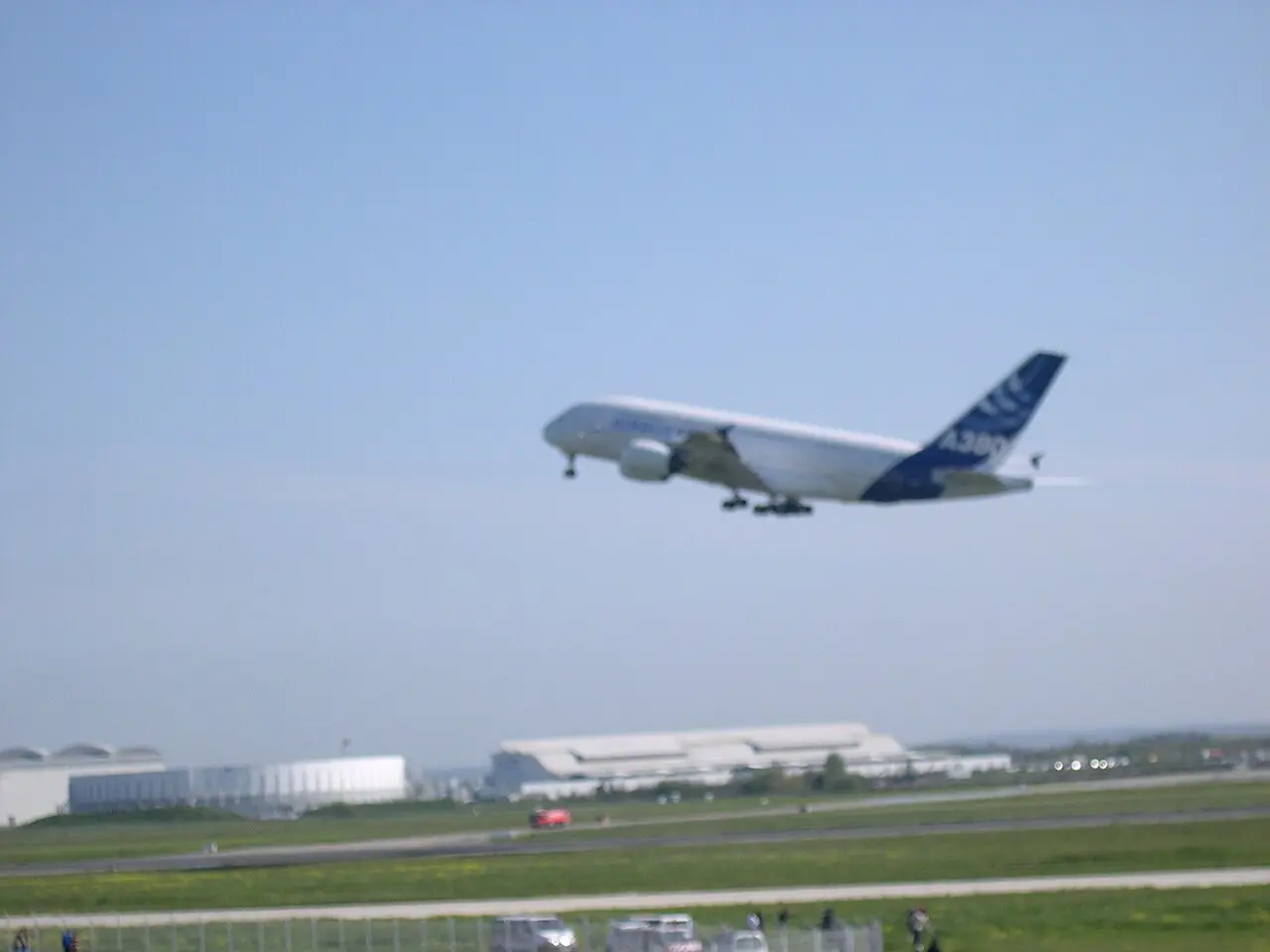
At 10:29 on a clear April morning, the largest passenger airplane ever built lifted off a runway in Toulouse — and one of the first things people noticed was how quiet it was.
The aircraft was F-WWOW, the first prototype of the Airbus A380, rolling down the runway at Toulouse-Blagnac airport at a takeoff weight of 421 tonnes — the heaviest of any civil airliner to date. On board were six crew members, led by Airbus chief test pilot Jacques Rosay. For three hours and 54 minutes the giant circled over southwest France while the crew worked through its flight envelope: handling, controls, landing gear, flaps, and — by all accounts — a remarkably hushed cabin. At 2:23 that afternoon it touched down back in Toulouse to cheering crowds of journalists, plane spotters, and ordinary onlookers. Every primary objective of the test flight had been met.
The A380 had been decades in the making. Airbus began studying a super-jumbo in 1988 to challenge the Boeing 747's half-century reign over long-haul travel; the program, then called the A3XX, was formally launched in December 2000 at a cost of roughly 9.5 billion euros. The prototype was unveiled in January 2005 in a ceremony worthy of the Olympics — dancers drifting through blue smoke — just three months before this first flight.
What rose into the Toulouse sky was audacious: the world's only full-length double-deck jetliner, with room for 525 passengers in typical three-class layout and a certified maximum of 853, powered by four huge turbofans and able to fly 8,000 nautical miles nonstop.
The road to service took longer than planned. Wiring problems delayed production by two years, and the A380 earned its type certificates from European and American regulators in December 2006. Singapore Airlines took the first delivery in October 2007 and flew the first commercial service, Singapore to Sydney, later that month. In the end, the program never earned back its roughly $25 billion development cost, and Airbus built the last A380 in 2021.
But as an airplane, it became a legend. The global fleet has flown more than 800,000 flights and carried over 300 million passengers — with no fatalities and no hull losses. Passengers consistently rank it their favorite way to fly. And MSN001, the very aircraft that lifted off on April 27, 2005, still works for Airbus as a flying testbed — a giant that refused to retire.
Photo: AlNo, CC BY-SA 3.0 (via Wikimedia Commons).