The State That Beat Congress to It
On September 9, 1850, California became the 31st state — a free state that had already been governing itself for nearly a year.
California was a state before Washington said it could be. By the time President Millard Fillmore signed the statehood act on September 9, 1850, California had already written a constitution, elected a governor and a legislature, and been running its own affairs for the better part of a year. Congress was merely catching up.
The rush began with gold. Early in 1848, flakes of gold were spotted at Sutter's Mill near Coloma, in the Sierra Nevada foothills — just days before Mexico formally ceded California to the United States in the Treaty of Guadalupe Hidalgo. Word traveled slowly, then all at once: by 1849, tens of thousands of fortune-seekers from around the world had poured in, and San Francisco had exploded from a sleepy village into a chaotic boomtown.
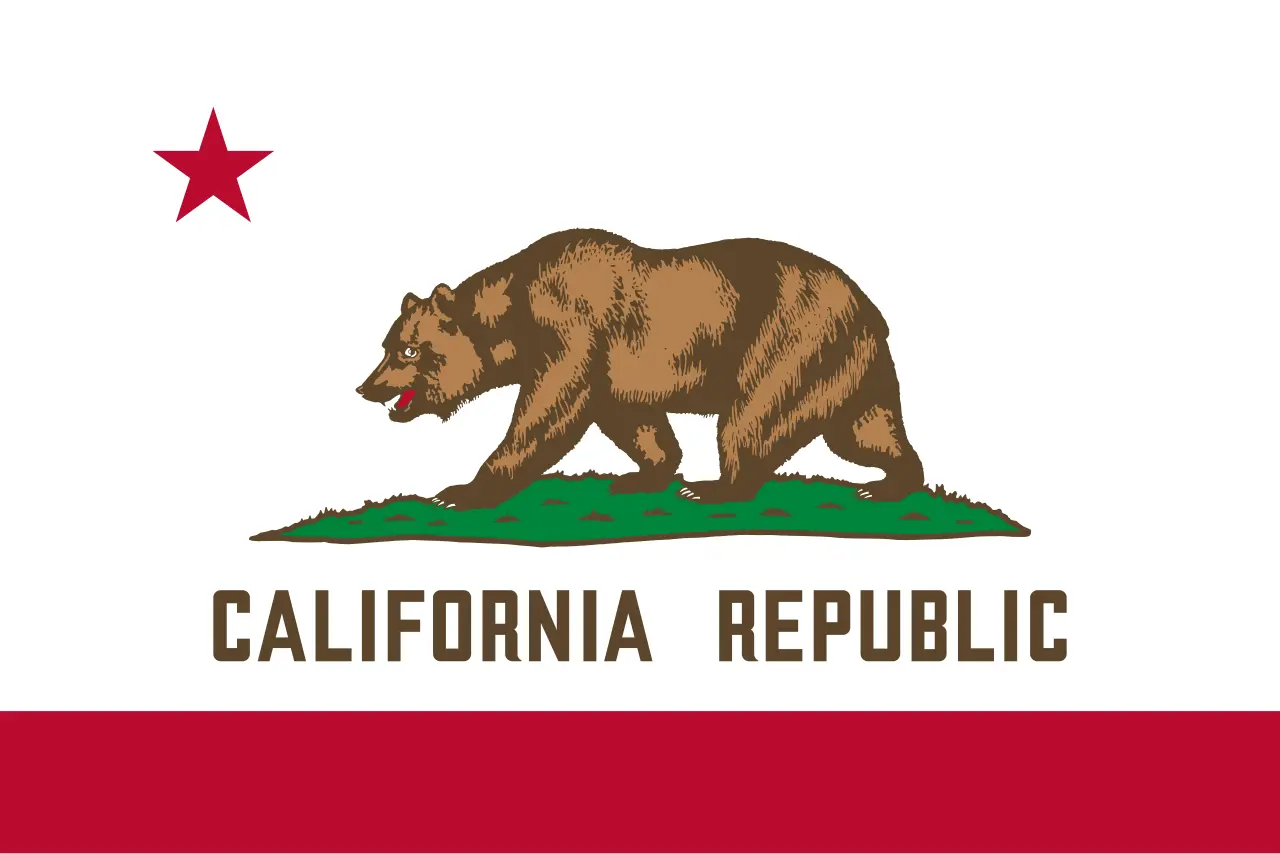
A place that wild needed government, and Congress — paralyzed by the question of slavery — wasn't providing one. So Californians provided their own. The grizzly on the state flag above recalls the Bear Flag Revolt of June 1846, when American settlers at Sonoma raised a homemade banner — a bear, a star, and the words "California Republic" — and declared a short-lived independent republic. That rough flag became the emblem of the new state.
In the fall of 1849, delegates met at Monterey and drafted a state constitution that banned slavery outright. On September 5 they voted 28 to 8 to seek admission as a state, skipping the territorial stage entirely. Voters ratified the constitution that November by more than twelve thousand to 811, and on December 20, 1849, Peter Hardeman Burnett was inaugurated as governor — of a state that did not yet legally exist.
In Washington, California's fate was tangled in the Compromise of 1850, the great bargain meant to hold the Union together. As a concession to the North, California would enter as a free state. The Senate approved the admission bill in August; on September 7 the House followed, 150 to 56. Two days later Fillmore signed, and California became the 31st state. The next morning, September 10, its first senators — John C. Frémont, the famed "Pathfinder" of western exploration, and William M. Gwin — took their seats.
Why it matters: California's admission as a free state tipped the Senate's balance and set the template for the West — admitted straight to statehood, with no territorial apprenticeship. It has been celebrated ever since: September 9 is California Admission Day, the birthday of the Golden State.
Photo: State of California, public domain (via Wikimedia Commons).