The Senate Vote That Outlawed Segregation: June 19, 1964
On June 19, 1964, after a 60-day filibuster, the U.S. Senate passed the Civil Rights Act 73 to 27, outlawing segregation and employment discrimination.
At 7:40 on a Friday evening, the clerk of the United States Senate read the tally out loud: 73 to 27. After the longest debate in the chamber's history, the Civil Rights Act of 1964 had passed.
The bill had been proposed by President John F. Kennedy in June 1963. After his assassination that November, President Lyndon B. Johnson made it his top priority, enlisting civil rights groups and key members of Congress to push it through. The House of Representatives passed it on February 10, 1964, by a vote of 290 to 130. Then it reached the Senate, where southern senators launched a filibuster to talk it to death.
Senate Majority Leader Mike Mansfield refused to send the bill to the Judiciary Committee, chaired by civil rights opponent James Eastland of Mississippi, and instead placed it directly on the Senate calendar. Debate began on March 26 and ground on for 60 days. Senator Hubert Humphrey managed the bill on the floor while Republican leader Everett Dirksen, once an opponent of civil rights legislation, rallied his party behind it, calling the bill "an idea whose time has come."
On June 10, the Senate did something it had never done before: it invoked cloture on a civil rights bill, cutting off debate. Nine days later, at 7:40 p.m. on June 19, 1964, the Senate passed the bill 73 to 27. As the Senate's own history notes, it was exactly one year after President Kennedy had proposed it.
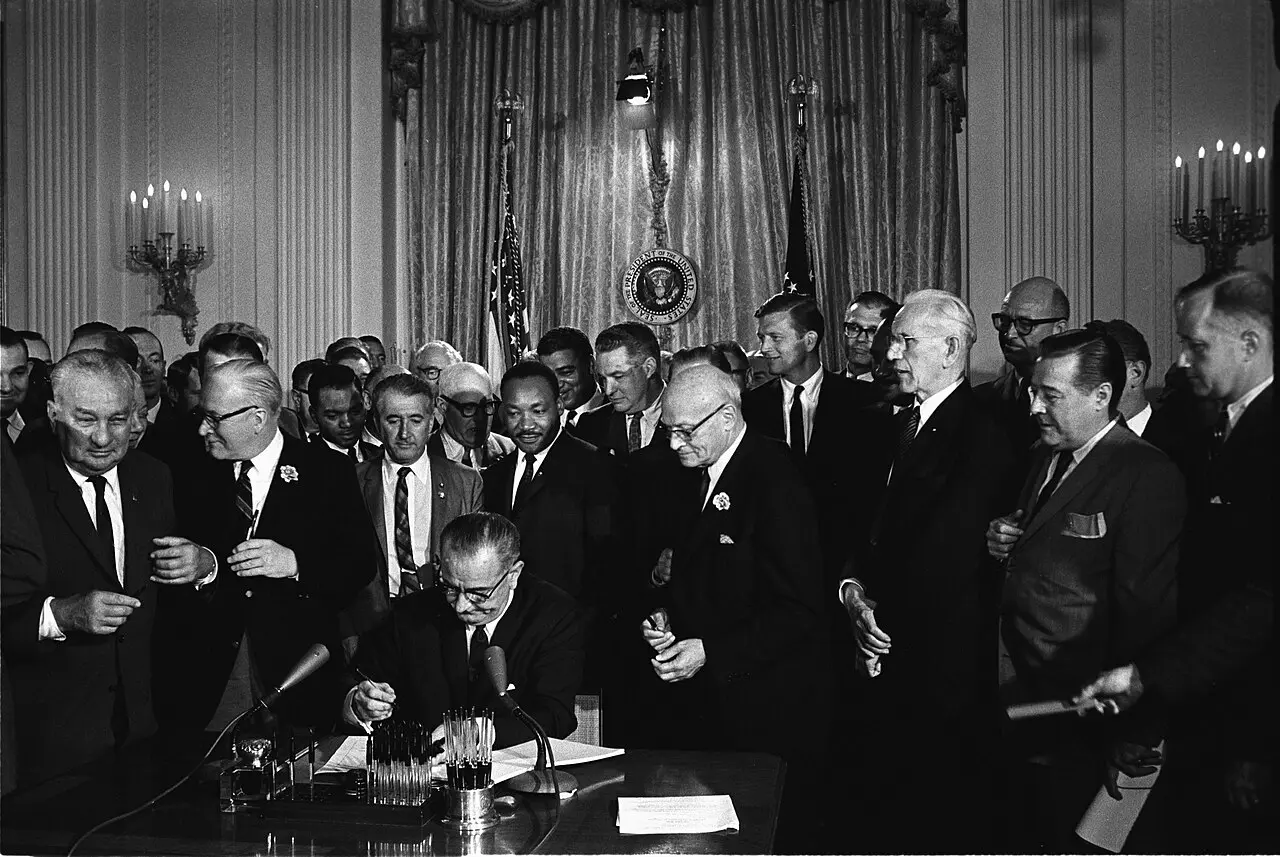
The law outlawed discrimination based on race, color, religion, sex, and national origin. It ended segregation in public accommodations like restaurants and hotels, banned employment discrimination, and attacked the unequal application of voter registration requirements. On July 2, the House approved the Senate's version, and that evening President Johnson signed the bill into law at the White House, with Dr. Martin Luther King Jr. and members of Congress looking on.
The final evening had its own drama. Senator Thomas Kuchel of California proclaimed that "the sham and shame of unequal justice are about to be shaved away." Mansfield called the debate one of the longest in Senate history, but also learned and thorough. Dirksen had the last word, insisting that "equality of opportunity must prevail," before adding, simply: "I am prepared for the vote."
It remains one of the most significant legislative achievements in American history. It did not end discrimination by itself — later laws, including the Voting Rights Act of 1965, would strengthen it — but on that Friday evening in June, the Senate finally put the force of federal law behind the simple idea that all Americans deserve equal treatment.
Photo: Cecil Stoughton, White House Press Office, public domain (via Wikimedia Commons).