
The Schuman Declaration: The Idea That Became Europe
On May 9, 1950, French foreign minister Robert Schuman proposed pooling France's and West Germany's coal and steel under one authority — the founding act of what would become the European Union.
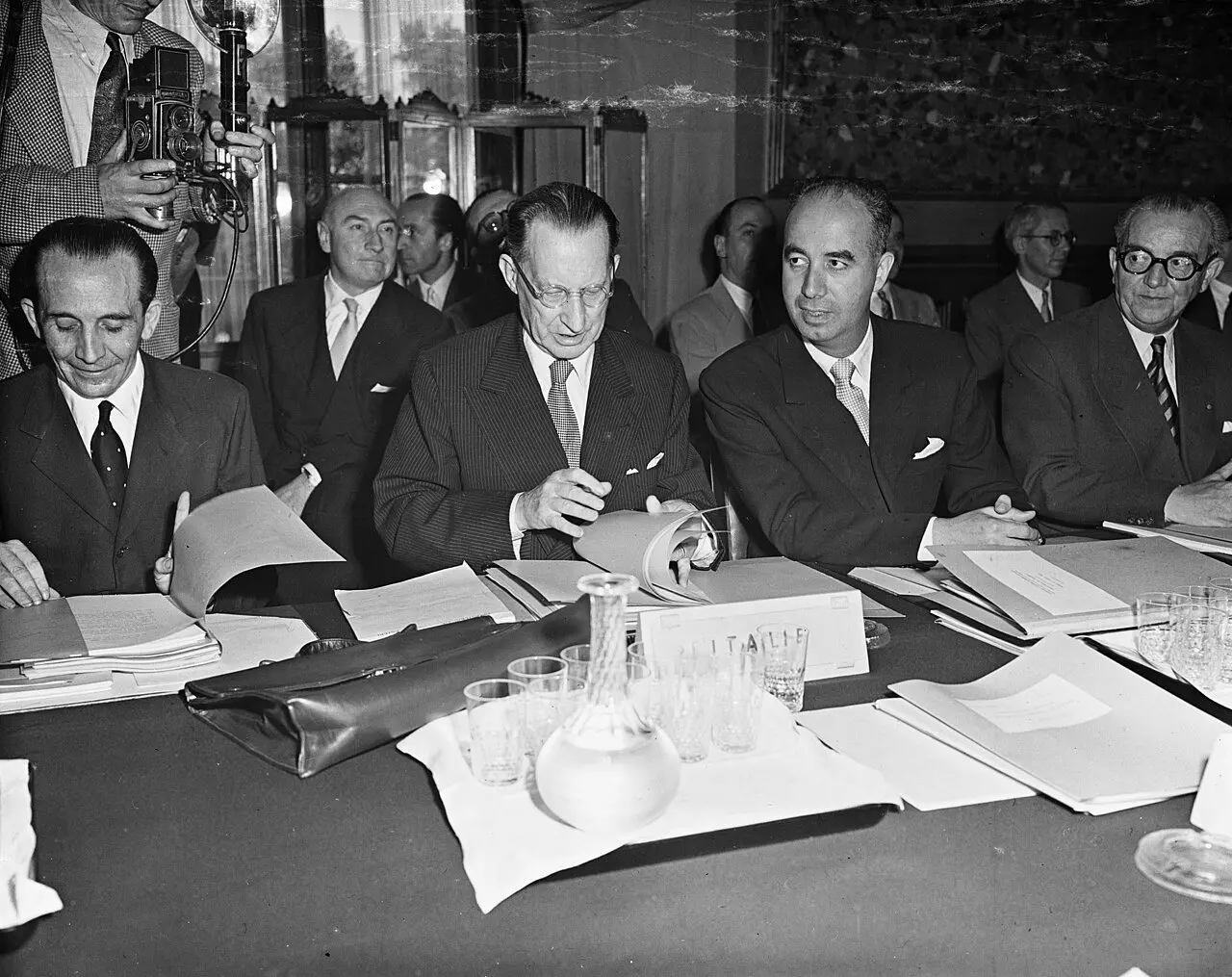
Five years after the guns fell silent in Europe, a quiet French statesman stood before the press in Paris and proposed ending war with an unlikely weapon: coal and steel.
On May 9, 1950 — the day after the fifth anniversary of the end of World War II in Europe — French foreign minister Robert Schuman announced a plan to place French and West German production of coal and steel under a single, shared authority, open to other European nations. Coal and steel were the stuff of war: whoever controlled them could build guns, tanks, and warships. Schuman's bet was that shared control would make another Franco-German war, in his words, "not merely unthinkable, but materially impossible."
"World peace cannot be safeguarded without the making of creative efforts proportionate to the dangers which threaten it," he told the gathered journalists. "Europe will not be made all at once, or according to a single plan. It will be built through concrete achievements which first create a de facto solidarity."
The response was warm. West German Chancellor Konrad Adenauer answered positively, as did the governments of the Netherlands, Belgium, Italy, and Luxembourg. On April 18, 1951, the six founding members signed the Treaty of Paris, creating the European Coal and Steel Community — Europe's first supranational community, with its own High Authority, assembly, council, and court of justice. The ECSC led to the European Economic Community and eventually to the European Union.
The plan had been drafted in secrecy. The text was prepared by the legal adviser Paul Reuter, his aide Bernard Clappier, and the French planner Jean Monnet with two of his team members, Pierre Uri and Étienne Hirsch — and the French government adopted it as American and British intentions to lift limits on German steel production from mid-May 1950 forced Paris to find a swift answer to the "German question." For years France had tried to keep Germany down through fragmentation and disarmament; Schuman and Monnet proposed the opposite: bind Germany's recovery to France's own, so that neither could rise at the other's expense.
The Coal and Steel Community was established in 1952. Its four institutions — the High Authority, the Common Assembly, the Council, and the Court of Justice — became the blueprint for today's European Commission, European Parliament, Council of the European Union, and Court of Justice of the European Union.
Every May 9 is now Europe Day in the EU, marking the anniversary of Schuman's speech. The declaration is remembered as the EU's founding act — proof that historic rivals can be bound together not by force but by shared work. For all the Union's later arguments and growing pains, the original achievement stands: France and Germany, enemies for a century of devastating wars, have never again fought each other.
Photo: U.S. Department of State, Agency for International Development, public domain (via Wikimedia Commons).